




Recent Post
- AI Agents and the Future of Personalized Customer Journeys
- How AI Is Transforming the Marketing Journey
- From Keywords to Knowledge Graphs: The Evolution of Search Optimization
- Recommendation SEO: Optimizing Brands for AI-Powered Recommendations
- AI Marketing Agents vs Traditional Automation: What Changes for Businesses?
- Entity SEO: Why Context May Matter More Than Keywords in AI Search
Marketing automation has already changed how businesses manage emails, nurture leads, and follow up with prospects. But what happens when marketing systems move beyond executing predefined workflows and begin making decisions, testing approaches, and adjusting campaigns toward specific goals? That shift toward autonomous marketing could reshape how teams work, provided they balance intelligent automation with human judgment, transparency, and control.
From Automated Tasks to Autonomous Decisions
Traditional marketing automation works a little like a reliable train running on fixed tracks. When someone downloads a guide, the system sends an email. When a lead reaches a certain score, a salesperson receives a notification. These workflows save time, but people usually have to design the rules and revise them when circumstances change.
Autonomous marketing introduces another layer. AI-powered systems can analyze available signals, recommend or select actions, and adjust their next steps within defined boundaries. Instead of merely sending a scheduled campaign, an AI agent might identify an audience segment responding poorly, test an alternative message, and recommend shifting resources toward a stronger-performing campaign.
For businesses exploring this transition, AI SEO Expert in Croatia is a relevant resource for understanding how AI-driven digital strategies can support visibility and marketing performance. The broader lesson is that automation is evolving from task execution toward more adaptive decision-making.
What Is Driving the Shift Toward Autonomous Marketing?
1. Customer behavior changes too quickly for static workflows
A campaign that performs well in one month may lose momentum the next. Search behavior shifts, competitors change their offers, and customers move between research and purchase at different speeds. Teams relying entirely on fixed rules can struggle to respond quickly.
AI marketing systems can help identify patterns across campaign data, customer interactions, and website behavior. They can suggest adjustments while marketers evaluate whether those changes make commercial sense. The benefit is not perfect prediction; it is the ability to recognize useful signals and respond more deliberately.
2. AI agents can connect separate marketing activities
Marketing often operates in pieces. SEO teams focus on organic discovery, paid media specialists manage advertising, and CRM teams oversee lead nurturing. Each function may perform well independently, yet the overall customer journey can still feel disconnected.
Autonomous marketing systems could coordinate these activities around shared objectives. For example, if a software company sees increased interest in a particular service, an AI agent might recommend updating a relevant landing page, adjusting an advertising audience, and creating a follow-up sequence for qualified leads. Important changes should still pass through the appropriate approval process.
3. Better tools make experimentation more practical
Testing multiple headlines, audience groups, and landing-page variations can consume considerable time. AI can help prioritize experiments, summarize results, and identify promising opportunities. Combined with clear performance targets, these capabilities support more continuous marketing optimization.
The NIST AI Risk Management Framework offers useful guidance for organizations considering AI adoption, particularly around identifying risks and building appropriate governance into AI-supported processes.
What Autonomous Marketing Could Look Like in Practice
Imagine an ecommerce business preparing for a seasonal sales period. Its usual approach involves manually reviewing performance reports, changing ad budgets, and updating email campaigns. An autonomous marketing setup could support that work in a more coordinated way.
- Discover: Analyze permitted customer and campaign data to identify emerging interests or underperforming segments.
- Plan: Suggest campaign adjustments based on business goals, budget limits, and previous results.
- Act: Execute approved, low-risk tasks such as adjusting eligible audience rules or preparing message variations.
- Learn: Compare results with a baseline and use the findings to inform the next decision.
This creates a feedback loop rather than a campaign that remains unchanged until someone reviews it. Still, the quality of the outcome depends on the quality of the data, the suitability of the objective, and the limits placed on the system.
Benefits Beyond Saving Time
Efficiency matters, but autonomous marketing may offer more than faster execution. Its deeper value lies in helping teams coordinate decisions across channels and react to changing conditions without constantly rebuilding workflows.
- Faster optimization: Identify performance changes sooner and prioritize useful responses.
- More relevant customer experiences: Adapt content and follow-ups to customer needs and observed intent.
- Better resource allocation: Help marketers focus attention on campaigns and audiences with stronger potential.
- More time for strategy: Reduce repetitive analysis so people can concentrate on positioning, creative thinking, and customer relationships.
These are potential benefits rather than guaranteed results. Businesses should measure actual improvements in qualified leads, conversion rates, customer retention, campaign costs, and customer satisfaction. Activity alone—such as the number of tasks an agent completes—is not evidence of business value.
The Risks: More Autonomy Requires More Oversight
Giving an AI system greater freedom does not automatically make marketing smarter. A poorly configured agent could increase advertising spend, send repetitive messages, misinterpret customer behavior, or optimize for cheap leads that rarely become paying customers.
There is also a trust question. Customers may welcome relevant assistance but dislike unexpected personalization or unclear data practices. Businesses need to establish sensible limits before allowing systems to act independently.
A practical starting framework includes:
- Set measurable objectives, spending caps, and clear rules for permitted actions.
- Require human approval for high-impact decisions, sensitive communications, and major budget changes.
- Use reliable, permissioned data and regularly review data quality.
- Maintain records of important decisions so teams can investigate unexpected outcomes.
- Monitor performance and establish a straightforward way to pause or reverse automated actions.
In other words, autonomous marketing should mean controlled independence, not marketing without accountability.
How to Prepare for the Next Stage
Most businesses do not need to rebuild their entire marketing operation overnight. A focused pilot can reveal whether AI-driven decision-making is useful for their goals and existing systems.
Start with a repeatable, low-risk process, such as lead qualification, campaign reporting, or identifying content opportunities. Define the baseline, choose a small set of success metrics, and document which actions the system may take without approval.
Then review the results with the people responsible for marketing, sales, and customer experience. If the pilot improves outcomes without creating unacceptable risks, expand gradually. Strong data foundations, integrated systems, and clear accountability will usually matter more than adopting the most sophisticated tool available.
Frequently Asked Questions
What is autonomous marketing?
Autonomous marketing uses AI systems to analyze information, recommend or perform selected marketing actions, and adapt within defined objectives and safeguards. It goes beyond executing only fixed, predefined workflows.
How is autonomous marketing different from marketing automation?
Traditional marketing automation primarily follows rules and workflows configured by people.
Autonomous marketing can add AI-supported planning, decision-making, and adjustment, although the level of independence depends on the system and its permissions.
Will autonomous marketing replace marketing professionals?
It is more likely to change how many marketing tasks are performed. Human professionals remain essential for brand strategy, creative direction, ethical decisions, customer understanding, and oversight of business-critical actions.
How can a company begin adopting autonomous marketing?
Choose a narrow, measurable use case, establish data and access controls, define approval limits, and test performance against a baseline. Expand only when the system demonstrates reliable results and manageable risks.
Final Thoughts
The next stage of marketing is not simply about removing people from workflows. It is about combining AI’s ability to process signals and coordinate tasks with human creativity, judgment, and accountability. Businesses that introduce autonomy carefully can build more adaptive marketing operations without losing sight of what matters most: earning customer trust and delivering meaningful results.
Blog Development Credits
Amlan Maiti developed the initial concept, supported by research and drafting with ChatGPT, Google Gemini, and Copilot, before final editorial and SEO refinement by Amlan Maiti and Digital Piloto Private Limited.
Related Articles

10 October 2026
AI Agents and the Future of Personalized Customer Journeys
Customers expect brands to understand what they need, when they need it, without making every interaction feel like starting from…
09 October 2026
How AI Is Transforming the Marketing Journey
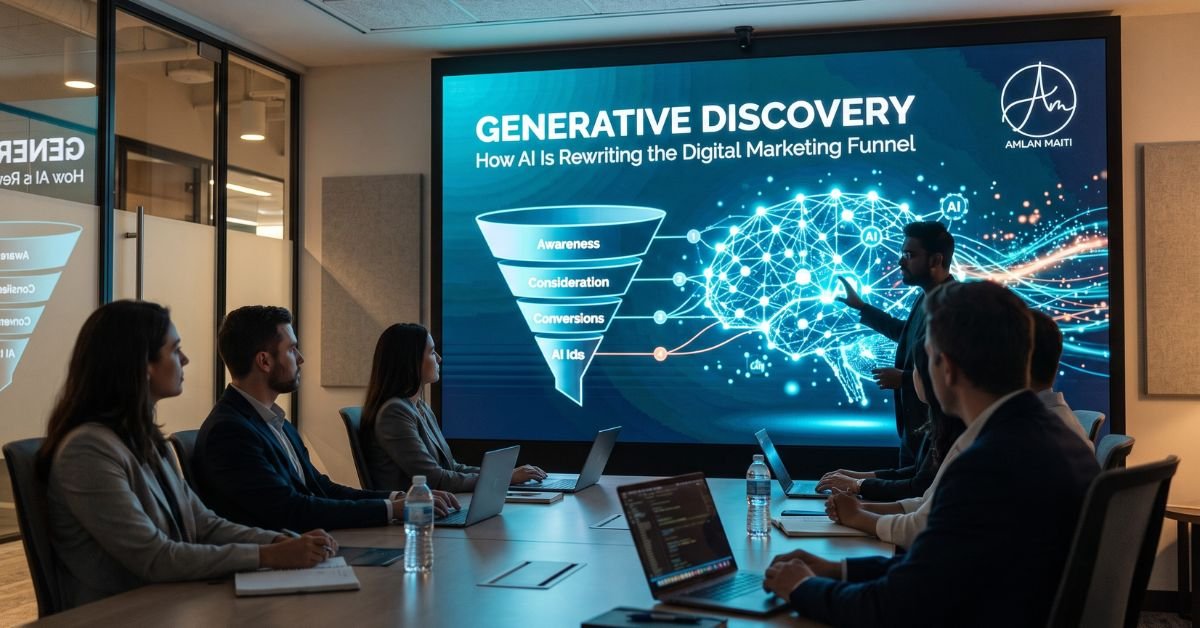
Digital marketing once followed a fairly predictable route: attract attention, generate interest, encourage consideration, and convert visitors into customers. Generative…

08 October 2026
From Keywords to Knowledge Graphs: The Evolution of Search Optimization
Search optimization once revolved around matching words: find the phrase people type, place it in the right places, and earn…

Get In Touch
Initiate your digital marketing journey by filling out this form.