



Recent Post
- Recommendation SEO: Optimizing Brands for AI-Powered Recommendations
- AI Marketing Agents vs Traditional Automation: What Changes for Businesses?
- Entity SEO: Why Context May Matter More Than Keywords in AI Search
- How AI Is Changing the Digital Marketing Funnel From Discovery to Conversion
- How AI Can Connect SEO, Paid Ads, CRO and Lead Generation
- How Multi-Agent AI Systems Could Reshape Performance Marketing
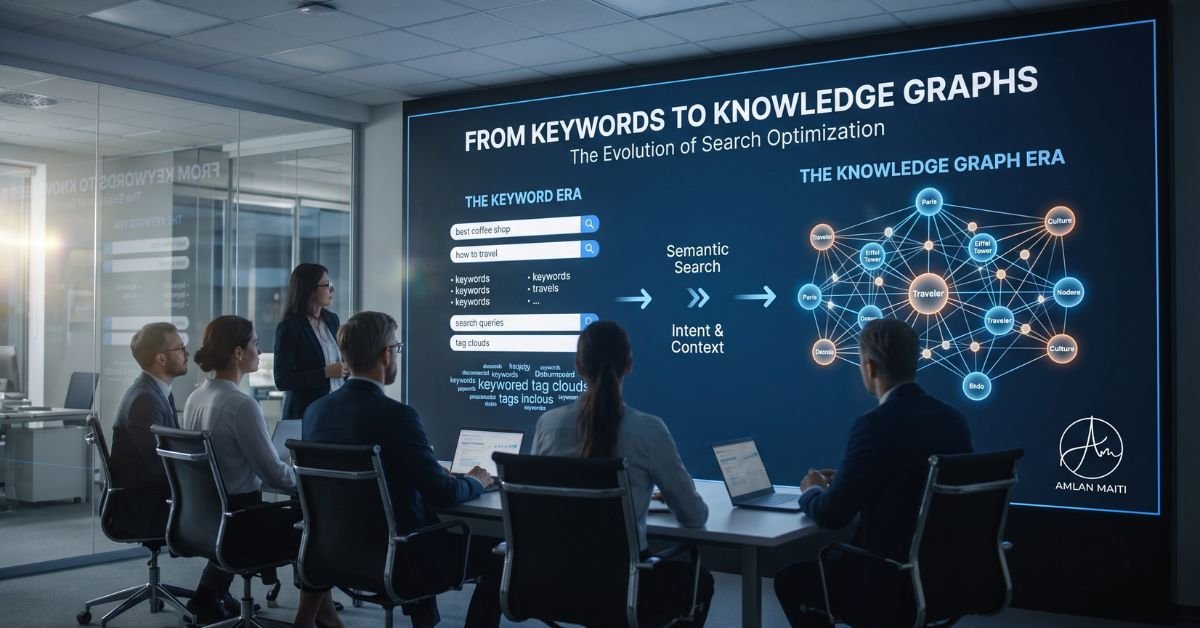
Search optimization once revolved around matching words: find the phrase people type, place it in the right places, and earn a ranking. That formula still has value, but search has become far more contextual. Today, engines increasingly try to understand people, places, products, organizations, and relationships—not simply strings of keywords.
For businesses preparing for that shift, working with an AI SEO Expert in Finland can mean thinking beyond keyword placement. The bigger goal is to make a brand understandable as an entity within a much wider web of information.
SEO Started With Words
Early search optimization was, in many ways, a vocabulary exercise. If a business sold running shoes, phrases such as “running shoes,” “buy running shoes,” and related variations were obvious targets.
That approach made sense when search engines were primarily matching text. But language is messy. Two people can describe the same need using completely different words.
Someone searching for “shoes for marathon training” may want the same product as someone asking for “long-distance running footwear.” A sophisticated search engine needs to recognize the connection.
This is where semantic SEO entered the picture. Instead of treating every phrase as an isolated target, search systems began getting better at understanding meaning, relationships, and intent.
From Keywords to Entities
An entity is essentially a distinct thing that can be identified and understood: a person, company, city, product, organization, landmark, or concept.
Consider Apple. The word itself can describe a fruit. In another context, it refers to the technology company. Context and relationships help a search engine determine which meaning applies.
Google’s Search Central documentation explains that structured data can help Google understand the content and entities represented on a page. That does not mean structured data guarantees rankings or inclusion in a particular search feature. It simply gives machines clearer information to work with.
This shift changed SEO from a pure keyword game into something closer to information architecture.
Knowledge Graphs Change the Question
A knowledge graph can be thought of as a giant network of connected facts and entities. Instead of seeing “Digital Piloto” as merely a phrase appearing on a page, a search system can potentially understand it as an organization associated with services, locations, people, websites, and other concepts.
Think of it like a city map. A keyword is a street name. A knowledge graph is the entire map—showing where the street sits, what connects to it, and what exists around it.
Google introduced its Knowledge Graph in 2012, describing it as a way to help Search move beyond matching strings toward understanding real-world entities and their relationships. Google’s original announcement provides the historical context for this major change in search technology.
What This Means for Modern SEO
The practical implication is straightforward: businesses should build a consistent and understandable digital identity.
- Define the entity: Clearly explain what the organization does, whom it serves, and which products or services it provides.
- Connect related concepts: Build useful topical relationships between services, expertise, locations, industries, and customer problems.
- Keep information consistent: Business names, descriptions, profiles, authorship, and other important facts should not contradict one another across the web.
- Demonstrate expertise: Publish genuinely useful material that establishes why the organization is relevant to a particular topic.
This is also where entity-based SEO becomes especially useful. Instead of asking only, “Which keyword should this page rank for?”, marketers can ask, “What should search engines understand about this page, brand, and subject?”
AI Search Makes the Shift More Important
The rise of AI-powered search adds another layer to the evolution. Generative systems need to retrieve and synthesize information before producing many answers. That makes clear entities, relationships, supporting evidence, and consistent information increasingly valuable.
Google’s current guidance on AI features in Search states that the same foundational SEO principles remain relevant for AI Overviews and AI Mode. There is no special “AI markup” that guarantees visibility.
That is an important reality check. Businesses do not need to abandon SEO and chase a mysterious new algorithm. They need to make their existing information more useful, trustworthy, structured, and comprehensible.
Practical steps for building entity authority
- Audit how your brand is described across your website, business profiles, directories, and industry publications.
- Create authoritative pages around your core topics rather than producing dozens of thin pages targeting tiny keyword variations.
- Use appropriate structured data where it genuinely describes the page.
- Develop author profiles and first-hand expertise signals where they add meaningful context.
The Real Evolution: From Matching to Understanding
The most interesting change in SEO is not that keywords have disappeared. They have not. Keywords still reveal what people are looking for and remain useful clues about demand.
What has changed is their role.
A keyword is increasingly the beginning of the conversation, not the whole conversation. Modern search optimization connects that phrase to intent, entities, context, expertise, and relationships. For marketers, that means the best SEO strategy may look less like writing for a search box and more like building a well-organized body of knowledge.
Frequently Asked Questions
What is a knowledge graph in SEO?
A knowledge graph is a structured network of entities and relationships that helps systems represent information about real-world things and how those things connect.
Are keywords still important for SEO?
Yes. Keywords remain useful for understanding search demand and user language. However, modern search optimization also considers intent, context, entities, topical relevance, and relationships.
What is entity-based SEO?
Entity-based SEO focuses on helping search engines understand distinct people, businesses, products, places, concepts, and their relationships rather than relying only on exact keyword matches.
Does structured data guarantee better rankings?
No. Structured data can help search engines interpret eligible content, but it does not guarantee higher rankings or inclusion in a particular search feature.
Final Thoughts
SEO has not really moved from keywords to knowledge graphs overnight. It has evolved step by step—from matching words, to understanding intent, to recognizing entities and relationships. The smartest strategy now is to build content that makes sense to both humans and machines. When your brand becomes easier to understand, it also becomes easier to discover, connect, and evaluate.
Blog Development Credits
Conceived by Amlan Maiti, with research and drafting supported by advanced AI tools, followed by final SEO refinement from Digital Piloto Private Limited.
Related Articles

07 October 2026
Recommendation SEO: Optimizing Brands for AI-Powered Recommendations
Search is becoming less about finding ten blue links and more about getting a useful recommendation. When AI suggests a…
06 October 2026
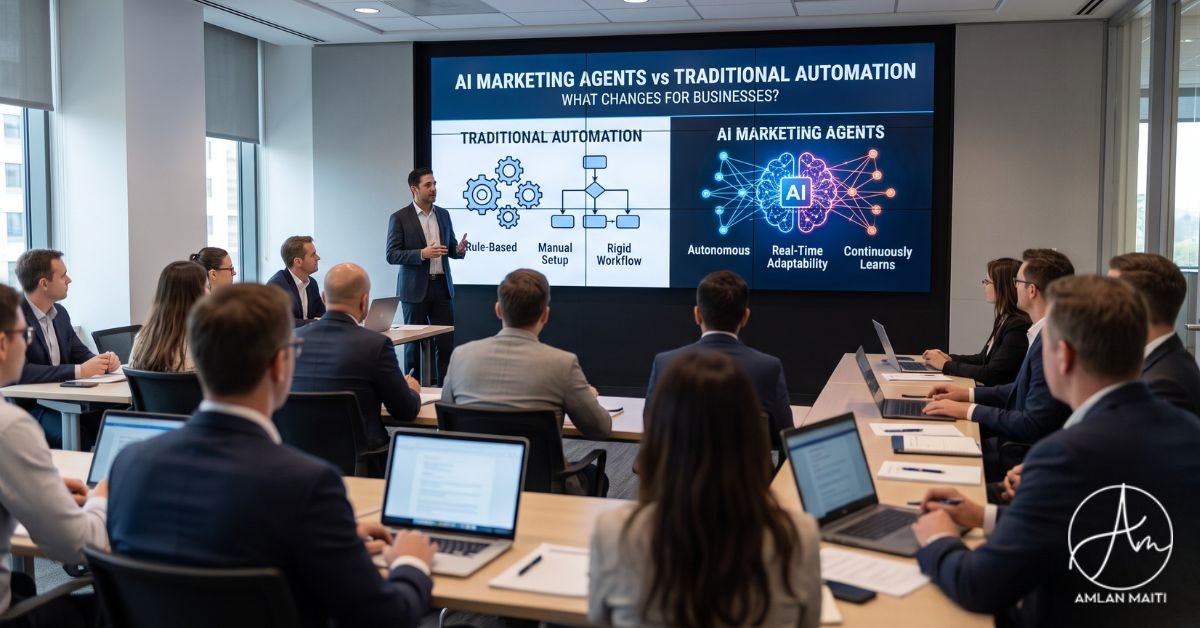
AI Marketing Agents vs Traditional Automation: What Changes for Businesses?
Traditional automation follows instructions. AI marketing agents can increasingly interpret situations, choose among possible actions, and adapt as circumstances change.…
05 October 2026
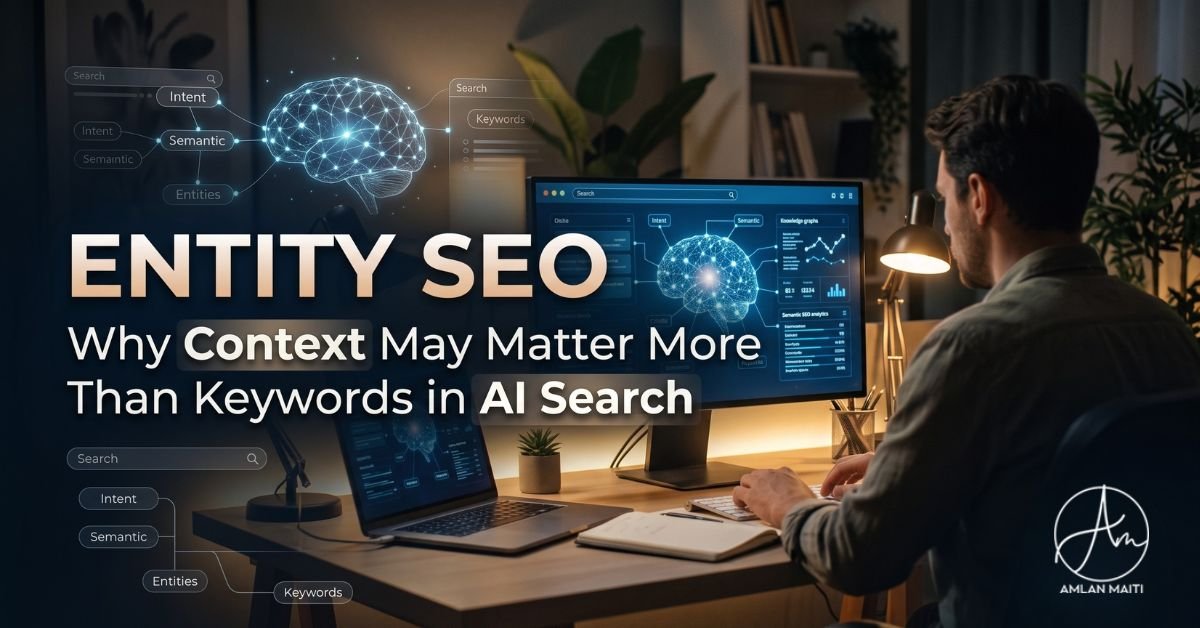
Entity SEO: Why Context May Matter More Than Keywords in AI Search
For years, SEO taught marketers to think in keywords. But AI search is changing the question. Instead of simply matching…

Get In Touch
Initiate your digital marketing journey by filling out this form.