



Recent Post
- How AI Can Connect Paid Search, Organic Search and Conversion Data
- The Future of Creative Testing in AI-Driven Performance Marketing
- Beyond Chatbots: Building Intelligent AI Agents for Business Growth
- How AI Search Interfaces Are Changing Consumer Decision-Making
- The Zero-Click Authority Model: Building Influence Without Depending on Traffic
- How AI Shopping Agents Will Change Product Discovery and Selection
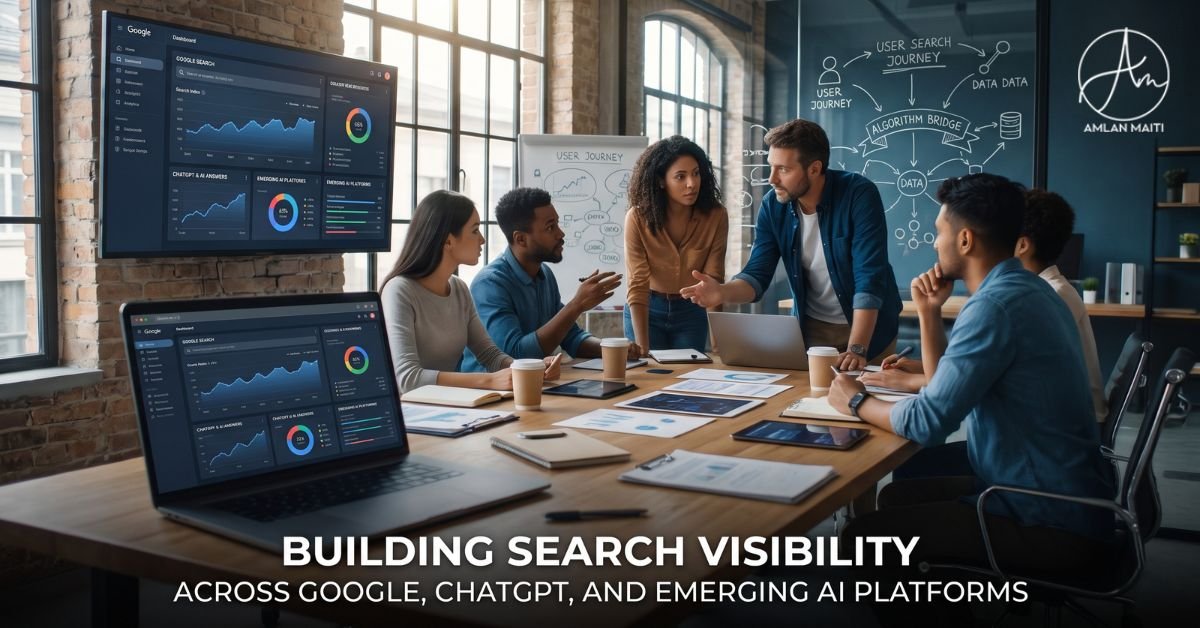
Search visibility used to mean earning a strong position on Google. Today, people discover businesses through traditional search results, ChatGPT conversations, AI-powered summaries and emerging answer platforms. A brand may be useful to a customer long before that customer visits its website. Businesses now need a strategy that makes them visible, understandable and credible across this expanding discovery landscape.
For companies seeking guidance from an AI SEO expert in Belgium, the challenge is no longer limited to improving keyword positions. It involves building a digital presence that search engines and AI systems can interpret, retrieve and reference when people ask relevant questions.
Search Is Becoming a Multi-Platform Experience
Think about how someone chooses a business today. They might begin with a Google search, ask ChatGPT to compare providers, check reviews on another platform and finally visit a company’s website. Each interaction contributes to the decision, even if only one platform generates the final click.
Google itself is evolving beyond conventional result pages. AI Overviews and AI Mode can organise information into generated responses, while still offering links for users who want to explore further. In June 2025, Google introduced AI Mode in India, reflecting the growing importance of conversational and multi-part searches.
ChatGPT Search has also brought web discovery into a conversational interface. Users can ask follow-up questions, explore current information and access links to relevant sources. Meanwhile, Microsoft’s Copilot and AI-powered Bing experiences provide additional routes through which online information can be discovered.
The implication is straightforward: businesses should not build their entire visibility strategy around one search interface. They need a connected approach that supports discovery across different platforms.
Google, ChatGPT and Emerging Platforms: Different Routes to Visibility
Google: The foundation of discoverability
Google remains an important starting point for people researching products, services and local businesses. Technical accessibility, relevant content, internal links, page experience and clear website structure continue to matter.
Its AI features also draw on established search foundations. Google’s guidance explains that pages need to meet ordinary Search eligibility requirements to appear as supporting links in AI Overviews or AI Mode. It does not prescribe a separate technical checklist or special schema specifically for these experiences.
ChatGPT: Visibility through useful information and references
ChatGPT introduces a different discovery behaviour. Instead of entering a short keyword, users may describe a business problem, explain their requirements and ask for suitable solutions. The system can search for relevant information and provide sources alongside its response.
That makes clarity especially valuable. A website should explain its services, expertise, location, processes and limitations in language that people can understand. Specific, verifiable information gives an AI-assisted search experience more useful material to work with.
However, appearing in ChatGPT responses is not guaranteed by adding a particular phrase or publishing a large number of articles. Retrieval, relevance, available sources and the wording of a user’s question can all affect the result.
Emerging AI platforms: A wider discovery ecosystem
Microsoft Copilot and other AI-assisted platforms are expanding the ways people interact with online information. Some focus on conversational research, others combine search with productivity tools or shopping experiences. Their interfaces and retrieval systems may differ, but they all need useful information to produce meaningful responses.
Businesses should therefore concentrate on durable foundations rather than chasing every new platform with a separate collection of optimisation tricks.
Build One Strong Digital Identity Across Platforms
Imagine a company whose website describes it as a specialist software developer, while its business profiles call it a general marketing agency. Its social accounts use another service description, and outdated directory listings show an old address. A potential customer may find the business, but understanding exactly what it offers becomes unnecessarily difficult.
Consistent brand information helps reduce this confusion. Businesses should maintain accurate details across their websites, professional profiles, relevant directories and other credible sources.
Important information includes:
- Business identity: Use consistent organisation names, descriptions, contact details and location information.
- Service clarity: Explain what each service includes, who it helps and which problems it addresses.
- Expertise signals: Publish meaningful author information, professional experience, relevant certifications and genuine project examples.
- Supporting references: Build a credible presence through relevant industry publications, professional associations and trustworthy third-party mentions.
This is closely connected to entity SEO. Search systems need to understand not just the words on a page, but also the relationships between businesses, people, services, products and topics. A recognisable digital identity makes those relationships easier to interpret.
Create Content That Answers More Than Keywords
Traditional keyword planning often begins with a phrase such as “digital marketing services” or “website development company”. These phrases remain useful, but conversational discovery frequently involves much richer questions.
A business owner might ask, “How can a manufacturing company generate qualified enquiries without increasing its advertising budget?” That question involves industry context, marketing methods, lead quality and commercial priorities.
A useful content strategy should address the wider decision behind the search. Rather than publishing several thin pages targeting minor keyword variations, create connected resources that genuinely help readers understand a subject.
Make information easy to extract and understand
Clear headings, descriptive subheadings, concise explanations and relevant examples help readers navigate content. They also make individual sections easier to interpret when systems retrieve information in response to specific questions.
For example, an article about ecommerce optimisation could explain mobile usability, checkout friction, product information, payment options and conversion measurement in separate sections. Each section should offer a complete explanation rather than relying on vague statements.
Consider these practical content priorities:
- Answer the main question early: Give readers a direct explanation before moving into supporting detail.
- Cover related questions: Address comparisons, practical limitations, costs or implementation considerations where relevant.
- Add original value: Include expert observations, genuine examples, useful data or first-hand experience instead of repeating common definitions.
- Keep information current: Review service descriptions, statistics, product details and references when circumstances change.
This is the foundation of generative engine optimisation (GEO): making useful information discoverable and suitable for consideration in AI-generated answers without sacrificing its value to human readers.
Technical SEO Still Supports AI Search Visibility
It is easy to assume that AI search requires an entirely new technical strategy. In practice, many established SEO fundamentals remain essential.
Search systems need to discover pages, access their content and interpret their structure. If important information is hidden behind inaccessible scripts, blocked crawling or confusing navigation, the website may struggle to perform across multiple discovery channels.
Businesses should pay attention to:
- Crawlability and indexing: Make important pages accessible to relevant search crawlers and check indexing issues regularly.
- Internal linking: Connect related service pages, guides and supporting resources through meaningful links.
- Structured data: Use appropriate schema markup when it accurately reflects visible page content.
- Mobile experience: Ensure pages are readable, responsive and reasonably fast across devices.
- Content accessibility: Present important information in readable text, supported by descriptive images, captions or transcripts where useful.
Microsoft’s Bing Webmaster Guidelines similarly explain that SEO fundamentals support discovery and eligibility across Bing and Copilot experiences. Clear, focused and verifiable content remains important.
Build Authority Beyond Your Own Website
A website is central to a brand’s digital presence, but it is not the only place where credibility develops. Customers may encounter a business through industry publications, professional profiles, customer reviews, partner websites and relevant community discussions.
These external references can help establish context around a business and its expertise. The objective should not be to collect as many mentions or backlinks as possible. A relevant, trustworthy reference is generally more meaningful than dozens of unrelated directory entries.
For example, a cybersecurity consultancy could strengthen its reputation by contributing expert commentary to a respected technology publication, publishing practical security guidance and maintaining accurate professional profiles. These activities create a more substantial information footprint than repeatedly publishing promotional claims on its own website.
Businesses should also avoid manufacturing reviews, buying irrelevant links or creating artificial mentions. Such shortcuts can damage credibility and do not provide a dependable route to AI citations or search performance.
Measure Visibility Across the New Search Landscape
Ranking positions and organic traffic remain important, but they do not describe the entire discovery journey. A brand might appear in an AI-generated answer without receiving a direct visit. Another might attract website traffic but fail to generate meaningful enquiries.
A broader measurement framework should include:
- Google performance: Monitor impressions, clicks, search queries and organic conversions through Search Console and analytics.
- AI references: Check whether relevant platforms cite or mention the business for important customer questions.
- Brand demand: Track branded searches, direct traffic and referral activity where measurable.
- Business outcomes: Evaluate qualified enquiries, sales conversations, assisted conversions and customer acquisition quality.
Microsoft’s AI Performance reporting in Bing Webmaster Tools provides visibility into pages cited in supported AI-generated answers, including Copilot and selected partner experiences. This is a useful development because it helps site owners observe citation activity rather than relying entirely on manual checks.
Still, a citation is not the same as a click, lead or sale. Businesses should connect visibility signals with measurable customer outcomes before deciding which activities deserve more investment.
Frequently Asked Questions
1. How can a business improve visibility across Google and ChatGPT?
Start with technically accessible pages, useful original content, consistent business information and credible external references. Explain services clearly and organise information around the questions customers actually ask. No method guarantees inclusion in AI-generated answers.
2. Is traditional SEO still important for AI platforms?
Yes. Search engines and AI-assisted discovery systems still depend on accessible, relevant and understandable information. Technical SEO, content quality, internal linking and a strong website structure remain valuable foundations.
3. What is the difference between SEO and GEO?
SEO focuses on improving a website’s discoverability in search engines. GEO focuses on making useful information more understandable and relevant for generative AI systems that produce answers and references. The two approaches overlap and work best together.
4. How often should businesses check their AI search visibility?
Businesses can review important conversational queries monthly or quarterly, depending on their market and publishing activity. Use consistent questions and record the platform, date and references observed, since AI responses can change over time.
Final Thoughts: Build Visibility, Not Dependence
Google, ChatGPT and emerging AI platforms are changing how people find and evaluate businesses. The strongest response is not to chase every new feature or search trend. It is to build a dependable digital presence through useful content, technical accessibility, consistent identity and genuine expertise. When a brand becomes a reliable source of information, it has a stronger foundation for being discovered wherever the next customer chooses to search.
Blog Development Credits
This article was conceptualised by Amlan Maiti, shaped through AI-assisted research and drafting, and refined with editorial and SEO enhancements by Digital Piloto Private Limited.
Related Articles

15 November 2026
How AI Can Connect Paid Search, Organic Search and Conversion Data
Paid search can bring immediate attention, organic search can build long-term discovery, and conversion data reveals what actually persuades people…

14 November 2026
The Future of Creative Testing in AI-Driven Performance Marketing
What if an advertising team could test dozens of creative ideas without spending weeks producing every variation? AI is making…

13 November 2026
Beyond Chatbots: Building Intelligent AI Agents for Business Growth
A chatbot can answer a customer’s question. But what if the system could also check stock, prepare a quotation, update…

Get In Touch
Initiate your digital marketing journey by filling out this form.