



Recent Post
- How AI Shopping Agents Will Change Product Discovery and Selection
- The Future of Voice Commerce in an AI-Connected World
- The AI Visibility Gap: Measuring the Distance Between Brand Presence and Recognition
- The Agentic Conversion Framework: Turning AI Discovery Into Business Revenue
- The Future of Search Behaviour in an Answer-Driven Internet
- From Human Navigation to Agent Navigation: Rethinking Website UX
What if your brand influenced a buying decision without receiving a single website visit? It may sound like a marketer’s missed opportunity, but it reflects a growing reality. People increasingly discover brands through AI summaries, featured snippets, social discussions and search recommendations. The challenge is no longer just attracting clicks; it is becoming a trusted answer.
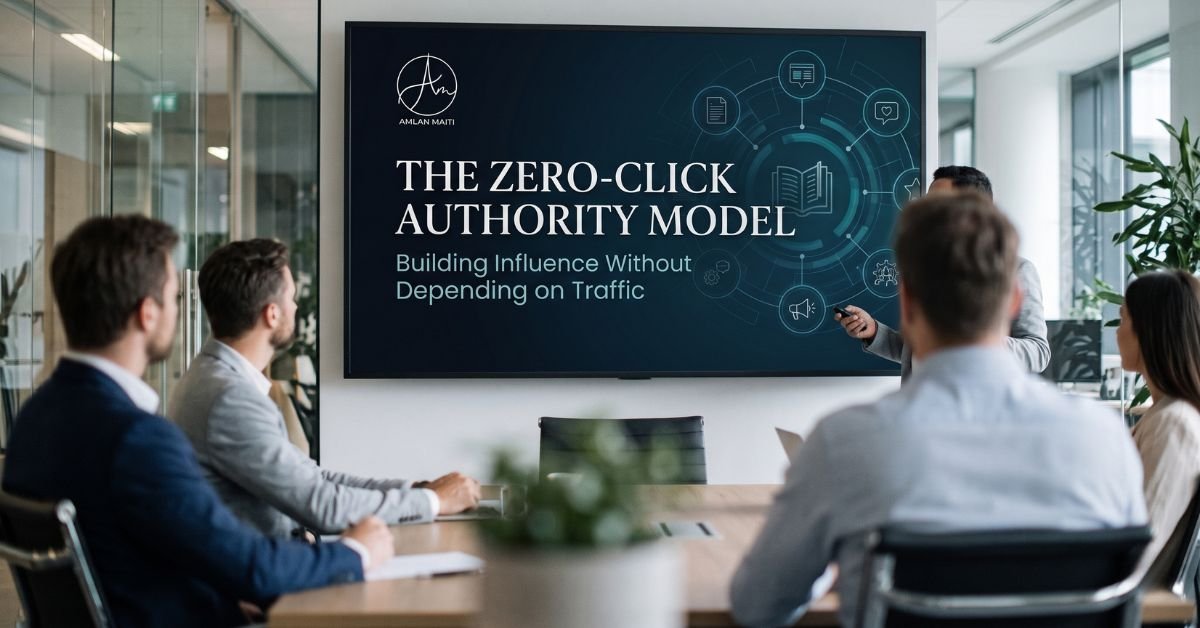
This shift calls for a different approach to digital visibility. An experienced AI SEO expert in Turkey can help businesses understand how search visibility, brand credibility and useful information work together when audiences do not necessarily visit the source website. This is the foundation of what can be called the zero-click authority model.
What Is the Zero-Click Authority Model?
The zero-click authority model is a marketing approach focused on building brand recognition, credibility and influence across digital platforms, even when users do not click through to a company’s website.
Think about a customer researching project management software. They might read a Google AI Overview, compare recommendations in an online community, watch a product demonstration and ask an AI assistant for a shortlist. They could form a strong opinion about three brands without visiting any of their websites.
That does not mean those businesses gained nothing. If one brand repeatedly appears in useful explanations, receives positive mentions and is associated with a particular solution, it may earn consideration before a direct website visit ever happens.
In other words, visibility creates familiarity, while consistent evidence builds trust. The objective is to make both work together.
Why Website Traffic No Longer Tells the Whole Story
Website traffic remains important. It helps businesses generate enquiries, sell products, understand user behaviour and measure campaign performance. However, it cannot independently describe the full influence of a brand.
Search behaviour is changing. According to a Pew Research Center analysis published in July 2025, users clicked a traditional search result in 8% of visits when an AI summary appeared, compared with 15% of visits without one. Clicks on links within the AI summaries themselves occurred in only 1% of visits. The research examined browsing activity from 900 US adults, so its findings should not automatically be treated as a global measurement.
Another useful perspective comes from SparkToro’s 2024 zero-click search study. Based on clickstream data supplied by Datos, it estimated that 58.5% of US Google searches and 59.7% of EU Google searches ended without a click.
These figures are not a reason to abandon SEO. They are a reminder that businesses need to measure more than visits. A brand can influence a decision during the research stage and receive the eventual enquiry through another channel, such as a direct search, referral or phone call.
How Brands Build Authority Without Chasing Clicks
1. Become a Reliable Source of Answers
People remember brands that explain complicated subjects clearly. Instead of publishing articles solely to target keywords, create content that addresses genuine customer questions. Explain processes, compare approaches, clarify technical terms and discuss common mistakes.
For example, a cybersecurity company could publish practical guidance on identifying phishing attempts, selecting security software and responding to data breaches. Even if readers do not visit its service pages immediately, the company can become associated with useful expertise.
2. Strengthen Your Brand’s Digital Footprint
Authority is rarely established through one website alone. Customers encounter businesses across search engines, industry publications, professional communities, review platforms, video channels and social networks.
Maintain consistent brand information across relevant platforms. Make sure company descriptions, services, leadership details and contact information are accurate. Seek meaningful industry mentions and contribute expert perspectives where your audience already spends time.
This broader presence supports brand visibility across search and helps audiences recognise the same business wherever they encounter it.
3. Make Content Easy for Search and AI Systems to Understand
Search engines and generative AI platforms need clear information to interpret what a business does and which subjects it understands. Useful content structure can make that interpretation easier.
Focus on practical improvements such as:
- Clear explanations: Define important concepts before exploring complex details.
- Specific headings: Organise content around real customer questions and subtopics.
- Verifiable information: Support factual claims with reliable sources and transparent evidence.
- Consistent entities: Keep brand names, service descriptions, author information and business details aligned.
- Useful structured data: Apply relevant schema markup accurately, without expecting it to guarantee AI citations.
This is part of a wider generative engine optimization strategy. The goal is not to manipulate an AI response, but to make the brand’s expertise understandable, accessible and credible.
Measuring Influence Beyond Website Visits
If traffic is no longer the only meaningful outcome, what should marketers monitor? The answer is a broader measurement framework that connects visibility with business performance.
Consider tracking these indicators:
- Brand search growth: Are more people searching for the company by name?
- AI visibility: Does the brand appear in relevant AI-generated recommendations and answers?
- Share of voice: How frequently is the business mentioned compared with competitors across relevant channels?
- Quality of references: Are credible publications, industry experts and communities discussing the brand?
- Assisted conversions: Do customers mention discovering the business through an AI answer, article or social discussion before enquiring?
These measurements need context. An increase in brand mentions does not automatically mean more sales, and AI platforms do not all provide complete visibility reporting. Combine available platform data with customer surveys, CRM records, referral analysis and conversion trends.
Common Mistakes Businesses Should Avoid
Moving beyond traffic does not mean replacing one vanity metric with another. Some businesses rush to publish large volumes of generic AI-generated content, hoping that more pages will create more visibility. Usually, this produces repetition rather than genuine expertise.
Other common mistakes include:
- Chasing mentions without checking whether the source is relevant or trustworthy.
- Using inconsistent company information across different platforms.
- Assuming that appearing in an AI answer guarantees customer confidence.
- Ignoring website experience, even though interested users may eventually visit and convert.
A strong zero-click strategy still needs a useful website, credible proof and a clear path to action. It simply recognises that the customer journey may begin and develop elsewhere.
FAQs
1. What does zero-click authority mean in digital marketing?
Zero-click authority means building brand recognition and trust through search results, AI answers, social platforms and third-party references, even when users do not visit the company’s website.
2. Is zero-click marketing replacing traditional SEO?
No. Traditional SEO remains valuable for discoverability, qualified traffic and conversions. Zero-click marketing expands the strategy by including brand influence and visibility across search experiences that may not generate a website visit.
3. How can businesses measure zero-click visibility?
Businesses can monitor brand mentions, branded search demand, AI platform appearances, third-party references, share of voice and assisted conversions. Combining these indicators gives a more complete picture than traffic alone.
4. Does appearing in AI-generated answers guarantee more sales?
No. AI visibility can introduce a brand or strengthen familiarity, but sales still depend on customer needs, trust, pricing, product quality and the overall buying experience.
Final Thoughts
The future of digital authority will not be measured by clicks alone. Businesses must earn a place in the conversations, answers and recommendations that shape customer decisions. That means sharing useful knowledge, building credible digital references and maintaining a consistent identity across platforms. Traffic still matters, but influence begins long before someone opens a website.
Blog Development Credits
Conceptualised by Amlan Maiti, this article was researched and refined with AI-assisted tools, then optimised by Digital Piloto Private Limited.
Related Articles
10 November 2026
How AI Shopping Agents Will Change Product Discovery and Selection
Imagine finding the perfect product without opening ten browser tabs, comparing endless specifications or reading dozens of reviews. You simply…
05 September 2026
Unlocking Growth: AI SEO Consulting Case Studies and Insights
In the fast-evolving landscape of digital marketing, AI SEO consulting has emerged as a game-changer for businesses looking to enhance…

04 September 2026
Navigating the Future of AI Marketing Strategy
The future of AI marketing strategy is rapidly evolving, driven by advancements in technology and changing consumer behaviors. As businesses…

Get In Touch
Initiate your digital marketing journey by filling out this form.