



Recent Post
- The Future of Search Behaviour in an Answer-Driven Internet
- From Human Navigation to Agent Navigation: Rethinking Website UX
- The Brand Intelligence Graph: Connecting Reputation, Relevance and Recognition
- Redefining Search Optimization Through Keywords, Entities, and Knowledge Graphs
- The Shift to AI-Driven Discovery and Its Impact on Marketing Funnels
- Enterprise Technology Evolution: Strategies for Business Expansion
Customers are no longer following a predictable path from Google search to website visit to purchase. They ask AI tools for recommendations, compare options through conversational interfaces, and increasingly expect technology to do the groundwork for them. Businesses now face a bigger challenge: turning these AI-driven discovery moments into genuine customer relationships and measurable revenue.
This shift calls for more than traditional SEO or another automated sales funnel. Businesses need a connected approach that makes their brand discoverable, builds confidence, responds to buying signals, and removes friction at the right moment. An experienced AI SEO expert in Thailand can help businesses understand how search visibility, AI recommendations, and conversion strategy fit together in this changing environment.
Why AI Discovery Is Changing the Conversion Journey
Traditional digital marketing often assumes that customers discover a business through a keyword, click a result, visit a landing page, and eventually make a purchase. That journey still exists, but it is no longer the only route to a buying decision.
Imagine someone looking for accounting software. Instead of opening ten search results, the person may ask an AI assistant to compare platforms based on pricing, integrations, business size, and ease of use. The assistant can narrow the options before the customer visits a single vendor website.
In this situation, the first meaningful interaction with a brand may happen inside an AI-generated recommendation rather than on its homepage. The business that appears relevant, credible, and useful during that conversation has an advantage.
Research is beginning to reflect this change. McKinsey’s October 2026 analysis of consumer behaviour across 11 markets found that 53% of surveyed consumers had used AI for shopping in the previous three months. Its research also indicated that AI search tools were becoming influential in product research and purchasing decisions.
These findings do not mean every business should expect immediate sales from AI platforms. They do suggest that discovery is expanding beyond conventional search, making it important to connect AI visibility with the rest of the customer journey.
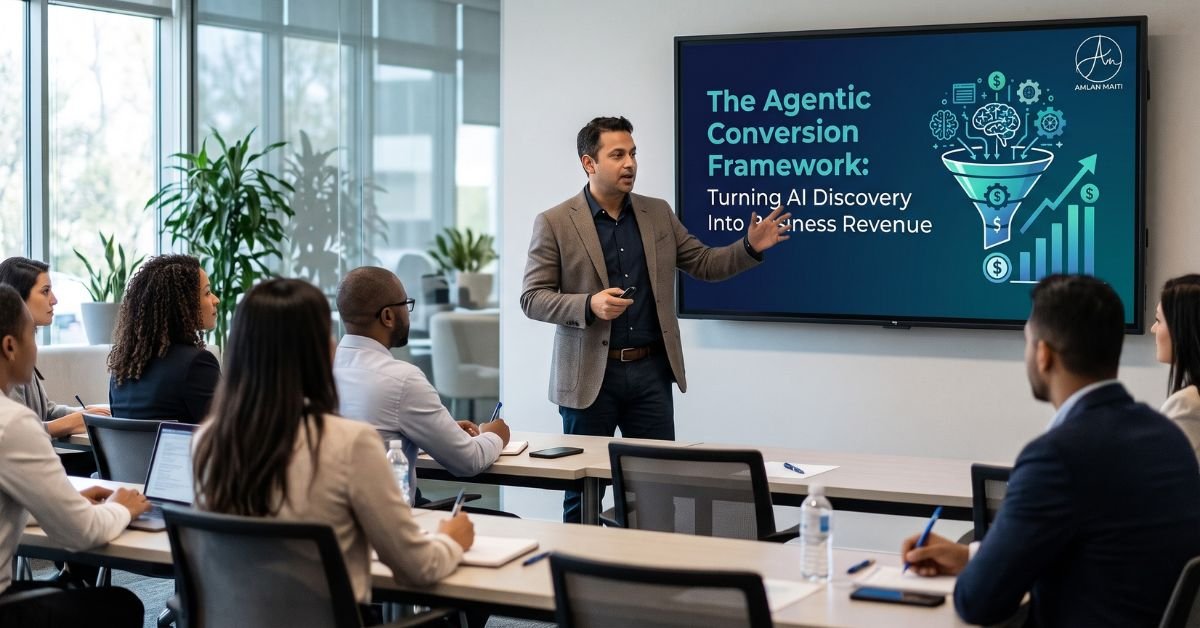
What Is the Agentic Conversion Framework?
The Agentic Conversion Framework is a business approach that connects AI-powered discovery with intelligent customer engagement and revenue generation. It uses data, automation, AI agents, and human decision-making to guide potential customers from initial interest towards an appropriate business outcome.
Think of it as a sales team that can listen, research, organise information, recognise intent, and complete routine tasks without requiring a person to manage every small step. However, the objective is not to remove human involvement. It is to make each interaction more relevant and timely.
A practical framework can be organised into five connected stages:
- Discover: Make the business visible across search engines, AI assistants, recommendation platforms, and relevant digital channels.
- Understand: Interpret the customer’s question, context, preferences, and likely buying intent.
- Engage: Deliver useful information, personalised recommendations, and relevant next steps.
- Convert: Reduce friction in enquiries, bookings, demonstrations, subscriptions, or purchases.
- Optimise: Analyse outcomes and improve the customer journey using performance data and feedback.
Each stage feeds the next. Discovery without engagement creates attention but little commercial value. Engagement without a clear conversion route can leave interested prospects uncertain about what to do. The framework connects these activities instead of treating them as separate marketing projects.
Stage One: Build Visibility Where Decisions Begin
AI discovery depends on more than ranking for a handful of popular keywords. A brand needs a clear digital identity and useful information that search systems and AI tools can interpret.
That means publishing content that answers real customer questions, maintaining consistent business information, developing relevant topical authority, and explaining products or services with enough detail to support informed recommendations.
Make business information easy to understand
Consider a software company offering inventory management solutions. A vague homepage describing it as an innovative technology provider does not tell a potential buyer much. Clear explanations of supported industries, integrations, pricing models, features, and business use cases provide stronger context.
Structured product information, descriptive service pages, credible third-party references, and consistent brand details can also help reduce ambiguity. This is where search engine optimisation and Generative Engine Optimisation (GEO) work together.
Businesses should pay attention to:
- Clear service and product descriptions that explain practical benefits.
- Frequently asked questions based on genuine customer concerns.
- Consistent company details across relevant digital platforms.
- Evidence of expertise, such as original research, useful case studies, and transparent credentials.
- Technically accessible pages with meaningful headings and structured information.
The goal is simple: when a potential customer asks an AI system for a suitable solution, the business should have a credible and understandable digital footprint.
Stage Two: Recognise Intent Instead of Chasing Every Lead
Not every visitor is ready to buy. Someone reading an introductory article may simply be exploring an unfamiliar topic, while another visitor comparing implementation costs could be much closer to making a decision.
An effective AI-powered conversion strategy recognises these differences. It looks beyond page views and basic demographic information to understand what a person is trying to accomplish.
Use behavioural signals intelligently
For example, repeated visits to a pricing page, downloads of a product comparison guide, and questions about integration may indicate stronger commercial interest than a single visit to a blog post.
An AI agent can help organise these signals, classify enquiries, and suggest suitable next steps. A visitor researching a product might receive a detailed comparison guide, while a high-intent prospect could be offered a product demonstration or consultation.
However, behavioural data should be used responsibly. Businesses need appropriate consent, transparent data practices, and sensible limits on automated personalisation. The objective is to make the experience more helpful, not to make customers feel monitored.
Stage Three: Turn Engagement Into Useful Conversations
Once a prospect shows interest, the business needs to respond with something more meaningful than a generic welcome message. This is where conversational AI, intelligent chat systems, and agentic workflows can make a difference.
Instead of displaying the same promotional offer to every visitor, an AI assistant can answer relevant questions, explain service options, collect basic requirements, and direct the person towards the right resource.
Imagine a business owner visiting a website to explore digital marketing services. The assistant could ask whether the immediate priority is lead generation, local visibility, ecommerce growth, or improving website conversions. Based on the response, it could present relevant information or arrange a conversation with the appropriate team member.
Good engagement should follow a few practical principles:
- Answer the question before pushing a sales message.
- Use customer context to make recommendations more relevant.
- Make it easy to reach a human representative when necessary.
- Clearly identify AI-assisted interactions where appropriate.
- Avoid promising outcomes that the business cannot guarantee.
Trust matters here. Salesforce’s State of the AI Connected Customer research reports that 72% of customers consider it important to know whether they are communicating with an AI agent. The finding highlights a straightforward lesson: automation works better when customers understand what is happening.
Stage Four: Remove the Obstacles Between Interest and Purchase
A prospect can be genuinely interested and still abandon the journey. Perhaps the enquiry form asks too many questions. Maybe the product information is incomplete, the checkout process is confusing, or nobody responds quickly enough to a request for a quotation.
These small obstacles can quietly weaken conversion performance.
Agentic workflows can help by connecting different business systems and handling routine actions. Depending on the permissions and technology involved, an AI agent might qualify a lead, check appointment availability, prepare a quotation draft, update a CRM record, or send a relevant follow-up.
Keep important decisions under control
Not every task should be fully automated. An agent may prepare a proposal, but a salesperson should review unusual pricing or contractual terms. A system can recommend a product, but customers should retain control over significant purchasing decisions.
A sensible division of responsibility looks like this:
- AI handles: Routine questions, information retrieval, lead categorisation, reminders, and workflow coordination.
- People handle: Complex negotiations, sensitive customer concerns, exceptions, and high-impact commercial decisions.
- Connected systems support both: CRM platforms, inventory databases, analytics tools, payment systems, and customer service software.
This combination can shorten response times while preserving the judgement and accountability that customers expect from a business.
Stage Five: Measure Revenue, Not Just AI Visibility
One of the biggest mistakes businesses can make is treating AI mentions, chatbot conversations, or website traffic as proof of commercial success. These metrics can provide useful context, but they do not automatically demonstrate revenue growth.
The Agentic Conversion Framework needs a measurement system that follows the customer journey from discovery to business outcome.
Useful performance indicators include:
- AI discovery visibility: How frequently the brand appears in relevant AI-generated answers and recommendations.
- Qualified enquiry rate: The percentage of incoming enquiries that match the business’s target customer profile.
- Lead-to-sale conversion: How effectively qualified prospects become paying customers.
- Time to response: How quickly the business responds to customer questions and requests.
- Customer acquisition cost: The total cost of acquiring a new customer through the relevant channels.
- Revenue influenced by AI: Sales associated with AI-assisted discovery, engagement, or conversion journeys.
Businesses should also compare AI-assisted journeys with other acquisition channels. Google explains that traffic from its AI search features is included in Search Console’s overall web performance reporting. Companies can combine this information with analytics and conversion tracking to understand what happens after a visitor arrives.
That distinction is important. A business does not need more automation for its own sake. It needs a better understanding of which activities contribute to qualified opportunities, customer satisfaction, and profitable growth.
Common Mistakes That Weaken Agentic Conversion
Adopting AI agents without a clear commercial strategy can create more complexity rather than less. Businesses should avoid several common mistakes:
- Automating a broken process: AI cannot reliably fix unclear pricing, poor service information, or a confusing checkout journey on its own.
- Chasing every AI platform: Focus on the discovery channels and customer behaviours that matter to the target market.
- Ignoring data quality: Outdated product details, inconsistent prices, and incomplete CRM records can lead to poor recommendations.
- Removing human support: Customers need an accessible route to a real person when a situation becomes complicated.
- Measuring activity instead of outcomes: More automated conversations do not necessarily mean more qualified sales.
Start with one customer journey that has a visible commercial problem. Improve that process, measure the result, and expand only when the evidence supports doing so.
Frequently Asked Questions
1. What is an Agentic Conversion Framework?
It is a structured approach that connects AI-powered discovery, customer intent analysis, personalised engagement, automated workflows, and conversion measurement to help businesses turn interest into revenue.
2. How is agentic AI different from traditional marketing automation?
Traditional automation generally follows predefined rules and triggers. Agentic AI can interpret context, work through multiple steps, use connected tools, and adapt its actions within defined permissions and business guidelines.
3. Can small businesses use agentic conversion strategies?
Yes. Smaller businesses can begin with focused applications such as AI-assisted enquiry handling, lead qualification, appointment scheduling, and personalised follow-ups. A large enterprise platform is not always necessary.
4. How can businesses measure revenue from AI discovery?
They can track AI-related referral traffic where available, qualified enquiries, assisted conversions, lead-to-sale rates, acquisition costs, and revenue associated with AI-supported customer journeys. Clear attribution rules are essential.
Final Thoughts: Make Every Discovery Moment Count
AI discovery is changing how customers find information, compare businesses, and make decisions. But visibility alone is not a revenue strategy. Businesses need to connect discovery with useful conversations, reliable information, smooth transactions, and measurable outcomes.
The Agentic Conversion Framework offers a practical way to make that connection. Start with customer intent, automate the tasks that genuinely reduce friction, and keep people involved where judgement matters. The strongest results will come not from using the most AI, but from using it to make the buying experience better.
Blog Development Credits
Conceived by Amlan Maiti, this article combines AI-supported research and editorial development, with final search optimisation refined by Digital Piloto Private Limited.
Related Articles
06 November 2026
The Future of Search Behaviour in an Answer-Driven Internet
Remember when finding something online meant opening several websites, comparing information, and piecing together an answer yourself? That habit is…
05 November 2026
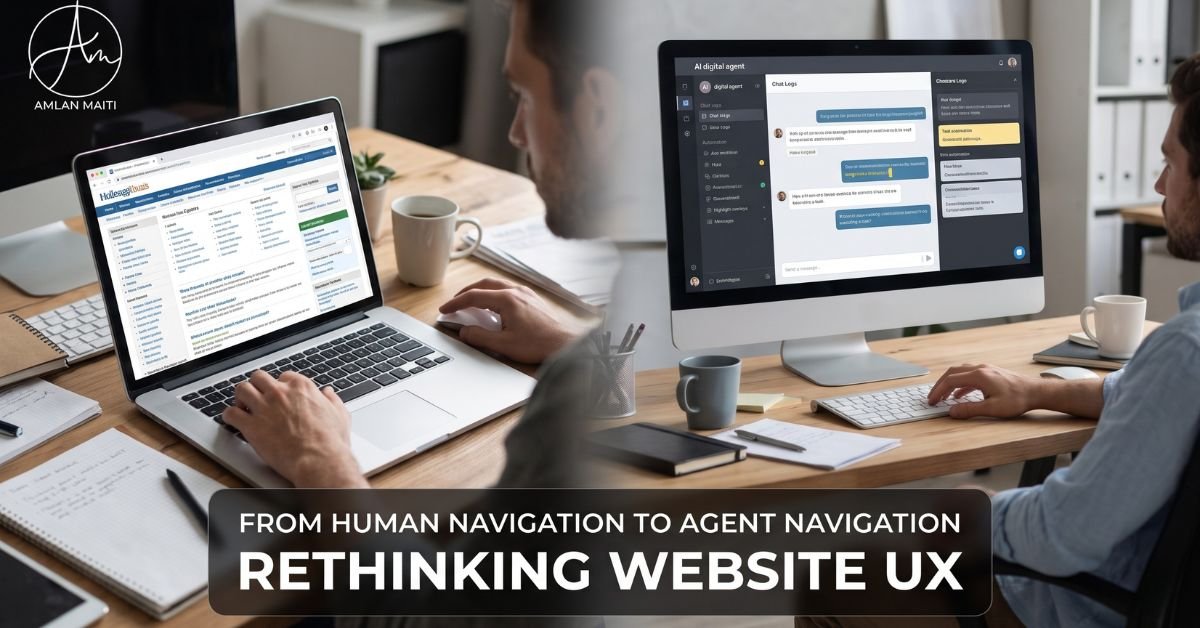
From Human Navigation to Agent Navigation: Rethinking Website UX
Websites were traditionally designed around a simple assumption: a human visitor arrives, explores the pages, clicks a few buttons, and…
04 November 2026
The Brand Intelligence Graph: Connecting Reputation, Relevance and Recognition
What makes a brand memorable in an increasingly crowded digital marketplace? It is no longer just an attractive identity, a…

Get In Touch
Initiate your digital marketing journey by filling out this form.