




Recent Post
- Redefining Search Optimization Through Keywords, Entities, and Knowledge Graphs
- The Shift to AI-Driven Discovery and Its Impact on Marketing Funnels
- How to Monitor Brand Mentions in AI-Generated Answers
- Enhancing Marketing ROI Through Intelligent Customer Segmentation
- The Impact of AI Agents on B2B Prospecting and Lead Generation
- The Evolution of Business Automation: From Workflows to AI Agents
Business expansion brings opportunity, but it also exposes weaknesses that may have remained hidden when an organisation was smaller. Systems become overloaded, teams struggle to share information, and customer expectations grow more demanding. Enterprise technology evolution helps businesses prepare for this change by building connected, adaptable systems that support growth without making everyday operations unnecessarily complicated.
Technology now influences nearly every stage of business expansion, from entering new markets to improving customer experiences and managing larger operations. Businesses exploring this shift may also consider specialist support, such as an AI SEO expert in Sweden, to strengthen their digital visibility as they reach new audiences. The broader objective is to ensure that technology, people, and business strategy develop together.
Why Enterprise Technology Must Evolve
A system that works perfectly for a company with twenty employees may become a serious limitation when the workforce grows to several hundred. The same applies to customer databases, financial software, communication tools, and operational processes.
Traditional technology environments often develop gradually. One department adopts a new application, another builds a spreadsheet-based workaround, and a third continues using an older platform. Over time, the organisation ends up with several disconnected systems.
Enterprise technology evolution is about moving beyond this patchwork. It involves reviewing existing infrastructure, identifying operational gaps, and introducing solutions that can support changing business requirements.
For expanding businesses, the benefits can include:
- Greater scalability: Systems can accommodate more users, transactions, locations, and customers.
- Better information flow: Connected applications reduce duplicate data entry and departmental silos.
- Improved decision-making: Reliable analytics help managers understand performance and identify emerging opportunities.
- Operational consistency: Standardised workflows make it easier to maintain service quality across teams and regions.
Key Technology Strategies for Business Expansion
1. Move towards scalable cloud infrastructure
Expanding a business often means handling unpredictable changes in demand. A retailer may experience seasonal traffic increases, while a service company may suddenly need to support customers across several countries.
Cloud computing offers flexibility by allowing organisations to access computing resources without building every infrastructure component themselves. Depending on the chosen architecture, businesses can scale capacity, support remote teams, and deploy applications across different environments.
However, moving everything to the cloud is not automatically the right decision. Enterprises should assess application compatibility, security requirements, operating costs, data residency, and performance before selecting a cloud strategy. Some organisations may benefit from a hybrid environment that combines cloud services with existing infrastructure.
2. Connect enterprise applications and business data
Growth becomes difficult when departments cannot access the information they need. Sales teams may not know whether products are available, finance may receive incomplete order details, and customer support may lack visibility into previous interactions.
Application integration helps solve this problem. APIs and integration platforms can connect systems such as enterprise resource planning (ERP), customer relationship management (CRM), inventory management, and accounting software.
Imagine a business receiving an online order. In a connected environment, the order can update inventory, trigger fulfilment activities, and pass relevant information to finance without employees repeatedly entering the same details.
Good integration is not simply about connecting every application. It is about deciding which information should move, who should access it, and how accuracy will be maintained.
3. Use AI and automation to improve productivity
Artificial intelligence is changing how enterprises handle information and routine work. AI-powered systems can classify documents, summarise reports, identify unusual patterns, support forecasting, and assist employees with internal knowledge searches.
Automation can also reduce repetitive activities such as invoice processing, approval routing, data extraction, and customer enquiry management. When these tools are implemented thoughtfully, employees can devote more attention to complex decisions and customer relationships.
Consider a logistics company expanding into new regions. Predictive analytics could help it understand demand patterns, while automated workflows coordinate routine shipment updates. Human teams would still handle exceptions, but they would have better information and fewer repetitive tasks.
Businesses should begin with clearly defined use cases and measure whether the technology actually improves efficiency. AI adoption without reliable data, suitable controls, or employee training can create more problems than it solves.
4. Strengthen cybersecurity as operations grow
Expansion increases the number of users, devices, applications, partners, and locations that connect to business systems. Each new connection needs appropriate protection.
Cybersecurity should therefore be part of the expansion strategy from the beginning. Enterprises should establish access controls, multi-factor authentication, regular software updates, data backups, employee awareness programmes, and incident response procedures.
A useful starting point is the NIST Cybersecurity Framework, which offers guidance for understanding and managing cybersecurity risks. Businesses should adapt their security practices to their industry, regulatory obligations, and the sensitivity of their information.
Build Technology Around Customer and Market Needs
Technology investment should not be driven entirely by internal efficiency. Business expansion also depends on reaching new customers and delivering consistent experiences as the organisation grows.
A customer entering a new market may discover a company through search, visit its website, compare its services, and contact the sales team. If the website provides outdated information or the enquiry process is disconnected from customer management systems, the opportunity can be lost.
Enterprises should consider how their digital platforms support the complete customer journey. This includes mobile-friendly websites, reliable ecommerce systems, personalised communication, accessible support, and accurate information across channels.
For companies expanding internationally, local market requirements also matter. Language, payment preferences, data regulations, delivery expectations, and search behaviour can differ considerably between regions. A scalable technology platform should allow these differences without requiring an entirely separate operating model for every market.
Creating a Practical Enterprise Technology Roadmap
Large technology projects can become expensive when organisations attempt too much at once. A phased roadmap provides a clearer way to manage investment and reduce disruption.
- Review the current environment: Document existing applications, infrastructure, data sources, security practices, and process bottlenecks.
- Set expansion priorities: Identify whether the immediate need is greater capacity, market access, faster operations, improved customer experience, or stronger security.
- Evaluate suitable solutions: Compare technology options based on integration, scalability, total cost, support, and long-term flexibility.
- Test through a pilot: Introduce the solution in a controlled area, collect feedback, and resolve issues before wider deployment.
- Train teams and establish ownership: Make sure employees understand new processes and know who is responsible for maintaining each system.
- Monitor results: Review performance regularly and adjust the technology roadmap as business needs change.
It is also important to involve people from different departments. IT teams understand technical requirements, but finance, operations, sales, and customer service teams understand how systems affect daily work. Their input can reveal problems that may not appear during a technical assessment.
Common Mistakes That Can Slow Business Expansion
Even organisations with substantial technology budgets can struggle if their approach is not grounded in business needs. A few recurring mistakes deserve attention:
- Buying tools without a clear purpose: New software should solve an identified problem, not simply add another platform to manage.
- Ignoring existing systems: Poor integration can leave employees working across disconnected applications.
- Underestimating training: Employees need time and guidance to adopt new workflows confidently.
- Overlooking long-term costs: Subscription fees, maintenance, integration, security, and support all affect the total investment.
- Failing to measure outcomes: Technology deployment is not proof of business improvement.
Another common issue is treating digital transformation as a project with a fixed finish line. Markets, customer expectations, and technology continue to change. Enterprises need an approach that supports regular evaluation and improvement.
Measuring the Impact of Technology Evolution
Technology should contribute to outcomes that matter to the business. Before implementing a new platform or process, establish a baseline so that improvements can be assessed fairly.
Useful performance indicators may include:
- Time required to complete key business processes.
- Cost per transaction or customer interaction.
- System uptime and application response times.
- Customer satisfaction and service resolution rates.
- Data accuracy and reduction in manual errors.
- Employee adoption and productivity.
- Revenue generated from new markets or digital channels.
For example, if an enterprise introduces an integrated CRM platform, it could measure whether sales teams respond to enquiries faster and whether customer records become more complete. These results provide a clearer picture than simply counting the number of employees who received access.
Frequently Asked Questions
1. What is enterprise technology evolution?
Enterprise technology evolution is the ongoing process of improving an organisation’s technology infrastructure, applications, data systems, and workflows so they can support changing business needs, operational efficiency, and long-term growth.
2. Which technologies support business expansion?
Cloud computing, AI, automation, enterprise resource planning systems, customer relationship management platforms, data analytics, APIs, and cybersecurity solutions can all support expansion. The right combination depends on the organisation’s size, industry, and strategic priorities.
3. Why is application integration important for growing businesses?
Application integration allows different business systems to share relevant information. It can reduce duplicate data entry, improve coordination between departments, support faster decisions, and create more consistent customer experiences.
4. How can enterprises reduce the risks of technology upgrades?
Enterprises can reduce risk by assessing existing systems, defining clear objectives, reviewing security requirements, testing solutions through pilot projects, training employees, and monitoring performance after implementation.
Final Thoughts
Business expansion requires more than additional employees, customers, or locations. It needs technology that can keep pace with growing complexity while remaining secure, useful, and adaptable. Enterprises that invest in connected systems, practical automation, reliable data, and continuous improvement can create a stronger foundation for sustainable growth.
Blog Development Credits
This article was conceptualised by Amlan Maiti, researched and developed with AI-assisted writing, then refined through editorial review and SEO enhancements by Digital Piloto Private Limited.
Related Articles

03 November 2026
Redefining Search Optimization Through Keywords, Entities, and Knowledge Graphs
Search optimization is no longer just about finding the right keywords and placing them strategically across a website. Search engines…
02 November 2026
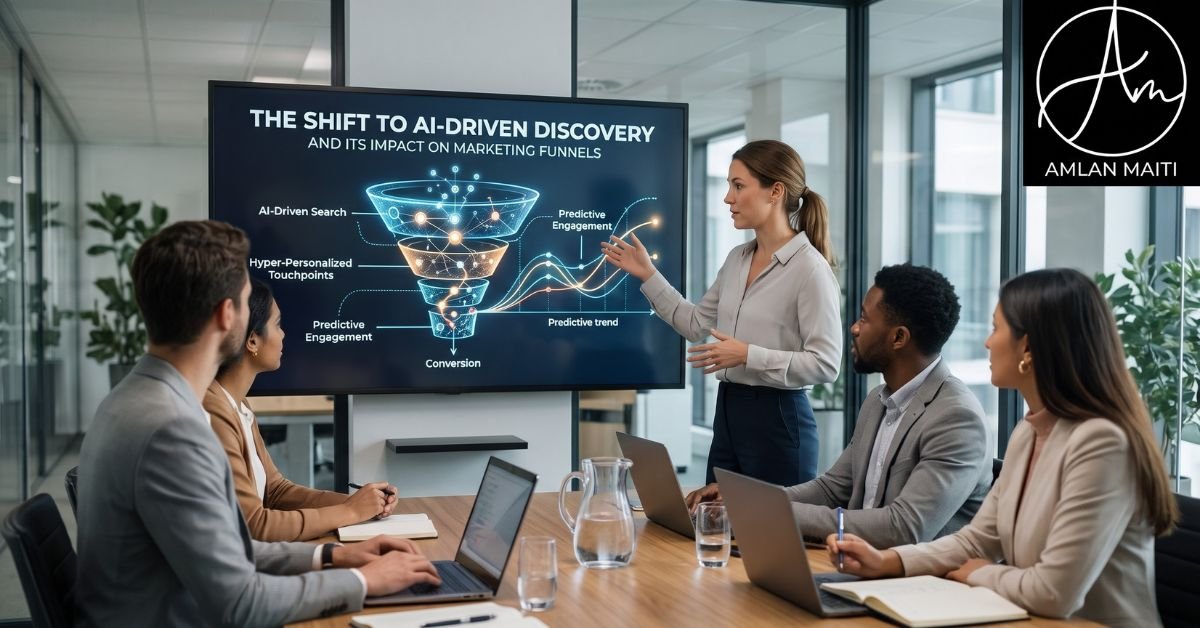
The Shift to AI-Driven Discovery and Its Impact on Marketing Funnels
For years, marketing funnels followed a familiar route: attract visitors, generate interest, nurture leads, and convert prospects into customers. But…

31 October 2026
How to Monitor Brand Mentions in AI-Generated Answers
When someone asks an AI assistant to recommend a reliable company, compare products, or explain an industry, does your brand…

Get In Touch
Initiate your digital marketing journey by filling out this form.