



Recent Post
- Enhancing Marketing ROI Through Intelligent Customer Segmentation
- The Impact of AI Agents on B2B Prospecting and Lead Generation
- The Evolution of Business Automation: From Workflows to AI Agents
- Transforming SaaS with Structured Data and Intelligent Systems
- Adapting to AI Search: Publisher KPIs That Matter in 2027
- Quantum SEO Strategies to Improve AI Answer Inclusion in 2027
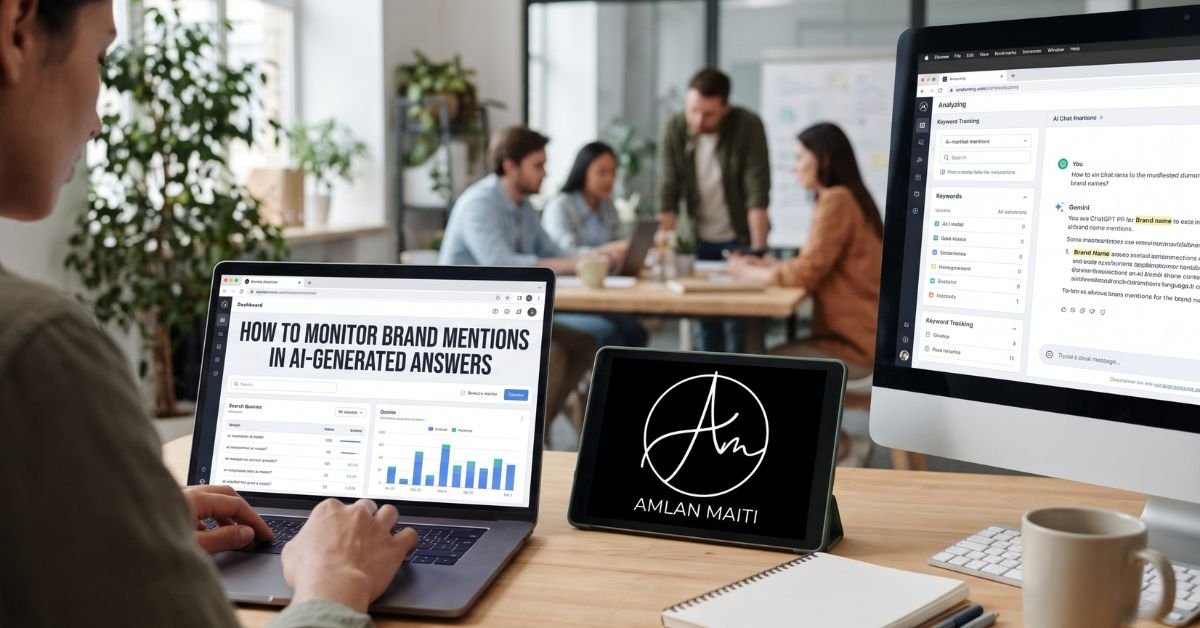
When someone asks an AI assistant to recommend a reliable company, compare products, or explain an industry, does your brand appear in the response? That question is becoming increasingly important. As customers discover businesses through AI-generated answers, monitoring brand mentions is no longer optional curiosity; it is an emerging part of digital visibility management.
Traditional brand monitoring focused on search results, news coverage, social media conversations, and online reviews. Now, businesses also need to understand how AI platforms describe them, when they recommend their products, and which competitors appear instead. Whether you’re improving international visibility with an AI SEO expert in Indonesia or strengthening your presence in a local market, tracking AI brand mentions can reveal how customers encounter your business beyond conventional search results.
Why AI-Generated Brand Mentions Matter
AI-powered search experiences are changing the way people research products and services. Instead of opening several websites, a user may ask an AI assistant to compare providers and summarise the strongest options. The response can mention brands, describe their services, or cite external sources.
This creates a different visibility challenge. A company may rank well in traditional search results but rarely appear in AI-generated recommendations. Another business with a smaller search presence might be referenced because its information is particularly relevant to a specific question.
Brand mentions matter because they can influence awareness, trust, and consideration. However, a mention is not automatically an endorsement or a lead. The context matters: Is the brand recommended positively, discussed neutrally, compared with competitors, or mentioned because of outdated information?
Monitoring these details helps businesses understand their AI search visibility and identify opportunities to improve how their expertise and offerings are represented.
Which AI Platforms Should You Monitor?
There is no single AI answer platform that represents every customer’s discovery journey. People use different tools for research, product comparisons, technical questions, and everyday recommendations.
A practical monitoring programme can include:
- ChatGPT: Track whether the platform mentions your business in relevant industry questions, comparisons, and recommendations.
- Google AI Overviews and AI Mode: Observe how your brand appears in Google’s AI-assisted search experiences, where available.
- Microsoft Copilot: Check brand references in research-oriented questions and business-related recommendations.
- Perplexity: Examine which brands and supporting sources appear in answer-led research.
- Other relevant assistants: Include platforms used by your target audience, rather than trying to monitor every available AI product.
Platform coverage changes over time, and the same question may produce different answers across products. Some systems also use web search, while others may rely on different combinations of model knowledge, retrieved information, and connected sources.
Build a Consistent Brand-Mention Monitoring Process
Checking an AI platform occasionally is useful for curiosity, but it does not provide a reliable picture of brand visibility. A structured process makes results easier to compare.
1. Create a list of realistic customer questions
Start with the questions potential customers might actually ask before choosing a provider. Avoid limiting your research to branded searches such as “What is Company X?” Most people who have never heard of your business will not search for it by name.
Instead, create prompts around different stages of the buying journey:
- Discovery: “Which companies provide AI-powered marketing services for growing businesses?”
- Comparison: “Compare agencies that offer SEO, GEO, and performance marketing.”
- Problem-solving: “How can a business improve its visibility in AI-generated search answers?”
- Local intent: “Recommend digital marketing companies in Kolkata.”
- Decision-making: “What should I consider before choosing a search optimisation agency?”
These prompts help reveal whether your brand appears naturally in conversations that could lead to a commercial opportunity.
2. Record mentions and their context
When a brand appears, record more than a simple yes or no. Note the exact question, platform, date, answer context, and any sources cited. Capture whether the mention is positive, neutral, negative, or factually inaccurate.
For example, an AI assistant might mention your company as a provider of SEO services but incorrectly describe its location or specialisation. That is a visibility success in one sense, but an information-quality problem that deserves attention.
Keep the original answer wherever possible. AI responses can change, and a record makes it easier to investigate differences over time.
Measure More Than Mention Frequency
A brand that appears twenty times is not necessarily more visible in a commercially useful way than one that appears five times. The quality and relevance of those mentions matter.
Consider tracking these indicators:
- Brand mention frequency: How often does your company appear across a consistent set of prompts?
- Prompt coverage: For how many relevant customer questions does your brand appear?
- Recommendation position: Is your business presented as a leading option, an alternative, or merely an example?
- Sentiment and accuracy: Does the answer describe your services correctly and fairly?
- Competitor visibility: Which competing brands appear for the same questions?
- Source citations: Which websites, articles, directories, or other sources support the AI-generated answer?
You can use these measures to build a practical AI visibility tracking dashboard. Avoid treating them as universal ranking factors, though. AI platforms do not provide one consistent public scoring system for brand mentions, and different monitoring tools may use different methodologies.
Find Out Why AI Systems Mention Other Brands
Competitor analysis is one of the most useful parts of AI brand monitoring. Suppose three agencies repeatedly appear when users ask for recommendations in your industry, while your company remains absent.
Rather than immediately assuming that your website needs more keywords, examine the sources and information surrounding those competitors.
Look for patterns such as:
- Detailed service pages that explain specific capabilities and business outcomes.
- Independent industry coverage, credible reviews, and relevant third-party references.
- Consistent business descriptions across websites and professional profiles.
- Useful educational content that answers detailed customer questions.
- Clear expertise signals, including authorship, experience, and verifiable examples.
This analysis can reveal gaps in your own digital presence. Perhaps your services are described too broadly, your business information is inconsistent, or your website lacks useful explanations of the problems you solve.
Improve the Sources That Shape Your AI Visibility
Monitoring should lead to action. If AI-generated answers repeatedly overlook your brand, review the information available across your website and other credible sources.
Start with clear, consistent descriptions of your company, services, locations, and areas of expertise. Develop useful pages that answer customer questions directly. Support important claims with evidence, examples, and relevant references wherever possible.
Technical foundations matter as well. Search engines need to access and understand your website content, while structured data can help clarify details about your organisation, products, and services when implemented correctly.
Google’s guidance on AI features in Search explains that established SEO fundamentals remain relevant to eligibility for its AI search experiences. There is no separate guaranteed formula for appearing in AI-generated answers.
For a broader content strategy, Google’s people-first content guidance is also useful. It emphasises creating genuinely helpful material rather than publishing pages simply to manipulate visibility.
Common Mistakes in AI Brand Monitoring
Even a well-organised monitoring process can produce misleading conclusions if the results are interpreted carelessly.
Watch out for these mistakes:
- Testing only once: A single response cannot establish a reliable visibility trend.
- Using only branded prompts: These reveal brand recognition, not necessarily discovery among new customers.
- Ignoring answer context: A negative or inaccurate mention should not be counted as a positive recommendation.
- Comparing inconsistent tests: Different wording, locations, dates, and platform settings can change responses.
- Chasing mentions instead of business outcomes: Visibility is useful, but qualified traffic, enquiries, and conversions still matter.
Remember that AI-generated answers can be variable. A brand may appear in one test and disappear in another. This is why consistent prompts, repeated observations, and transparent reporting methods are essential.
Frequently Asked Questions
1. What are brand mentions in AI-generated answers?
Brand mentions occur when an AI assistant refers to a company, product, or service in a generated response. The mention may appear in a recommendation, comparison, explanation, or answer to a customer question.
2. How often should businesses monitor AI brand mentions?
Businesses can begin with weekly or monthly checks using a consistent set of prompts. The appropriate frequency depends on market changes, campaign activity, and how important AI-driven discovery is to the business.
3. Can businesses improve their visibility in AI-generated answers?
They can strengthen the information available about their brand by publishing helpful content, maintaining consistent business details, demonstrating expertise, earning credible references, and following sound technical SEO practices. However, no tactic guarantees an AI mention.
4. Are AI brand mentions the same as traditional search rankings?
No. Search rankings describe a page’s position in a search results experience, while AI brand mentions refer to how a company is represented in generated responses. The two can influence discovery, but they measure different aspects of visibility.
Final Thoughts
AI-generated answers are becoming another place where customers discover, compare, and evaluate businesses. Monitoring brand mentions helps organisations understand whether they are part of those conversations and how accurately they are represented. The real opportunity is not simply to appear more often. It is to become a credible, relevant choice when customers ask the questions that matter.
Blog Development Credits
This article was conceptualised by Amlan Maiti, shaped through research and AI-assisted writing, and refined with strategic search optimisation by Digital Piloto Private Limited.
Related Articles

30 October 2026
Enhancing Marketing ROI Through Intelligent Customer Segmentation
Why do some marketing campaigns generate impressive returns while others consume budgets without producing meaningful results? Often, the difference is…
29 October 2026
The Impact of AI Agents on B2B Prospecting and Lead Generation
Finding the right business prospect has never been just a numbers game. Sales teams can contact hundreds of companies and…

28 October 2026
The Evolution of Business Automation: From Workflows to AI Agents
Business automation has come a long way from automatically sending emails or moving information between spreadsheets. Today, organisations are exploring…

Get In Touch
Initiate your digital marketing journey by filling out this form.