




Recent Post
- The Shift to AI-Driven Discovery and Its Impact on Marketing Funnels
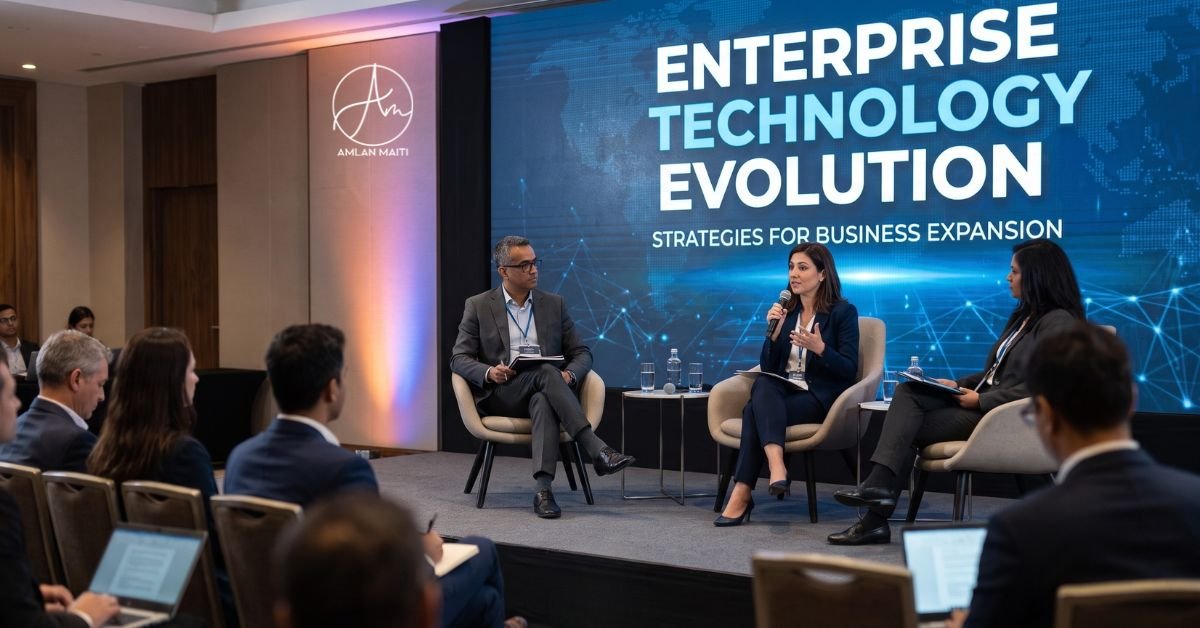
- Enterprise Technology Evolution: Strategies for Business Expansion
- How to Monitor Brand Mentions in AI-Generated Answers
- Enhancing Marketing ROI Through Intelligent Customer Segmentation
- The Impact of AI Agents on B2B Prospecting and Lead Generation
- The Evolution of Business Automation: From Workflows to AI Agents
Search optimization is no longer just about finding the right keywords and placing them strategically across a website. Search engines are becoming increasingly sophisticated at understanding meaning, context, and relationships between topics. So, what happens when matching words is no longer enough? Businesses must rethink their approach through keywords, entities, and knowledge graphs.
For instance, an experienced AI SEO expert in Ireland understands that modern visibility requires more than traditional keyword placement. It involves helping search systems recognize what a business represents, which subjects it understands, and how its information connects with the wider digital ecosystem.
Why Traditional Keyword Optimization Is Changing
Keywords have always been an important part of SEO. They help search engines identify the subjects discussed on a webpage and connect relevant content with user queries. However, relying entirely on exact-match phrases can create a rather limited optimization strategy.
Imagine someone searching for “affordable website development for small businesses.” Another person might type “budget-friendly business website solutions.” Although the wording differs, both searches express a similar requirement.
Modern search systems can interpret language variations and understand relationships between concepts. Google’s Search Central documentation also explains that its language-matching systems can connect content with relevant queries without requiring every exact search phrase to appear on a page.
This changes how businesses should approach keyword research. Instead of producing separate pages for every minor keyword variation, marketers should build comprehensive resources that address the underlying search intent.
The objective is simple: create content that answers what people actually want to know, rather than writing exclusively for the words they enter into a search box.
Understanding the Role of Entities in Modern SEO
An entity is a clearly identifiable person, organization, place, product, concept, or other distinct thing. Unlike a keyword, which is simply a word or phrase, an entity represents something with an identifiable meaning.
Consider the word “Apple.” Depending on the context, it could refer to a fruit or a technology company. Search engines need contextual information to understand which meaning is relevant.
Entity-based SEO helps establish that context by connecting names, descriptions, attributes, and relationships across digital content.
How Entity-Based SEO Strengthens Brand Understanding
Suppose a digital marketing agency publishes content about SEO, paid advertising, conversion optimization, and marketing automation. If these subjects are consistently connected with the same business identity, search systems can encounter a clearer picture of its expertise.
Businesses can strengthen entity recognition through several practical activities:
- Maintain consistent business information: Use the same business name, website details, descriptions, and contact information across important platforms.
- Develop meaningful author profiles: Connect published articles with identifiable authors, professional experience, and relevant expertise.
- Build topical connections: Publish related content that demonstrates how different services and concepts fit within the same area of expertise.
- Use structured information: Implement appropriate schema markup to describe organizations, products, people, articles, and other relevant entities.
These activities do not guarantee knowledge panel appearances or improved rankings. However, they provide clearer information that search systems can use when interpreting a brand and its content.
Knowledge Graphs: Connecting Information With Meaning
Knowledge graphs take entity understanding a step further. They organize information around entities and the relationships connecting them, creating a structured representation of how different things relate to one another.
Think of a knowledge graph as a large digital relationship map. A company might connect with its founder, products, services, industry, website, and associated locations. Each connection adds another layer of context.
Google’s Knowledge Graph documentation describes entities such as people, places, and organizations as identifiable elements within its information ecosystem. Its Knowledge Graph Search API also supports retrieving matching entities using structured information.
For marketers, this highlights an important shift. Search optimization should not simply communicate what a webpage says. It should also help establish how its subject relates to other relevant concepts.
Why Knowledge Graph Optimization Matters
Consider an ecommerce business selling organic skincare products. Its website might discuss natural ingredients, moisturizers, skin hydration, product formulations, and sustainable packaging.
When these subjects are explained accurately and connected through meaningful content, the website develops a more understandable topical structure.
Knowledge graph optimization encourages businesses to think about:
- Which important entities are associated with their industry?
- How are their products or services connected to those entities?
- What relationships should their website communicate clearly?
- Which trusted external sources can support important factual information?
It is worth remembering that publishing schema markup does not automatically insert a business into Google’s Knowledge Graph. Structured data communicates information, while search engines independently evaluate and process available evidence.
Bringing Keywords, Entities, and Knowledge Graphs Together
These three elements should not be treated as competing SEO techniques. They work best when they support one another.
Keywords reveal how people express their needs. Entities clarify the subjects behind those expressions. Knowledge graphs provide a broader understanding of the relationships connecting those subjects.
For example, a company offering cloud computing services might target the keyword “cloud migration services.” Its content could also establish connections with entities such as cloud infrastructure, data security, enterprise applications, and business continuity.
Rather than repeating the primary keyword throughout several pages, the company can develop a useful content ecosystem around the entire subject.
A Practical Framework for Modern Search Optimization
Businesses can begin integrating these concepts into their SEO strategies through a structured approach:
- Identify search intent: Understand the questions, challenges, and commercial requirements behind relevant search queries.
- Map important entities: Identify the people, organizations, products, technologies, and concepts associated with the topic.
- Build connected content: Develop supporting articles, service pages, and educational resources around related subjects.
- Strengthen internal linking: Connect relevant pages using descriptive anchor text that communicates their relationship.
- Implement structured data: Use relevant Schema.org vocabulary and valid JSON-LD markup where appropriate.
- Review and update information: Keep business details, author information, product descriptions, and supporting references accurate.
Google’s SEO Starter Guide emphasizes useful content, logical website organization, descriptive links, and clear information. These fundamentals remain valuable even as search technology evolves.
How AI Search Is Accelerating This Transformation
The growing adoption of AI-powered search experiences is making contextual understanding increasingly important. People are asking longer questions, comparing alternatives, and expecting answers that address multiple aspects of a problem.
For example, a business owner might ask an AI assistant to recommend a digital marketing solution for a growing ecommerce company. The answer may need to consider business requirements, industry relevance, available services, and supporting evidence.
This creates new opportunities for brands that communicate their expertise clearly across their websites and other credible digital platforms.
Semantic SEO, entity-based content, and knowledge graph optimization can support this broader discovery process. However, no single technique guarantees that an AI platform will mention, recommend, or cite a particular business.
Brands should therefore focus on creating accurate, informative, independently verifiable content rather than attempting to manipulate AI recommendations through repetitive keywords or excessive structured data.
Common Mistakes Businesses Should Avoid
While adopting modern SEO practices, businesses sometimes become overly focused on technical implementation and overlook the quality of their information.
Some common mistakes include:
- Adding excessive keywords without addressing the actual search intent.
- Creating multiple pages targeting nearly identical topics without meaningful differences.
- Using structured data that does not accurately represent visible page content.
- Publishing inconsistent business descriptions across different platforms.
- Building internal links without considering topical relevance.
- Assuming that schema markup alone guarantees rankings or AI search visibility.
Ultimately, technical clarity should support useful information, not replace it. A well-structured website with genuinely valuable content is a much stronger foundation than a collection of artificially optimized pages.
Frequently Asked Questions (FAQs)
1. What is the difference between keywords and entities in SEO?
Keywords are words or phrases people use when searching online. Entities represent identifiable subjects such as people, businesses, products, and concepts. Keywords help interpret search queries, while entities provide additional context about their meaning.
2. How do knowledge graphs influence search optimization?
Knowledge graphs organize entities and their relationships, helping represent information in a structured way. Clear entity information and meaningful content relationships can support better contextual understanding across search systems.
3. Is entity-based SEO more important than traditional keyword SEO?
Neither approach should completely replace the other. Keywords remain useful for understanding search demand, while entity-based optimization strengthens contextual relevance. Combining both creates a more comprehensive search strategy.
4. Can small businesses benefit from knowledge graph optimization?
Absolutely. Small businesses can establish clearer digital identities through consistent business information, informative service pages, author credibility, relevant structured data, and interconnected topical content. These practices can support long-term search visibility.
Final Thoughts: SEO Is Becoming More About Meaning
The future of search optimization is not about abandoning keywords. It is about understanding what those keywords represent and connecting them with meaningful information. Businesses that combine keyword research, entity clarity, and structured knowledge can build a stronger foundation for traditional search and emerging AI-driven discovery. In the long run, being understood may become just as important as being found.
Blog Development Credits
This article was conceptualized by Amlan Maiti, developed with research and writing assistance from ChatGPT, Google Gemini, and Copilot, then refined and SEO-optimized by Digital Piloto Private Limited.
Related Articles

02 November 2026
The Shift to AI-Driven Discovery and Its Impact on Marketing Funnels
For years, marketing funnels followed a familiar route: attract visitors, generate interest, nurture leads, and convert prospects into customers. But…
01 November 2026
Enterprise Technology Evolution: Strategies for Business Expansion
Business expansion brings opportunity, but it also exposes weaknesses that may have remained hidden when an organisation was smaller. Systems…

31 October 2026
How to Monitor Brand Mentions in AI-Generated Answers
When someone asks an AI assistant to recommend a reliable company, compare products, or explain an industry, does your brand…

Get In Touch
Initiate your digital marketing journey by filling out this form.