



Recent Post
- The Zero-Click Authority Model: Building Influence Without Depending on Traffic
- The Future of Voice Commerce in an AI-Connected World
- The AI Visibility Gap: Measuring the Distance Between Brand Presence and Recognition
- The Agentic Conversion Framework: Turning AI Discovery Into Business Revenue
- The Future of Search Behaviour in an Answer-Driven Internet
- From Human Navigation to Agent Navigation: Rethinking Website UX
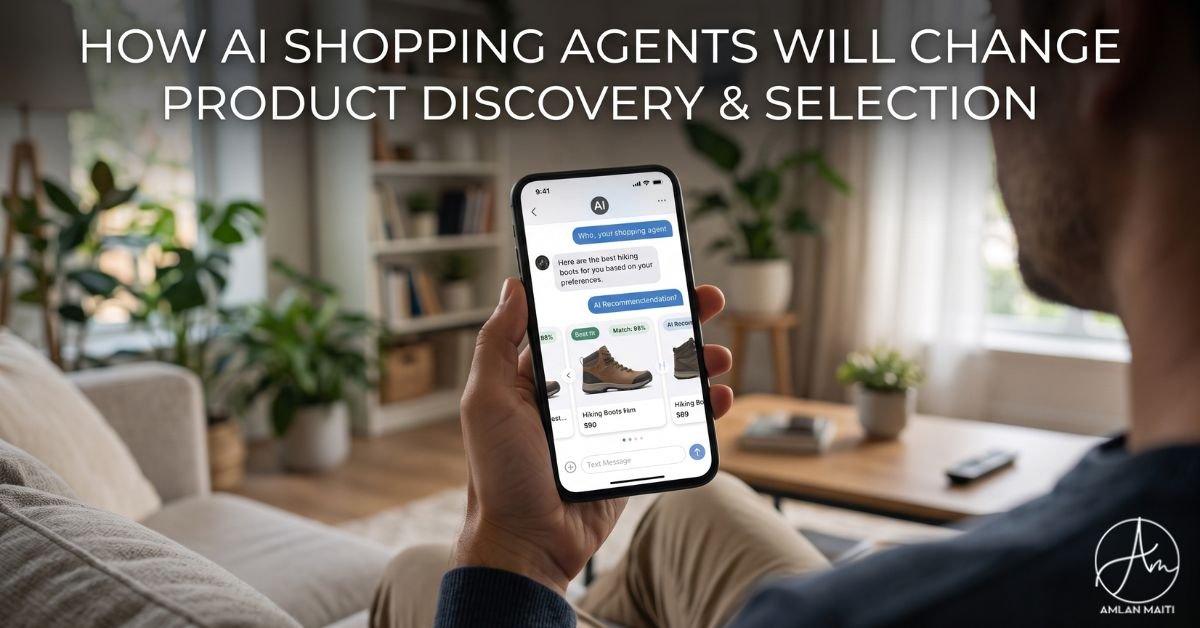
Imagine finding the perfect product without opening ten browser tabs, comparing endless specifications or reading dozens of reviews. You simply explain what you need, and an intelligent assistant does much of the research for you. This is the promise of AI-powered shopping, and it could fundamentally change how customers discover and select products.
For businesses competing in international markets, this transformation creates a new digital visibility challenge. An experienced AI SEO expert in Serbia can help brands understand how artificial intelligence is reshaping product discovery, search behaviour and customer decision-making.
What Are AI Shopping Agents?
AI shopping agents are intelligent digital assistants that help consumers research products, evaluate alternatives and identify suitable purchasing options. Instead of simply displaying search results, they can interpret conversational instructions and organize recommendations around a shopper’s requirements.
Consider someone looking for a laptop for remote work. They might ask an AI assistant to find a lightweight model with strong battery performance, suitable processing power and a reasonable price. The assistant can potentially compare available products, examine specifications and present a shortlist.
Some emerging systems are also exploring transaction assistance, including shopping carts and checkout experiences. Google’s introduction of Universal Commerce Protocol demonstrates how technology companies are working towards more connected AI-powered shopping journeys. Google’s commerce announcement provides an example of this direction.
How AI Shopping Agents Will Transform Product Discovery
1. From Traditional Search to Conversational Discovery
Traditional ecommerce searches usually begin with a few keywords, such as “best office chair” or “affordable smartphone”. AI shopping agents make the process more descriptive.
A customer could explain that they need an office chair for long working hours, with adjustable lumbar support, breathable material and a particular budget. Instead of guessing which keywords to enter, they can describe the actual problem.
This creates an opportunity for businesses to develop product pages that answer detailed questions. Generic descriptions may no longer be enough to communicate why a particular product deserves consideration.
2. Personalized Recommendations Become More Contextual
Personalization is evolving beyond displaying products based on browsing history. AI systems can potentially consider the purpose behind a purchase, individual preferences and specific requirements.
For example, two customers searching for running shoes may receive different recommendations. One needs lightweight footwear for marathon training, while another wants comfortable shoes for everyday walking.
For retailers, this means product information should explain practical benefits, intended usage, compatibility and limitations rather than relying exclusively on promotional language.
3. Product Comparisons Become Easier
Customers often spend considerable time comparing products before purchasing. AI agents can simplify this process by arranging relevant information in a more understandable format.
Depending on the platform and available data, an AI assistant may evaluate:
- Product specifications: Features, dimensions, materials and technical compatibility.
- Pricing: Available offers, discounts and overall value.
- Customer feedback: Reviews, ratings and recurring product concerns.
- Purchase conditions: Delivery estimates, stock availability and return policies.
For businesses, accurate product information becomes a competitive advantage. If an AI system cannot understand what a product offers, it may have difficulty comparing that product with better-documented alternatives.
4. Discovery Moves Beyond Individual Websites
Another important change is where shopping begins. Customers may increasingly discover products through AI assistants, messaging interfaces, search experiences and connected marketplaces rather than visiting an individual retailer first.
Consequently, businesses must think beyond website traffic. Their product information needs to remain understandable, consistent and accessible across the digital platforms where potential customers make purchasing decisions.
What Consumer Research Reveals About AI Shopping
The shift towards intelligent shopping is supported by emerging research. A January 2026 IBM and National Retail Federation study involving 18,000 consumers worldwide found that 41% of respondents used AI assistants to research products, while 33% used them to find reviews. The findings suggest that AI is becoming a useful research companion during the buying process.
However, customers still want control over important decisions. Gartner’s May 2026 consumer research found that only 11% of surveyed US consumers were willing to let AI make purchasing decisions. This highlights an important distinction: people may welcome automated research without wanting to surrender final buying authority.
How B2B and B2C Businesses Should Prepare
AI-powered product discovery is relevant to more than online retailers. Manufacturers, wholesalers, distributors and service-oriented businesses can also benefit from better-organized digital information.
For B2C Businesses
Consumer brands should focus on accurate product descriptions, useful reviews, clear pricing and detailed buying guidance. A furniture retailer, for instance, should explain product dimensions, materials, maintenance requirements and room suitability.
For B2B Businesses
Business buyers often compare suppliers using technical specifications, certifications, bulk pricing, production capabilities and delivery conditions. Manufacturers should make these details easy to understand through well-structured product catalogues and informative website content.
Businesses preparing for this transition should prioritize three practical improvements:
- Strengthen product data: Keep product names, specifications, prices, images and inventory information accurate.
- Improve website structure: Use descriptive headings, relevant internal links, accessible product pages and appropriate Product and Offer structured data.
- Build credibility: Publish original insights, genuine customer feedback, transparent policies and useful comparison resources.
Why AI SEO and Ecommerce Optimization Matter
AI shopping agents introduce a new dimension to ecommerce SEO. Businesses must help search engines and intelligent systems understand not only what they sell but also why their products are relevant to specific customer requirements.
This is where AI search optimization, product data optimization and Generative Engine Optimization become increasingly relevant. Clear information, reliable product feeds, consistent brand details and useful supporting content can strengthen digital discoverability.
Still, no structured data technique or SEO strategy guarantees that an AI assistant will recommend a particular product. Recommendations depend on the platform, available information, customer preferences and the system’s selection process.
Final Thoughts
AI shopping agents are gradually turning product discovery into a more conversational and personalized experience. Businesses that invest in accurate information, trustworthy content and well-organized digital platforms will be better prepared for this change. The real opportunity is not simply getting products listed by AI systems; it is making them genuinely relevant to the people searching for solutions.
Blog Development Credits
This article originated with Amlan Maiti, was developed through research and AI-assisted writing, and received final editorial and SEO refinement from Digital Piloto Private Limited.
Related Articles

11 November 2026
The Zero-Click Authority Model: Building Influence Without Depending on Traffic
What if your brand influenced a buying decision without receiving a single website visit? It may sound like a marketer’s…

05 September 2026
Unlocking Growth: AI SEO Consulting Case Studies and Insights
In the fast-evolving landscape of digital marketing, AI SEO consulting has emerged as a game-changer for businesses looking to enhance…

04 September 2026
Navigating the Future of AI Marketing Strategy
The future of AI marketing strategy is rapidly evolving, driven by advancements in technology and changing consumer behaviors. As businesses…

Get In Touch
Initiate your digital marketing journey by filling out this form.