



Recent Post
- How to Create SEO Content That Converts Readers Into Buyers
- Why Entity SEO Is Essential for Improving AI Search Visibility
- A Practical Guide to Calculating SEO Return on Investment in 2027
- From Customer Data to Business Success: The Power of Predictive AI Marketing
- How AI-Powered Marketing Turns Traffic Into Revenue and Measurable ROI
- Zero-Click Search in 2027: How Brands Can Stay Visible When Users Skip Search Results
Introduction
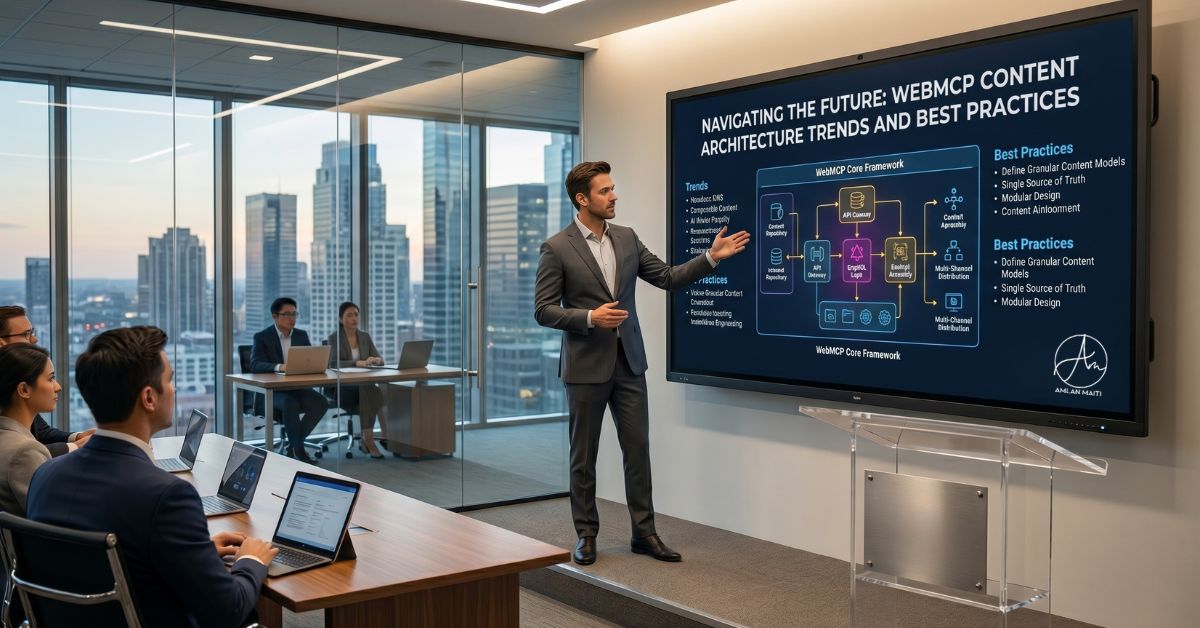
As digital landscapes evolve, businesses are increasingly adopting AI SEO strategies to enhance their content management systems. One such framework gaining traction is WebMCP (Web Multi-Channel Publishing), which focuses on optimizing content architecture for better scalability and user experience. This blog post delves into the current trends, statistics, and challenges associated with WebMCP content architecture, providing insights for businesses looking to refine their digital strategies.
Current Trends in WebMCP Content Architecture
1. Microservices Integration
The shift towards a microservices architecture is revolutionizing how businesses manage content within WebMCP. By breaking down applications into smaller, independent services, organizations can enhance scalability and flexibility. This approach allows for more efficient content management and delivery, enabling businesses to respond quickly to changing market demands.
2. Headless CMS Adoption
Another significant trend is the adoption of headless Content Management Systems (CMS) within WebMCP frameworks. Headless CMS decouples the back-end content repository from the front-end presentation layer, allowing for dynamic and personalized content experiences across multiple platforms and devices. This flexibility is crucial as consumers increasingly expect seamless interactions across various touchpoints.
3. AI-Driven Content Personalization
Businesses are leveraging AI technologies within WebMCP to deliver personalized content experiences. By analyzing user behavior and preferences, AI can tailor content to individual users, improving engagement and conversion rates. This approach not only enhances user satisfaction but also drives measurable growth for businesses.
Supporting Statistics
- Increased Adoption: Recent industry reports indicate that **60% of businesses** using WebMCP have integrated microservices to improve their content delivery networks.
- Headless CMS Growth: The adoption of headless CMS solutions within WebMCP environments has increased by **35%** over the past year, driven by the demand for flexible content management systems.
Major Challenge: Integration Complexity
Despite the advantages of adopting microservices and headless CMS solutions, businesses face significant challenges in integrating these technologies into existing WebMCP architectures. The complexity of these integrations often requires substantial technical expertise and resources, which can be a barrier for many organizations. Addressing this challenge is crucial for successfully leveraging the benefits of WebMCP.
Tool Spotlight: AI-Powered Solutions
To navigate the complexities of WebMCP content architecture, businesses can utilize AI-powered tools such as ChatGPT and Google Gemini. ChatGPT can assist in generating personalized content based on user input, while Google Gemini offers advanced analytics capabilities to track user engagement and optimize content strategies. These tools empower businesses to enhance their content management processes effectively.
Real-World Example: Successful Implementation
A notable example of effective WebMCP content architecture is seen in a leading e-commerce platform that integrated microservices to streamline its content delivery. By adopting a headless CMS, the company was able to personalize user experiences across different devices, resulting in a **25% increase in conversion rates** within three months. This success highlights the importance of flexibility and personalization in modern digital marketing strategies.
FAQs
1. What is WebMCP content architecture?
WebMCP content architecture refers to the framework used for managing and delivering content across multiple channels. It focuses on optimizing content delivery through various technologies, including microservices and headless CMS.
2. Why is microservices integration important?
Microservices integration allows businesses to enhance scalability and flexibility in their content management systems. This architecture enables organizations to respond quickly to market changes and improve content delivery efficiency.
3. How does a headless CMS work?
A headless CMS separates the back-end content repository from the front-end presentation layer. This decoupling allows for dynamic content delivery across various platforms, providing a seamless user experience.
4. What role does AI play in content personalization?
AI analyzes user behavior and preferences to deliver tailored content experiences. By leveraging AI, businesses can enhance user engagement and conversion rates through personalized interactions.
5. What challenges do businesses face with WebMCP?
The primary challenge businesses encounter with WebMCP is the complexity of integrating microservices and headless CMS solutions into existing architectures. This often requires significant technical expertise and resources.
Conclusion
In conclusion, understanding the trends and challenges of WebMCP content architecture is essential for businesses aiming to enhance their digital marketing strategies. By embracing microservices, headless CMS, and AI-driven personalization, organizations can create a more efficient and engaging content management system. As the digital landscape continues to evolve, staying informed about these developments will be crucial for success.
Blog Development Credits
This blog was developed by Amlan Maiti, an expert in AI-powered digital marketing and SEO strategies, with optimization insights from Digital Piloto. For more information, visit Amlan Maiti’s website.
Related Articles

16 October 2026
From Keywords to Knowledge Graphs: How Search Optimization Continues to Evolve
Search optimization has come a long way from placing popular keywords in a webpage and hoping Google notices. Today, search…

05 September 2026
Unlocking Growth: AI SEO Consulting Case Studies and Insights
In the fast-evolving landscape of digital marketing, AI SEO consulting has emerged as a game-changer for businesses looking to enhance…

04 September 2026
Navigating the Future of AI Marketing Strategy
The future of AI marketing strategy is rapidly evolving, driven by advancements in technology and changing consumer behaviors. As businesses…

Get In Touch
Initiate your digital marketing journey by filling out this form.