



Recent Post
- How AI-Powered Marketing Turns Traffic Into Revenue and Measurable ROI
- Zero-Click Search in 2027: How Brands Can Stay Visible When Users Skip Search Results
- Recommendation SEO: Optimizing Brands for AI-Driven Discovery and Personalized Recommendations
- Tracking GEO Metrics as AI Search Answers Change Over Time
- Digital Consistency: Why AI Needs a Consistent Brand Identity Across the Web
- AI-Powered Reputation Engineering: Managing Brand Perception in Generative Search
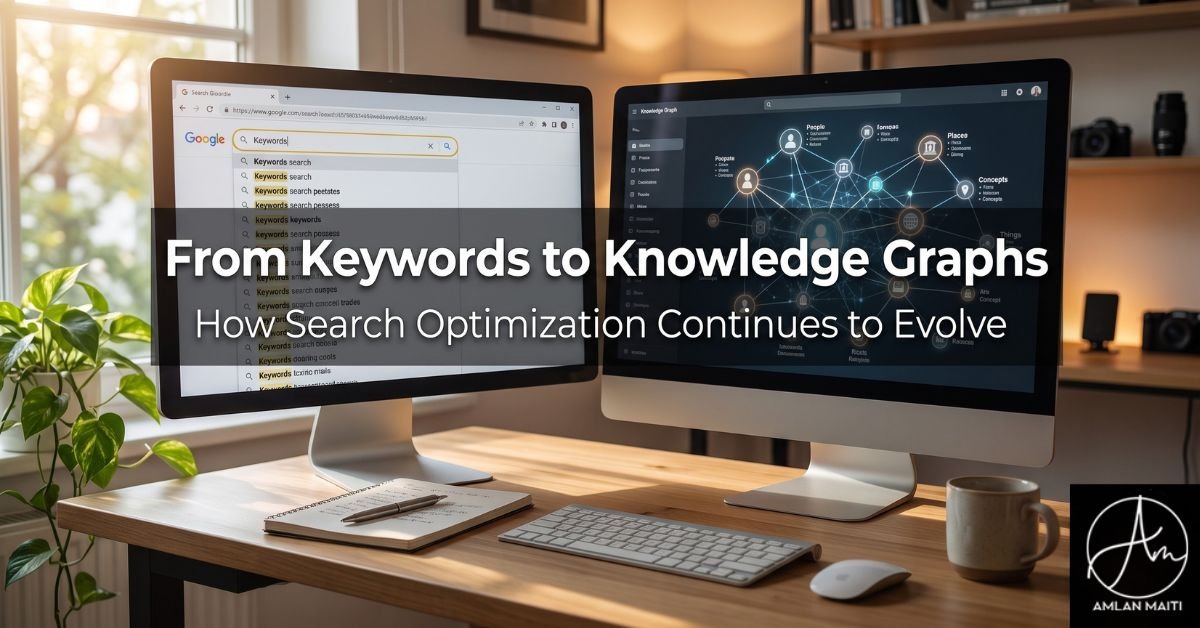
Search optimization has come a long way from placing popular keywords in a webpage and hoping Google notices. Today, search engines increasingly interpret context, relationships, and the meaning behind a query. For businesses, this shift creates a new challenge: how do you make your content useful not just to people, but also to systems trying to understand your brand?
Think about how a customer searches for a service today. They might type a phrase, ask a conversational question, or compare recommendations generated by an AI assistant. This is where modern SEO becomes more sophisticated. An experienced AI SEO expert in Denmark understands that sustainable visibility depends on more than matching words; it requires building clear, consistent connections between topics, entities, and genuine user needs.
How Keyword-Based SEO Changed the Game
Keywords were once the most visible foundation of search optimization. Businesses researched popular phrases, included them in titles and headings, and developed pages around specific search terms. When done thoughtfully, this helped search engines connect relevant pages with interested users.
However, keyword-focused strategies also encouraged shortcuts. Some websites repeated phrases excessively, published thin pages for nearly identical searches, or treated every keyword as a separate content opportunity. The result was often content designed for algorithms rather than readers.
Search technology has evolved beyond this narrow approach. Google’s documentation explains that its systems use multiple signals to understand relevance and usefulness, rather than relying on a single keyword match. Its helpful content guidance encourages publishers to create material primarily for people.
Keywords still matter. They reveal language, demand, and search intent. The difference is that they now work best as entry points into a broader understanding of a topic.
What Is a Knowledge Graph in SEO?
A knowledge graph represents entities and the relationships between them. An entity can be a person, business, place, product, concept, or another identifiable thing. Instead of treating each name or phrase as an isolated string, a knowledge graph connects related information into a structured network.
Imagine a digital marketing company. Its website discusses SEO, technical audits, content strategy, local search, and generative engine optimization. These subjects are connected to the company, but they also connect to one another. A well-organized website makes those relationships understandable through consistent information, descriptive pages, internal links, and appropriate structured data.
Google’s overview of how Search works describes systems that discover, organize, and rank information. Knowledge graphs are one part of the wider shift toward understanding entities and their connections, although not every search result depends on a knowledge graph.
Entities versus keywords
- Keyword: “best running shoes” describes a phrase someone may search.
- Entity: A particular shoe model is a distinct product with identifiable attributes.
- Relationship: The product belongs to a brand, has certain features, and may suit particular running conditions.
This distinction matters because search engines need to interpret what a page actually discusses, not merely count how often a phrase appears. Clear entity relationships help create a stronger foundation for topical relevance and accurate brand representation.
Why Search Optimization Now Requires Context
Consider a person searching for “SEO services for a small ecommerce business.” A basic keyword strategy might create a page that repeats the phrase and lists standard services. A context-driven strategy asks more useful questions: Is the business struggling with product-page visibility? Does it need technical fixes? Are shoppers abandoning product pages? Is organic traffic reaching the right audience?
The second approach is more likely to address the actual problem. It also creates a clearer relationship between the search query, the content, and the service being offered.
Modern search optimization increasingly involves several connected practices:
- Search intent analysis: Understand whether people want information, comparisons, local services, or a specific product.
- Semantic SEO: Cover the concepts, attributes, and related questions that make a topic meaningful.
- Entity optimization: Maintain consistent information about people, organizations, products, and services.
- Internal linking: Connect related pages so readers and crawlers can discover their relationships.
- Structured data: Use supported schema markup to describe page content in a machine-readable format.
These practices do not guarantee higher rankings or special search features. They help make a website clearer, better organized, and more useful—which is a stronger long-term goal than chasing a single ranking signal.
How Structured Data Supports Search Understanding
Structured data adds explicit labels to information on a webpage. Using vocabulary from Schema.org, a website can describe details such as an organization’s name, a product’s attributes, an article’s author, or a business’s address.
Think of structured data as a set of labels attached to a well-organized filing cabinet. The labels help systems interpret the information, but they cannot turn inaccurate or incomplete records into trustworthy facts.
For example, an organization can use suitable Organization markup to identify its name and official website. An article may use Article markup to describe its headline, author, and publication details. The markup must accurately reflect visible page content and follow the relevant search engine guidelines.
Google explains its supported implementations and eligibility requirements in its structured data documentation. Importantly, adding schema does not guarantee a rich result, a knowledge panel, or improved rankings. It is a clarity tool, not a shortcut.
Building a Website Around Connected Topics
A website becomes easier to understand when its content follows a logical structure. Rather than publishing disconnected articles targeting similar phrases, businesses can build topic clusters around core services and customer questions.
Suppose a company offers ecommerce SEO. A central service page could connect to detailed resources about product-page optimization, site architecture, crawlability, category-page content, and conversion measurement. Each supporting page answers a distinct question while reinforcing the broader subject.
A practical framework for content planning
- Identify the core entity. Define the main business, product, service, or topic the website needs to explain.
- Map related concepts. Research customer questions, relevant attributes, common problems, and closely connected subjects.
- Assign a clear purpose to each page. Avoid publishing multiple pages that compete to answer the same question without a meaningful distinction.
- Connect related resources. Use descriptive internal links that help readers move naturally between explanations and services.
- Review facts and consistency. Keep names, service descriptions, author details, and business information accurate across relevant pages.
This approach also supports topical authority. That phrase should not be treated as a formal score that guarantees rankings; it describes the practical value of demonstrating meaningful, well-supported coverage of a subject.
What AI Search Means for the Next Stage of SEO
AI-powered search experiences can interpret conversational questions, synthesize information, and present answers with supporting links. As a result, businesses have another reason to publish content that is specific, understandable, and grounded in reliable information.
Generative engine optimization (GEO) builds on several established principles: explain concepts clearly, support claims, maintain accurate entity information, and organize pages so their purpose is easy to understand. It does not replace technical SEO, keyword research, or the need to serve real visitors.
There is no universal formula that ensures an AI assistant will cite a particular brand. However, businesses can improve their foundations by maintaining accessible pages, providing original expertise, using meaningful headings, and avoiding contradictory information across their digital presence.
For measurement, combine traditional search metrics with business outcomes. Google Search Console can help monitor impressions, clicks, and search queries, while analytics tools can track engagement and conversions. AI referral traffic and brand mentions may provide additional context where measurable, but attribution can be incomplete.
Frequently Asked Questions
1. Are keywords still important for SEO?
Yes. Keywords help reveal what people search for and how they describe their needs. Their role is stronger when combined with search intent, relevant supporting concepts, useful content, and a well-structured website.
2. What is the difference between semantic SEO and knowledge graph optimization?
Semantic SEO focuses on meaning, intent, and relationships among concepts in content. Knowledge graph optimization focuses more specifically on making entities and their relationships clear and consistent. The practices overlap, but they are not identical.
3. Does structured data guarantee a knowledge panel or higher rankings?
No. Structured data helps search engines interpret eligible information, but it does not guarantee rankings, rich results, or a knowledge panel. Accuracy, eligibility, and the search engine’s own systems all matter.
4. How can a small business start optimizing for entity-based search?
Begin with accurate business information, clear service pages, useful answers to customer questions, relevant internal links, and appropriate structured data. Build depth around your actual expertise instead of creating large numbers of repetitive keyword pages.
Final Thoughts: Make Meaning the Priority
Search optimization is moving from isolated keyword matching toward a richer understanding of topics, entities, and relationships. That does not make traditional SEO obsolete; it makes thoughtful SEO more valuable. Businesses that combine sound technical foundations with clear, trustworthy content can build a website that serves people today and remains adaptable as search experiences continue to change.
Blog Development Credits
This article was shaped by Amlan Maiti, developed through research and AI-assisted writing, then refined for search relevance and editorial quality by Digital Piloto Private Limited.
Related Articles

19 October 2026
How AI-Powered Marketing Turns Traffic Into Revenue and Measurable ROI
Getting thousands of website visitors feels encouraging, until the sales report tells a different story. Why do some visitors buy…

18 October 2026
Zero-Click Search in 2027: How Brands Can Stay Visible When Users Skip Search Results
What happens when someone searches for your business category, gets an instant answer, and never visits a website? For brands,…

17 October 2026
Recommendation SEO: Optimizing Brands for AI-Driven Discovery and Personalized Recommendations
Imagine a customer searching for the perfect skincare product without typing a single brand name. Instead, they ask an AI…

Get In Touch
Initiate your digital marketing journey by filling out this form.