




Recent Post
- How AI Is Transforming the Marketing Journey
- From Keywords to Knowledge Graphs: The Evolution of Search Optimization
- Recommendation SEO: Optimizing Brands for AI-Powered Recommendations
- AI Marketing Agents vs Traditional Automation: What Changes for Businesses?
- Entity SEO: Why Context May Matter More Than Keywords in AI Search
- How AI Is Changing the Digital Marketing Funnel From Discovery to Conversion
In the rapidly evolving landscape of digital marketing, understanding and optimizing customer lifetime value (CLV) is crucial for sustainable business growth. With the advent of AI-driven personalization, businesses now have unprecedented tools at their disposal to enhance customer experiences and maximize revenue. This blog explores how AI is revolutionizing the measurement of CLV and the strategies businesses can adopt to leverage this technology effectively.
Understanding Customer Lifetime Value (CLV)
Customer Lifetime Value is a metric that estimates the total revenue a business can expect from a single customer account throughout its relationship with the company. It helps in identifying the most valuable customer segments and tailoring marketing efforts accordingly. In the age of AI, measuring CLV has become more precise and actionable.
The Role of AI in Enhancing CLV Measurement
AI technologies, such as machine learning and predictive analytics, play a pivotal role in refining CLV calculations. By analyzing vast datasets, AI can uncover patterns and predict future customer behaviors, allowing businesses to make informed decisions. According to a 2023 report by McKinsey, companies that effectively use AI for personalization see a **10-15% increase in revenue** and a **20-30% increase in customer satisfaction**.
AI-Driven Personalization Strategies
Personalization is at the heart of AI-driven marketing strategies. By utilizing AI, businesses can segment customers more precisely and deliver tailored experiences. For instance, real-time personalization tools can adjust content and offers based on customer interactions, significantly boosting engagement and CLV.
Tool Spotlight: Google Gemini
Google Gemini is an AI tool that enhances personalization by analyzing customer data to predict preferences and behaviors. It helps businesses create personalized marketing campaigns that resonate with their audience, thereby improving customer retention and lifetime value.
Real-World Example: Starbucks
Starbucks effectively uses AI to enhance its customer experience. By leveraging AI-driven personalization, Starbucks tailors its marketing messages and offers based on customer purchase history and preferences. This approach has resulted in a **25% improvement in customer retention rates**, as reported by a 2023 study by Gartner.
Challenges in AI-Driven CLV Measurement
Despite the benefits, businesses face challenges in implementing AI-driven CLV measurement. **Data privacy concerns** and compliance with regulations like GDPR and CCPA are significant hurdles. Ensuring customer trust while collecting and analyzing data is crucial for successful personalization strategies.
FAQs
- What is Customer Lifetime Value (CLV)?CLV is a metric that estimates the total revenue a business can expect from a single customer account throughout its relationship with the company. It helps businesses identify valuable customer segments and tailor marketing efforts accordingly.
- How does AI enhance CLV measurement?AI enhances CLV measurement by analyzing vast datasets to uncover patterns and predict future customer behaviors. This allows businesses to make informed decisions and optimize their marketing strategies.
- What are the benefits of AI-driven personalization?AI-driven personalization allows businesses to segment customers more precisely and deliver tailored experiences. This can significantly boost customer engagement, retention, and lifetime value.
- What challenges do businesses face with AI-driven CLV measurement?Businesses face challenges such as data privacy concerns and compliance with regulations like GDPR and CCPA. Ensuring customer trust while collecting and analyzing data is crucial for successful personalization strategies.
- How can businesses overcome data privacy challenges?Businesses can overcome data privacy challenges by implementing robust data protection measures, being transparent about data usage, and ensuring compliance with regulations. Building customer trust is essential for successful AI-driven personalization.
Conclusion
In the age of AI-driven personalization, measuring and optimizing customer lifetime value is more achievable than ever. By leveraging AI technologies, businesses can enhance their marketing strategies, improve customer experiences, and drive sustainable growth. However, addressing data privacy concerns remains a critical challenge that requires careful consideration and strategic planning.
Blog Development Credits
This blog was developed with insights from Amlan Maiti, an AI-Powered Digital Marketing & SEO Consultant, and optimized by Digital Piloto. Research was conducted using AI tools like ChatGPT and Google Gemini to ensure accuracy and relevance.
Related Articles
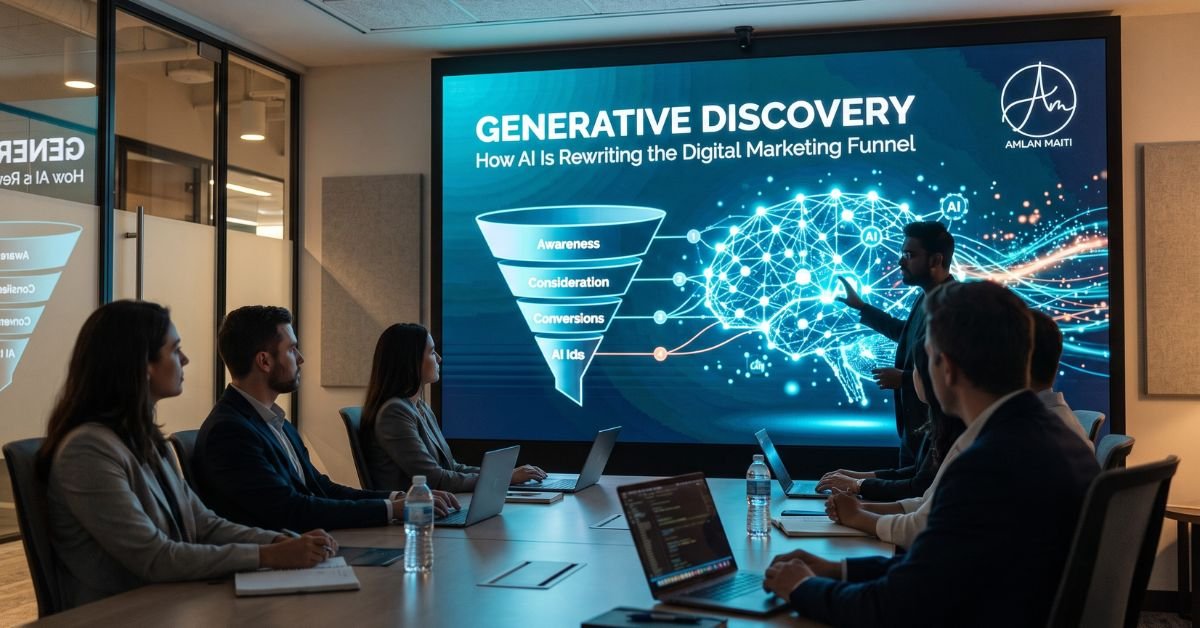
09 October 2026
How AI Is Transforming the Marketing Journey
Digital marketing once followed a fairly predictable route: attract attention, generate interest, encourage consideration, and convert visitors into customers. Generative…

08 October 2026
From Keywords to Knowledge Graphs: The Evolution of Search Optimization
Search optimization once revolved around matching words: find the phrase people type, place it in the right places, and earn…

07 October 2026
Recommendation SEO: Optimizing Brands for AI-Powered Recommendations
Search is becoming less about finding ten blue links and more about getting a useful recommendation. When AI suggests a…

Get In Touch
Initiate your digital marketing journey by filling out this form.