



Recent Post
- From Keywords to Knowledge Graphs: The Evolution of Search Optimization
- Recommendation SEO: Optimizing Brands for AI-Powered Recommendations
- AI Marketing Agents vs Traditional Automation: What Changes for Businesses?
- Entity SEO: Why Context May Matter More Than Keywords in AI Search
- How AI Is Changing the Digital Marketing Funnel From Discovery to Conversion
- How AI Can Connect SEO, Paid Ads, CRO and Lead Generation
Understanding Real-Time SEO Optimization
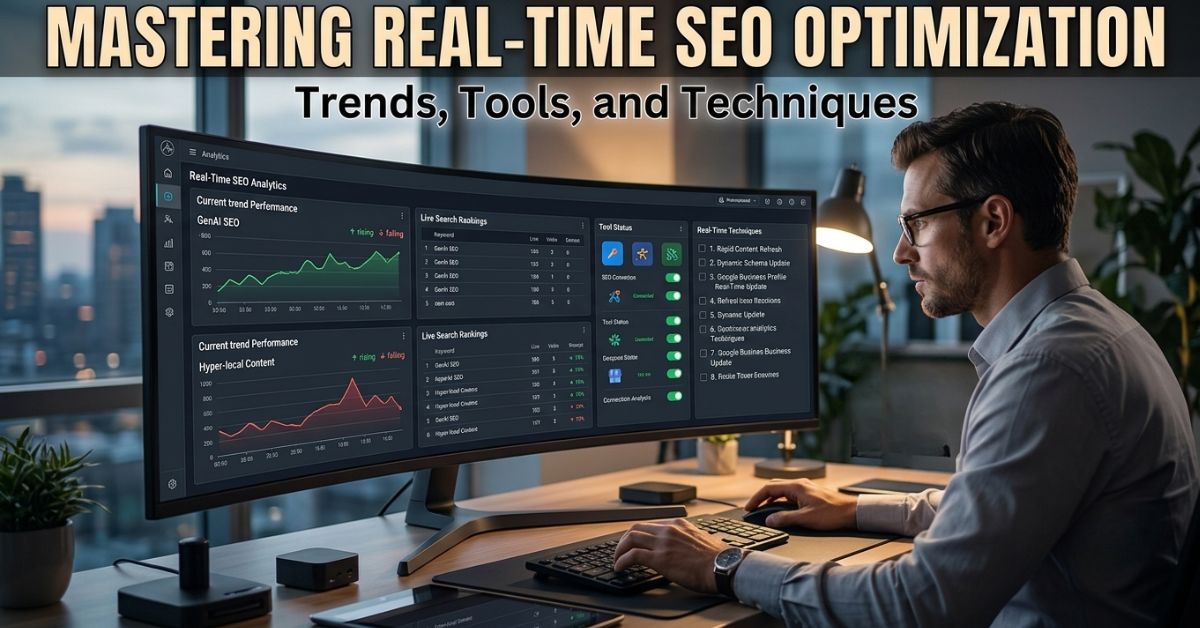
In the fast-paced world of digital marketing, AI SEO has emerged as a game-changer. Real-time SEO optimization refers to the ability to analyze and adjust SEO strategies dynamically, ensuring that businesses remain competitive in search engine rankings. This approach is crucial, especially as search engines evolve and user behavior changes. By leveraging real-time data, marketers can make informed decisions that enhance their online visibility and drive traffic to their websites.
Current Trends in Real-Time SEO
1. AI-Powered Tools
The integration of AI and machine learning in SEO practices is on the rise. These technologies enable marketers to gain insights from real-time data analysis, allowing for instant optimization suggestions. Tools like ChatGPT and Google Gemini are leading the way, providing automated recommendations that help businesses improve their search engine rankings effectively.
2. Voice Search Optimization
With the increasing use of smart speakers and voice assistants, optimizing for voice search has become essential. This trend emphasizes the importance of natural language processing and question-based queries, ensuring that content aligns with how users verbally search for information.
3. Mobile-First Indexing
As Google prioritizes mobile-first indexing, real-time optimization for mobile devices is critical. Websites must be fast-loading and mobile-friendly to cater to the growing number of users accessing the web via smartphones. In fact, as of 2023, mobile devices account for approximately 58% of global website traffic, making this trend even more significant.
Challenges in Real-Time SEO
Despite the advantages, businesses face challenges in managing and analyzing vast amounts of real-time data. The ability to quickly interpret this data and implement effective SEO strategies is a significant hurdle for many organizations. Overcoming data overload is crucial for successful real-time optimization.
Tool Spotlight: AI-Powered SEO Tools
Several tools are revolutionizing real-time SEO optimization:
- SEMrush: This tool offers real-time keyword tracking and performance monitoring, allowing marketers to adjust their strategies based on live data.
- Ahrefs: Known for its comprehensive backlink analysis, Ahrefs provides live SEO updates that help businesses stay ahead of their competition.
- Google Analytics: This widely used tool offers real-time website optimization insights, enabling businesses to track user behavior and make immediate adjustments.
Real-World Example: Successful Real-Time SEO Implementation
A leading e-commerce company implemented real-time SEO strategies by utilizing AI-driven tools to monitor their website traffic and keyword rankings. By analyzing live data, they identified underperforming keywords and optimized their content accordingly. This proactive approach resulted in a 30% increase in organic traffic within three months, demonstrating the effectiveness of real-time SEO optimization.
FAQs about Real-Time SEO Optimization
1. What is real-time SEO optimization?
Real-time SEO optimization involves continuously analyzing and adjusting SEO strategies based on live data. This approach allows businesses to respond quickly to changes in search engine algorithms and user behavior, ensuring they remain competitive in search rankings.
2. How can AI tools enhance SEO strategies?
AI tools can analyze vast amounts of data quickly, providing insights and recommendations for optimizing content and improving search engine rankings. They help marketers make data-driven decisions, enhancing the effectiveness of their SEO strategies.
3. Why is mobile optimization important for SEO?
Mobile optimization is crucial because a significant portion of web traffic comes from mobile devices. Google prioritizes mobile-friendly websites in its rankings, making it essential for businesses to ensure their sites are optimized for mobile users.
4. What challenges do businesses face with real-time SEO?
One of the main challenges is data overload, where businesses struggle to manage and analyze large volumes of real-time data. This can hinder their ability to make quick, informed decisions about their SEO strategies.
5. How can I start implementing real-time SEO strategies?
Begin by utilizing AI-powered SEO tools to monitor your website’s performance and keyword rankings. Regularly analyze the data to identify areas for improvement and make adjustments to your content and strategies accordingly.
Conclusion
Real-time SEO optimization is no longer just a trend; it is a necessity for businesses seeking to thrive in the digital landscape. By embracing AI-powered tools and staying informed about current trends, marketers can enhance their SEO strategies and drive measurable growth. The future of SEO lies in the ability to adapt and respond to real-time data, ensuring that businesses remain competitive and visible in search engine results.
Blog Development Credits
This blog was developed with insights from Amlan Maiti, an expert in AI-driven digital marketing strategies. For more information, visit Amlan Maiti’s LinkedIn and explore how Digital Piloto can optimize your digital marketing efforts.
Related Articles

05 September 2026
Unlocking Growth: AI SEO Consulting Case Studies and Insights
In the fast-evolving landscape of digital marketing, AI SEO consulting has emerged as a game-changer for businesses looking to enhance…

04 September 2026
Navigating the Future of AI Marketing Strategy
The future of AI marketing strategy is rapidly evolving, driven by advancements in technology and changing consumer behaviors. As businesses…
03 September 2026
Unlocking the AI SEO Expert Mindset: Strategies for Success
Understanding the AI SEO Expert Mindset In today’s digital landscape, the AI SEO expert mindset is pivotal for marketers aiming…

Get In Touch
Initiate your digital marketing journey by filling out this form.