



Recent Post
- Knowledge Graph SEO: Why Entities Matter in the Age of AI Search
- AI Discovery Index: A New Way to Think About Brand Visibility
- How to Optimize Content for AI Answers Without Losing Human Engagement
- How to Measure GEO Performance When AI Answers Keep Changing
- AI Citations vs Google Rankings: Understanding the New Search Visibility Model
- How Generative Engines Decide Which Brands to Mention
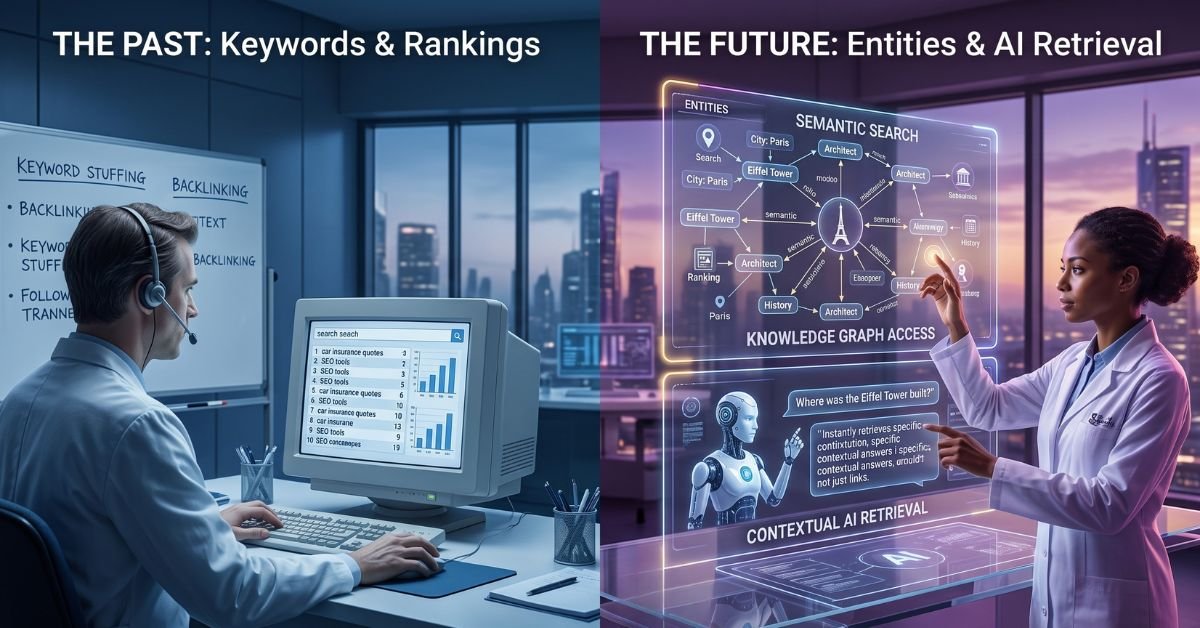
SEO used to feel like a treasure hunt: find the right keyword, earn a strong ranking, and wait for visitors. Search is becoming less literal. Modern systems increasingly connect entities, context, relationships, and intent before deciding what information to retrieve. For businesses, that means the future of SEO may depend less on matching words and more on becoming a trusted, understandable source.
For an AI SEO Specialist in Switzerland, this shift is already changing how brands think about visibility. A page can contain the perfect keyword and still fail to become useful to an AI-driven search system if the surrounding context is weak. Search engines increasingly need to understand what a business is, what it offers, whom it serves, and how its information connects with the wider web.
Why Keywords Are No Longer the Whole Story
Keywords still matter. They tell search systems something about language and intent. But modern search is increasingly contextual.
Imagine searching for “best running shoes for flat feet.” A traditional approach might focus heavily on that exact phrase. A more advanced system can interpret related concepts such as foot type, cushioning, stability, running surface, product attributes, reviews, and user preferences.
This is where semantic SEO becomes important. Instead of creating separate pages around every slight variation of a phrase, businesses can build comprehensive topic ecosystems that demonstrate genuine knowledge.
- Keywords describe the language people use.
- Entities help identify the people, businesses, products, places, and concepts being discussed.
- Context explains how those entities relate to a particular problem or question.
- Evidence gives search systems reasons to consider the information trustworthy.
The Rise of Entities in Modern SEO
An entity is more than a word on a page. It represents a distinct thing that can be understood through its attributes and relationships.
Think about a company website. Its entity footprint may include its brand name, founders, services, locations, industries, products, publications, customer experiences, and external references. When these signals consistently connect across credible sources, the business becomes easier for machines to understand.
This matters because search is gradually moving from “Which page contains these words?” toward “Which source best explains this subject?”
Build an Entity That Makes Sense
Businesses can strengthen their entity signals by consistently presenting information across their digital ecosystem. Practical areas include:
- Keeping company names, services, locations, and business descriptions consistent.
- Publishing genuinely useful information around core areas of expertise.
- Connecting related topics through meaningful internal links rather than isolated articles.
- Using structured data where it accurately describes the page and business.
- Building credible third-party references that reinforce expertise.
AI Retrieval Changes What Visibility Means
The next major shift is retrieval. AI-powered search systems can retrieve information from multiple sources and use that material to construct an answer. In that environment, visibility is no longer limited to appearing in a familiar blue-link position.
A brand may be discovered because its article is retrieved as evidence, its product information is referenced, or its business details help answer a highly specific question.
This creates a broader concept of AI search visibility. Instead of asking only, “What position do we rank at?” marketers increasingly need to ask:
- Is the brand being mentioned when relevant questions are asked?
- Which pages or sources are being retrieved?
- Are competitors appearing where the brand could reasonably be included?
- Does the information being surfaced accurately represent the business?
What SEO Professionals Should Measure Next
Rankings will not suddenly disappear, and traditional SEO metrics remain useful. But they should sit alongside a wider measurement framework.
For example, marketers can monitor branded and non-branded AI queries, citation patterns, referring pages, entity consistency, organic engagement, conversions, and changes in visibility across important search journeys.
Google also continues to emphasize the importance of helpful, reliable, people-first content rather than content created primarily to manipulate search rankings. Its guidance provides a useful reminder that technical optimization works best when it supports genuine usefulness. Google’s official guidance on creating helpful content explains this principle in greater detail.
The New SEO Skill Set
The future SEO professional may look less like someone checking rankings all morning and more like a digital information architect. Keyword research will still be part of the job, but it will connect with broader disciplines.
The most valuable capabilities are likely to include:
- Entity optimization: making brands and their relationships easier to understand.
- Content architecture: building connected topic clusters instead of disconnected posts.
- AI retrieval analysis: studying what information search systems surface and cite.
- Technical SEO: ensuring important information can be efficiently discovered and interpreted.
- Business measurement: connecting search visibility with qualified traffic, leads, sales, and customer journeys.
FAQs
Will keywords become irrelevant in the future of SEO?
No. Keywords will continue to provide useful clues about language and search intent. Their role is simply becoming part of a larger system that also considers entities, context, relationships, authority, and relevance.
What is entity-based SEO?
Entity-based SEO focuses on helping search systems understand distinct people, businesses, products, places, and concepts, along with the relationships between them.
How does AI retrieval affect SEO?
AI retrieval can broaden the meaning of search visibility. A website may contribute information to an AI-generated answer even when the user never visits a traditional search results page.
Should businesses stop tracking Google rankings?
No. Rankings remain useful for understanding conventional search performance. However, businesses should complement them with metrics covering AI visibility, citations, brand mentions, organic engagement, and conversions.
Final Thoughts
The future of SEO is not really about abandoning keywords. It is about putting them in perspective. Search engines are becoming better at understanding entities, relationships, intent, and evidence. Brands that organize their information clearly and demonstrate real expertise will be better positioned for this changing environment. The winning mindset is simple: stop optimizing only for the query, and start building information that machines and people can understand.
Blog Development Credits
Conceptualized by Amlan Maiti, developed with AI-assisted research and writing, then refined and optimized for SEO by Digital Piloto Private Limited.
Related Articles
30 September 2026
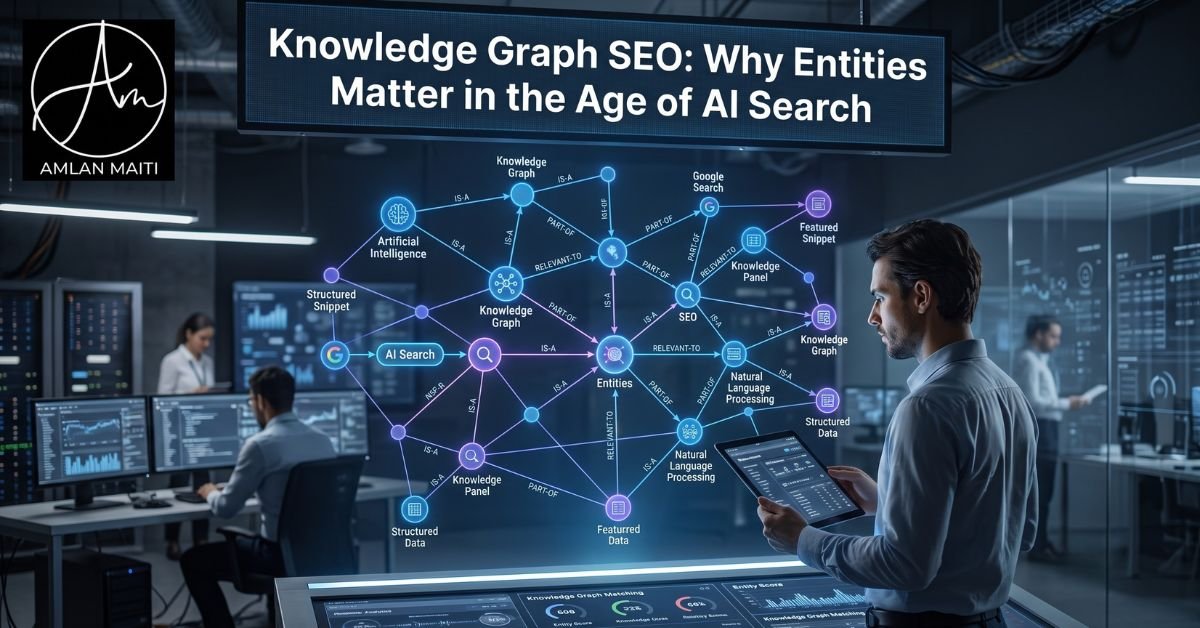
Knowledge Graph SEO: Why Entities Matter in the Age of AI Search
Search engines are no longer simply matching words on pages. They are trying to understand people, businesses, products, places, and…

28 September 2026
AI Discovery Index: A New Way to Think About Brand Visibility
For years, brand visibility had a familiar scoreboard: rankings, impressions, clicks, and traffic. AI search is quietly changing that game.…
27 September 2026
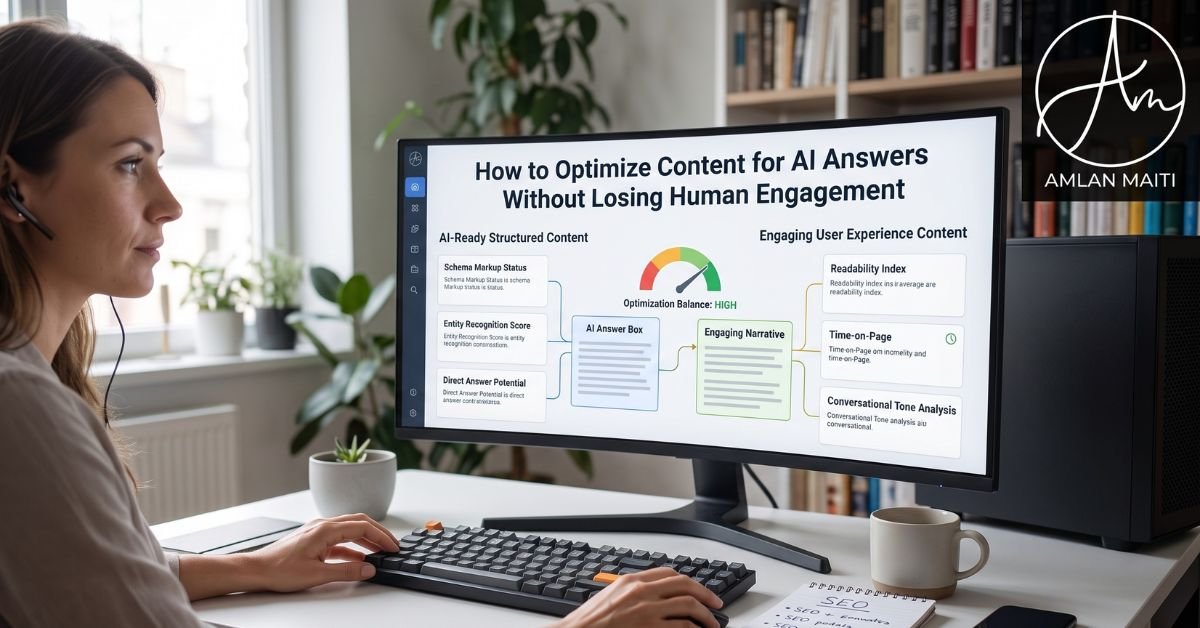
How to Optimize Content for AI Answers Without Losing Human Engagement
Search is becoming a strange hybrid: people still want useful, persuasive content, while AI systems increasingly decide which information deserves…

Get In Touch
Initiate your digital marketing journey by filling out this form.