



Recent Post
- Unlocking Growth: AI SEO Consulting Case Studies and Insights
- Navigating the Future of AI Marketing Strategy
- Unlocking the AI SEO Expert Mindset: Strategies for Success
- Unlocking Success with an AI SEO Agency Blueprint
- Navigating the Future: AI SEO Leadership Strategies for Success
- Unlocking Success with the AI SEO Consulting Playbook
Introduction
In the ever-evolving landscape of digital marketing, AI SEO has emerged as a crucial component for agencies aiming to safeguard their clients’ online presence. As search engine algorithms become increasingly complex, the need for effective SEO risk control strategies has never been more critical. This article delves into the essential techniques and tools agencies can employ to minimize SEO risks and optimize their clients’ digital strategies.
The Importance of SEO Risk Control
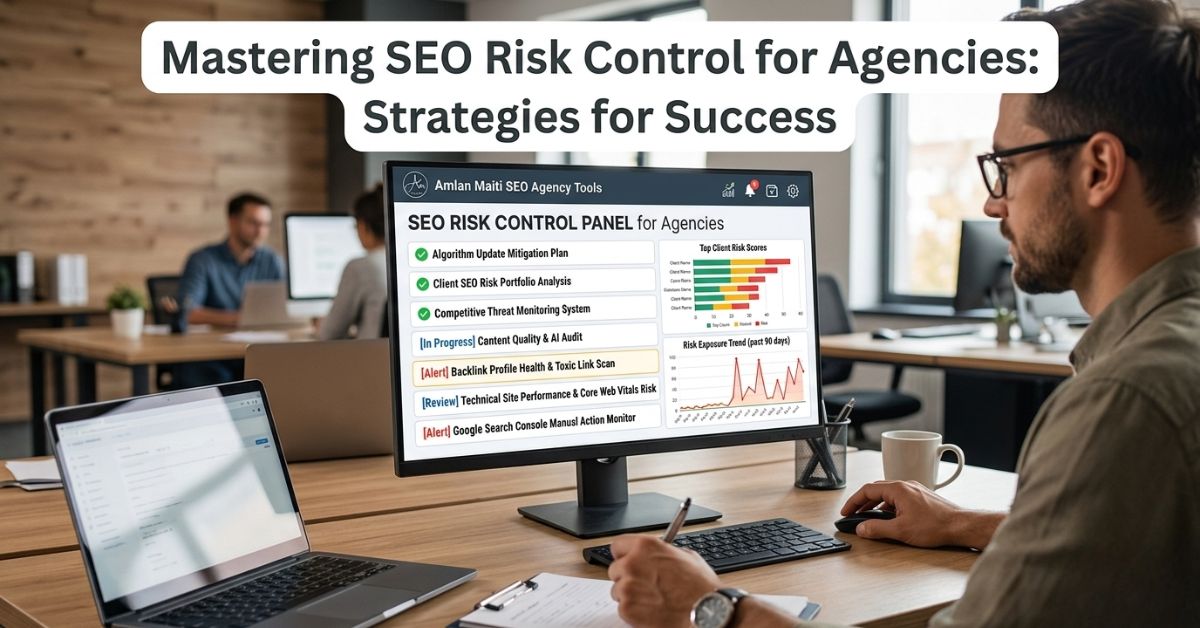
SEO risk control is vital for agencies to maintain their clients’ search engine rankings and visibility. With the unpredictability of search engine algorithms, agencies must adopt proactive measures to mitigate potential risks. This involves understanding the various factors that can impact SEO performance, including algorithm updates, content quality, and overall website health.
Current Trends in SEO Risk Management
- AI-Powered SEO Tools: Agencies are increasingly leveraging AI-driven tools to predict and mitigate SEO risks. These tools analyze large datasets to identify potential issues before they impact rankings.
- Focus on E-A-T: With Google’s emphasis on Expertise, Authoritativeness, and Trustworthiness (E-A-T), agencies are prioritizing content quality and credibility to minimize the risk of penalties.
- Proactive Algorithm Update Monitoring: Agencies are adopting strategies to monitor and adapt to Google’s frequent algorithm updates, ensuring compliance and competitiveness.
Tool Spotlight: AI-Driven Solutions
Several AI tools have become indispensable for agencies managing SEO risks. For instance, ChatGPT can assist in generating high-quality content that aligns with E-A-T principles, while Google Gemini offers insights into keyword performance and potential ranking threats. By utilizing these tools, agencies can enhance their SEO strategies and reduce the likelihood of ranking drops.
SEO Risk Mitigation Techniques
To effectively manage SEO risks, agencies should implement the following techniques:
- Regular SEO Audits: Conducting comprehensive audits helps identify potential vulnerabilities in a website’s SEO strategy.
- Content Quality Assurance: Ensuring that all content meets high-quality standards is essential for maintaining E-A-T scores.
- Monitoring Competitor Strategies: Keeping an eye on competitors can provide insights into emerging trends and potential threats.
Real-World Example: Successful SEO Risk Management
A digital marketing agency recently faced a significant challenge when a major algorithm update threatened their client’s rankings. By swiftly conducting a thorough SEO audit and enhancing the client’s content quality, they improved E-A-T scores. This proactive approach resulted in a 25% increase in organic traffic within three months, demonstrating the effectiveness of robust SEO risk control strategies.
Frequently Asked Questions
What is SEO risk management?
SEO risk management involves identifying, assessing, and mitigating potential risks that can negatively impact a website’s search engine rankings. This proactive approach helps agencies maintain their clients’ visibility and performance in search results.
How can AI tools help in SEO risk control?
AI tools can analyze vast amounts of data to predict potential SEO issues, automate content creation, and monitor algorithm changes. This technology enables agencies to respond quickly to risks and optimize their strategies effectively.
What are E-A-T principles, and why are they important?
E-A-T stands for Expertise, Authoritativeness, and Trustworthiness. These principles are crucial for SEO success, as they influence how search engines evaluate content quality. High E-A-T scores can lead to better rankings and reduced risk of penalties.
What should agencies do after an algorithm update?
After an algorithm update, agencies should conduct a comprehensive SEO audit to assess the impact on their clients’ websites. This includes reviewing content quality, keyword performance, and overall site health to implement necessary adjustments.
How often should SEO audits be conducted?
Agencies should conduct SEO audits at least quarterly, or more frequently if significant changes occur in the industry or search engine algorithms. Regular audits help identify vulnerabilities and ensure ongoing optimization.
Conclusion
In conclusion, effective SEO risk control is essential for agencies striving to maintain their clients’ search engine visibility. By leveraging AI tools, focusing on E-A-T principles, and implementing proactive strategies, agencies can navigate the complexities of SEO and mitigate potential risks. Embracing these practices will not only enhance client satisfaction but also drive long-term growth in a competitive digital landscape.
Blog Development Credits
This blog was developed by Amlan Maiti, an expert in AI-powered digital marketing and SEO strategies. For more insights, connect with Amlan on LinkedIn and explore optimization solutions at Digital Piloto.
Related Articles

05 September 2026
Unlocking Growth: AI SEO Consulting Case Studies and Insights
In the fast-evolving landscape of digital marketing, AI SEO consulting has emerged as a game-changer for businesses looking to enhance…

04 September 2026
Navigating the Future of AI Marketing Strategy
The future of AI marketing strategy is rapidly evolving, driven by advancements in technology and changing consumer behaviors. As businesses…

03 September 2026
Unlocking the AI SEO Expert Mindset: Strategies for Success
Understanding the AI SEO Expert Mindset In today’s digital landscape, the AI SEO expert mindset is pivotal for marketers aiming…

Get In Touch
Initiate your digital marketing journey by filling out this form.