



Recent Post
- AI Discovery Index: A New Way to Think About Brand Visibility
- How to Optimize Content for AI Answers Without Losing Human Engagement
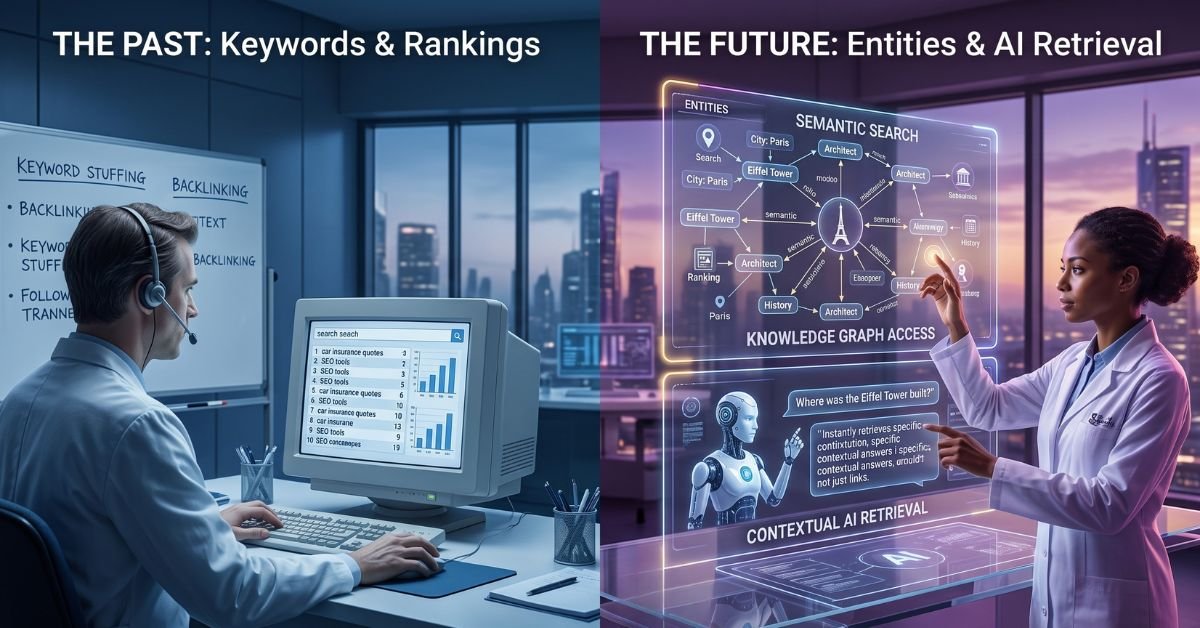
- The Future of SEO: From Keywords and Rankings to Entities and AI Retrieval
- How to Measure GEO Performance When AI Answers Keep Changing
- AI Citations vs Google Rankings: Understanding the New Search Visibility Model
- How Generative Engines Decide Which Brands to Mention
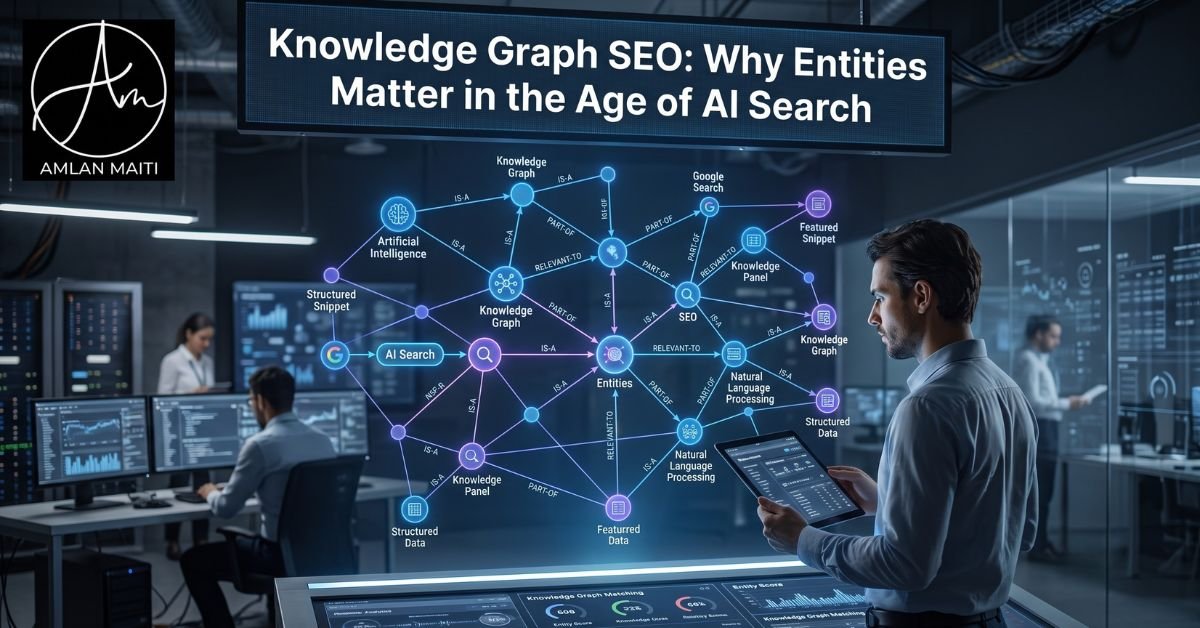
Search engines are no longer simply matching words on pages. They are trying to understand people, businesses, products, places, and the relationships connecting them. That shift becomes even more important as AI search expands. For brands, the question is changing from “What keyword should we rank for?” to “Does search understand who we are and what we represent?”
For an AI SEO Specialist in Denmark, this is where entity-focused optimization becomes particularly interesting. A business may publish hundreds of articles, yet still remain difficult for machines to understand if its identity, expertise, services, people, and relationships are poorly connected across the web. Knowledge Graph SEO addresses that deeper layer.
What Is a Knowledge Graph Entity?
Think of an entity as a clearly identifiable “thing” rather than simply a collection of words. A company is an entity. So is a person, product, city, university, software platform, or organization.
Google’s Knowledge Graph was launched in 2012. In a 2020 explanation, Google said its Knowledge Graph had accumulated more than 500 billion facts about five billion entities. That gives some perspective on the scale of the shift from indexing pages toward organizing information about the world. Google’s explanation of the Knowledge Graph describes how information about people, places, and things is gathered and connected.
The important point is not the size of Google’s database. It is the underlying idea: search systems need to understand what information refers to.
Why Entities Matter More in AI Search
Traditional SEO often starts with a query. AI search increasingly starts with a concept and its surrounding context.
Imagine someone asks an AI assistant, “Which digital marketing companies specialize in ecommerce growth?” The system needs more than a page containing those exact words. It needs to connect companies with services, industries, expertise, locations, reputation, and supporting evidence.
That is why entity-based SEO can become an important part of an AI search strategy.
- Identity: What exactly is the brand, person, product, or organization?
- Attributes: What does the entity offer, specialize in, or represent?
- Relationships: Which people, services, products, locations, and topics are connected to it?
- Evidence: Which credible sources reinforce those relationships?
Build a Consistent Digital Entity
One of the most overlooked problems in modern SEO is inconsistency. A company might use slightly different names across directories, describe its services differently on various pages, or have outdated information on third-party profiles.
Humans can usually work out what is going on. Machines have a harder job when the signals conflict.
A stronger entity strategy begins by making the business easier to identify across its digital ecosystem.
Focus on These Entity Signals
- Keep the organization name and core business information consistent.
- Create a clear About page that explains the company’s expertise and identity.
- Use appropriate Organization, Person, Product, or LocalBusiness structured data where relevant.
- Connect official profiles and authoritative references using appropriate links such as
sameAs. - Build content around the subjects the business genuinely knows rather than chasing every trending keyword.
Google’s documentation says structured data can provide explicit clues about the meaning of a page and help Search understand information about people, companies, books, and other entities. It also notes that accurate, complete data is preferable to adding large amounts of poorly maintained markup. Google Search Central’s structured data guidance explains this approach.
Content Should Reinforce the Entity
Structured data alone will not magically create authority. Your visible content has to tell the same story.
Suppose a software company says it specializes in AI automation. Its website should not stop at a services page. Helpful supporting content might explain workflow automation, AI agents, implementation challenges, industry applications, security considerations, and real use cases.
Over time, these connected topics create a clearer semantic footprint. This is where semantic SEO and knowledge graph optimization meet: the content builds associations around the central entity instead of treating every article as an isolated ranking opportunity.
Think in Relationships, Not Just Keywords
A useful way to rethink content planning is to draw the subject as a map.
Put the main business in the middle. Around it, place its products, services, customers, locations, founders, industries, technologies, problems solved, and areas of expertise. Then ask a simple question: Does the website actually explain the relationships between these things?
If not, there is an opportunity.
Strong entity-focused content tends to:
- Answer questions surrounding the core topic, not just repeat its name.
- Link related pages in ways that make conceptual sense.
- Use precise terminology consistently.
- Support important claims with trustworthy sources.
- Demonstrate first-hand expertise rather than recycling generic information.
Measure Understanding, Not Just Rankings
Rankings remain useful, but they are only one part of the picture. AI search introduces another question: Is the brand being understood correctly?
Marketers can periodically test relevant prompts across AI search systems and record brand mentions, descriptions, citations, competitors, and recurring inaccuracies. The goal is not to treat every AI response as a fixed ranking. Responses can vary. Instead, look for patterns over time.
This creates a broader form of AI search visibility measurement, where entity recognition becomes part of the conversation alongside traffic, rankings, conversions, and brand demand.
FAQs
What is Knowledge Graph SEO?
Knowledge Graph SEO is an approach focused on helping search systems understand a brand, person, product, or organization as a distinct entity and recognize its relationships with relevant topics and other entities.
Is structured data the same as entity SEO?
No. Structured data is one technical method for communicating information clearly to search engines. Entity SEO is broader and includes content, consistency, relationships, authoritative references, and the overall digital identity of a subject.
Can small businesses benefit from entity optimization?
Yes. Entity optimization is not limited to large brands. Clear business information, consistent profiles, useful expertise-led content, appropriate structured data, and credible references can help smaller organizations build a clearer digital identity.
Does entity SEO replace traditional keyword SEO?
No. Keywords still help search systems understand language and intent. Entity-focused SEO expands the strategy by adding identity, context, relationships, and evidence to the optimization process.
Final Thoughts
The next phase of SEO is less about making a page look relevant and more about making a business understandable. Keywords still have a place, but entities give those words meaning. When your website, content, structured data, and external references consistently explain who you are and how your expertise connects to real problems, you create something more durable than a ranking signal: a digital identity that search systems can recognize.
Blog Development Credits
Conceptualized by Amlan Maiti, researched and developed with AI-assisted tools, then refined and optimized by Digital Piloto Private Limited.
Related Articles

28 September 2026
AI Discovery Index: A New Way to Think About Brand Visibility
For years, brand visibility had a familiar scoreboard: rankings, impressions, clicks, and traffic. AI search is quietly changing that game.…

27 September 2026
How to Optimize Content for AI Answers Without Losing Human Engagement
Search is becoming a strange hybrid: people still want useful, persuasive content, while AI systems increasingly decide which information deserves…
26 September 2026
The Future of SEO: From Keywords and Rankings to Entities and AI Retrieval
SEO used to feel like a treasure hunt: find the right keyword, earn a strong ranking, and wait for visitors.…

Get In Touch
Initiate your digital marketing journey by filling out this form.