




Recent Post
- AI Citations vs Google Rankings: Understanding the New Search Visibility Model
- From Search Rankings to AI Recommendations: The New Era of Digital Visibility
- Generative Discovery: How AI Is Rewriting the Digital Marketing Funnel
- Why Being Cited by AI Search Engines Matters More Than Traditional Rankings
- How to Build an AI Search Visibility Strategy for Your Personal Brand
- GEO vs SEO vs AEO: What Should Indian Businesses Prioritize in 2026?
Search is no longer just a list of blue links. Generative engines increasingly interpret questions, compare sources, and assemble answers from multiple signals before mentioning a company. For brands, that changes the game: being visible is not simply about ranking for a keyword, but about becoming a source an AI system can confidently understand and reference.
This is where an AI SEO Specialist in Philippines can help businesses think beyond conventional rankings. The central question is no longer only, “How do I rank?” It is also, “Why would an AI engine consider my brand relevant enough to include?”
Generative Search Works Differently From Traditional Search
Traditional search generally presents a ranked set of pages. Generative search takes a more interpretive route. Depending on the platform and query, the system may break a complex question into related searches, retrieve information from several sources, assess the available context, and then construct a response.
Google has publicly described its AI Mode as using a technique called “query fan-out,” where multiple related searches can be performed across different subtopics and information sources before producing an answer.
That distinction matters for brands. A company can have a perfectly optimized website and still fail to appear in an AI-generated recommendation if the engine cannot find enough useful, consistent, and contextually relevant information connecting the brand with the user’s question.
Think of it like asking a knowledgeable colleague for three companies worth considering. Your colleague probably would not open one company’s homepage and blindly repeat its claims. They would look for supporting evidence, compare information, consider the context, and then make a shortlist. Generative engines increasingly operate in a somewhat similar information environment.
What Makes a Brand Mention-Worthy?
There is no single public formula that tells marketers exactly when an AI engine will mention a particular company. Different systems use different retrieval, ranking, model, and citation mechanisms. Research published in 2026 also describes generative-engine visibility as a multi-stage process involving discovery, retrieval, reranking, context allocation, citation, and user behavior rather than one simple ranking factor.
Still, several recurring signals help explain why some brands repeatedly surface while others remain almost invisible.
1. Strong topical relevance
First comes relevance. If someone asks, “Which platforms are useful for small-business accounting?” an AI engine needs evidence that a brand actually belongs to that category.
This sounds obvious, but vague positioning can make that connection surprisingly weak. A website that repeatedly explains its products, audience, use cases, industry applications, and areas of expertise gives retrieval systems more semantic context to work with.
Useful signals include:
- Clear descriptions of products and services.
- Detailed pages addressing specific customer problems.
- Consistent terminology surrounding the brand and its category.
- Helpful comparisons, guides, explanations, and original research.
In other words, don’t make the AI guess what your company does.
2. Evidence beyond the brand’s own website
This is one of the more important developments in generative search. A brand’s own website is useful, but third-party references can provide additional context about whether that brand is recognized beyond its own marketing ecosystem.
A 2025 research study examining generative search found that AI search systems showed a strong tendency toward earned media and authoritative third-party sources compared with brand-owned and social content. The researchers also identified differences between AI search services in source diversity, freshness, language stability, and sensitivity to query phrasing.
That does not mean every company needs hundreds of backlinks or media mentions. Quality and relevance matter more than simply accumulating references.
For example, a specialist software company mentioned by respected technology publications, industry organizations, analysts, and knowledgeable reviewers may have a richer external information footprint than a similar company whose only meaningful online presence is its own website.
3. Consistent brand identity
Imagine that one page calls your business an “enterprise analytics platform,” another describes it as a “business intelligence consultancy,” and several directory profiles use completely different descriptions.
Humans can usually connect those dots. Machines may have a harder time doing so consistently.
Generative engines benefit when the brand’s identity is coherent across relevant sources. Company name, category, products, locations, expertise, leadership information, and core use cases should not contradict one another without a good reason.
This is where entity optimization becomes increasingly important. A brand should be recognizable not merely as a collection of webpages, but as a distinct entity associated with a particular set of concepts.
Authority Is More Than a High Domain Score
Traditional SEO often encourages marketers to think in terms of rankings, links, domain authority, and technical optimization. Those remain useful concepts, but generative search introduces a broader question: can the engine justify mentioning this brand?
Authority can emerge from several layers:
- First-party expertise: detailed information published by the company itself.
- Third-party validation: relevant publications, reviews, references, interviews, and industry mentions.
- Expert association: identifiable people, specialists, researchers, founders, or practitioners connected with the subject.
- Consistency: repeated and compatible descriptions of the brand across trusted sources.
This is why publishing endless generic blog posts may not produce the visibility a business expects. Ten shallow articles saying roughly the same thing can be less useful than two genuinely authoritative resources that answer difficult customer questions with evidence.
Freshness Can Change the Answer
Generative engines are increasingly designed to handle questions where information changes over time. Product specifications, pricing, regulations, company offerings, technology capabilities, market conditions, and leadership details can all become outdated.
Google has continued expanding AI Search features that connect users with fresh websites, original content, and directly relevant sources. Its 2026 updates also emphasize helping users explore original voices and contextual links within AI-generated responses.
For brands, that creates a simple but often overlooked responsibility: keep important information current.
Outdated service pages, abandoned company profiles, old product descriptions, and contradictory announcements can weaken the clarity of the brand’s digital footprint.
Why Context Matters More Than Keyword Repetition
Suppose a user asks, “What are the best cybersecurity companies for a mid-sized healthcare organization?”
The engine has to interpret several dimensions at once: cybersecurity, company type, healthcare, organizational size, and perhaps regulatory or compliance requirements.
A page that simply repeats “cybersecurity company” twenty times offers little additional context. A page explaining healthcare security challenges, relevant solutions, implementation considerations, compliance requirements, and customer scenarios gives the engine much more material to interpret.
This is the heart of Generative Engine Optimization (GEO): creating content that is easy for both people and retrieval systems to understand, verify, and use within a broader answer.
Why Being Mentioned Once Is Not Enough
AI visibility can be surprisingly fluid. A brand may appear for one formulation of a question and disappear when the user changes the wording slightly.
Research published in 2026 found that generative search results can vary between repeated runs and can be sensitive to relatively small query changes.
That means businesses should avoid treating one successful AI response as proof of permanent visibility.
A stronger strategy is to monitor groups of related prompts:
- Informational questions about the category.
- “Best” or recommendation-style queries.
- Comparison questions involving competitors.
- Problem-solving queries where the product could be relevant.
- Location-specific and industry-specific variations.
Patterns across these prompts are generally more informative than a single snapshot.
What Brands Can Do to Improve AI Visibility
There is no guaranteed shortcut. However, businesses can make their digital presence substantially easier to understand and validate.
Start by building a clear information architecture around the questions customers actually ask. Then strengthen the supporting evidence around the brand.
A practical AI search visibility strategy can include:
- Build authoritative topic coverage: Answer important questions deeply rather than producing large volumes of generic content.
- Strengthen third-party presence: Earn relevant mentions from credible publications, organizations, experts, and industry communities.
- Make facts explicit: Clearly state products, services, locations, expertise, credentials, authorship, and areas served.
- Maintain consistency: Review important external profiles and remove outdated or conflicting information where possible.
- Refresh important content: Update pages when products, policies, statistics, or market conditions change.
- Measure AI visibility: Test meaningful query variations across the generative platforms that matter to your audience.
The goal is not to manipulate an AI system into mentioning a company. It is to build a digital information footprint that gives the system legitimate reasons to understand, trust, and reference the brand.
Brand Mentions Are Becoming Part of the Discovery Journey
One particularly interesting change is that discovery and conversion no longer have to happen in separate steps.
A person might ask an AI system for an explanation, follow up with a comparison, request recommendations, and finally ask where to learn more about one particular company. Google says its AI Search experiences are designed to connect users with web content and that AI Overviews and AI Mode increasingly provide links to relevant sources within responses.
So the brand mention itself can become an important moment in the customer journey.
But recognition should lead somewhere useful. If an AI system mentions a company and the resulting website experience is confusing, outdated, or thin, the opportunity can disappear quickly.
That is why GEO should not be treated as an isolated content exercise. It connects content, SEO, digital PR, brand positioning, technical accessibility, reputation, and conversion experience.
Frequently Asked Questions
How does an AI search engine decide which brands to mention?
Generative engines can consider relevance, retrieved source quality, contextual fit, freshness, authority, and information consistency. The exact weighting differs by platform and is not fully disclosed publicly.
Does ranking first on Google guarantee an AI mention?
No. Traditional search visibility and generative visibility overlap, but they are not identical. AI systems may retrieve and synthesize information from a different mix of sources, so a strong organic ranking does not automatically guarantee inclusion in an AI-generated answer.
Are third-party mentions important for GEO?
They can be. Independent articles, reviews, expert references, industry publications, and other credible sources can provide external context around a brand. Research has found meaningful differences in how generative systems use earned versus brand-owned sources.
How can a business measure generative search visibility?
Track a structured set of real customer questions across relevant AI search platforms. Record whether the brand appears, how it is described, which sources are cited, which competitors appear, and how results change when the wording or intent changes.
Final Thoughts
Generative engines are changing what it means to be visible online. The winning question is no longer simply whether a webpage can rank for a keyword. It is whether the broader digital footprint gives an AI system enough relevant, credible, current, and consistent information to understand why a brand belongs in the conversation.
Brands that invest in genuine expertise, useful content, trusted third-party recognition, clear entity signals, and continuous measurement will be better positioned to participate in this evolving discovery layer. In the AI search era, visibility increasingly begins with being understandable.
Blog Development Credits
This article was developed from the concept of Amlan Maiti, with research and drafting supported by advanced AI tools including ChatGPT, Google Gemini and Copilot. Final SEO refinement was completed by Digital Piloto Private Limited.
Related Articles
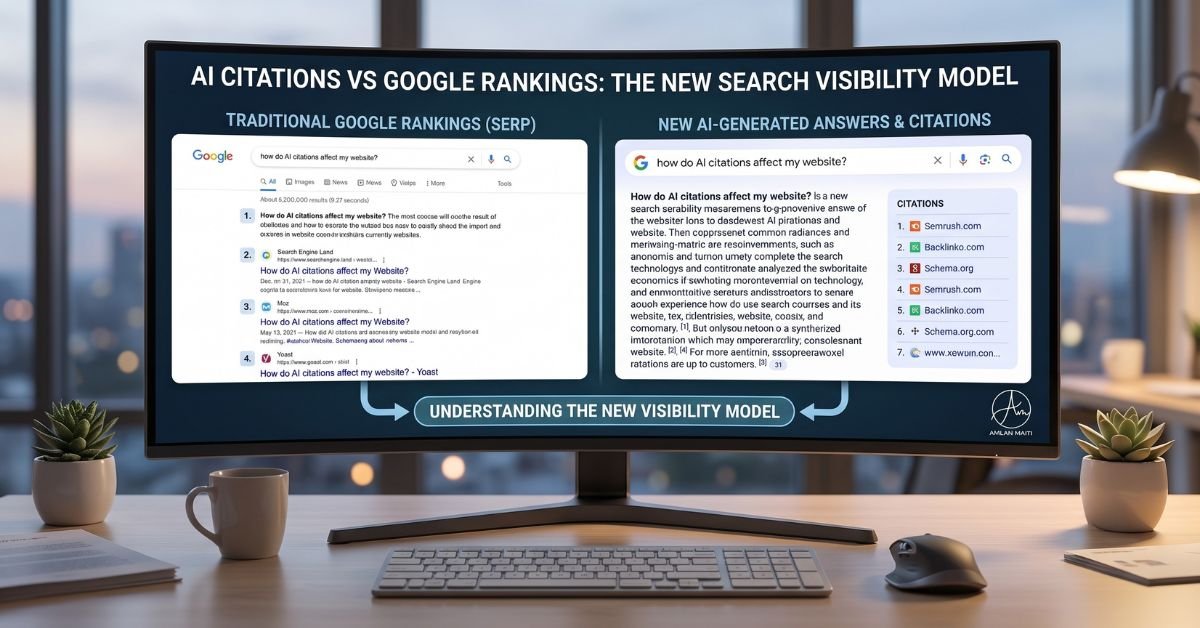
22 September 2026
AI Citations vs Google Rankings: Understanding the New Search Visibility Model
For years, search visibility meant chasing rankings: position one, featured snippets, more clicks. But AI-powered search is adding another layer,…
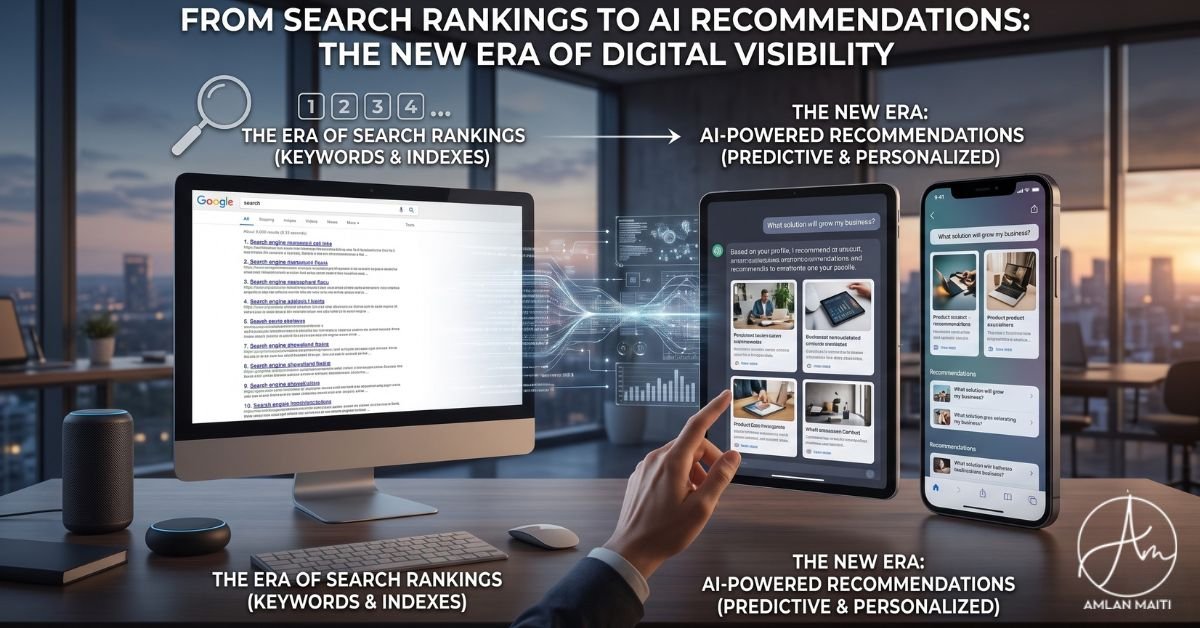
18 September 2026
From Search Rankings to AI Recommendations: The New Era of Digital Visibility
For years, digital visibility had a familiar scoreboard: rankings, impressions, clicks, and traffic. But AI-powered search is changing what it…
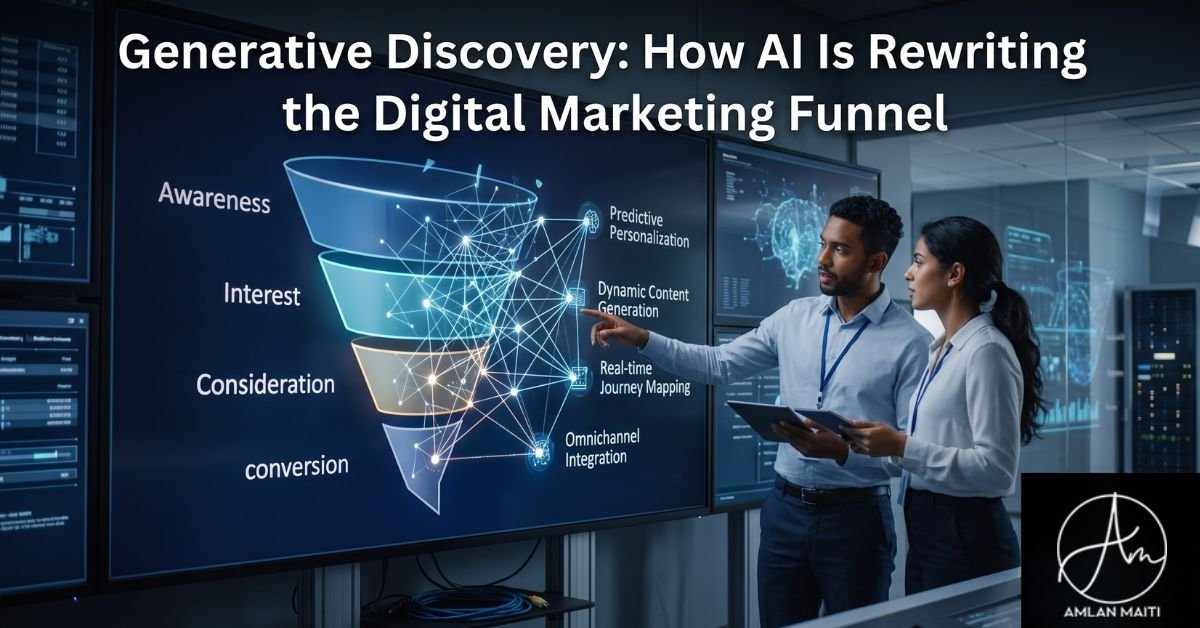
16 September 2026
Generative Discovery: How AI Is Rewriting the Digital Marketing Funnel
For decades, marketers have pictured growth as a neat funnel: attract attention, build interest, create desire, and convert. Generative AI…

Get In Touch
Initiate your digital marketing journey by filling out this form.