



Recent Post
- AI Citations vs Google Rankings: Understanding the New Search Visibility Model
- How Generative Engines Decide Which Brands to Mention
- From Search Rankings to AI Recommendations: The New Era of Digital Visibility
- Why Being Cited by AI Search Engines Matters More Than Traditional Rankings
- How to Build an AI Search Visibility Strategy for Your Personal Brand
- GEO vs SEO vs AEO: What Should Indian Businesses Prioritize in 2026?
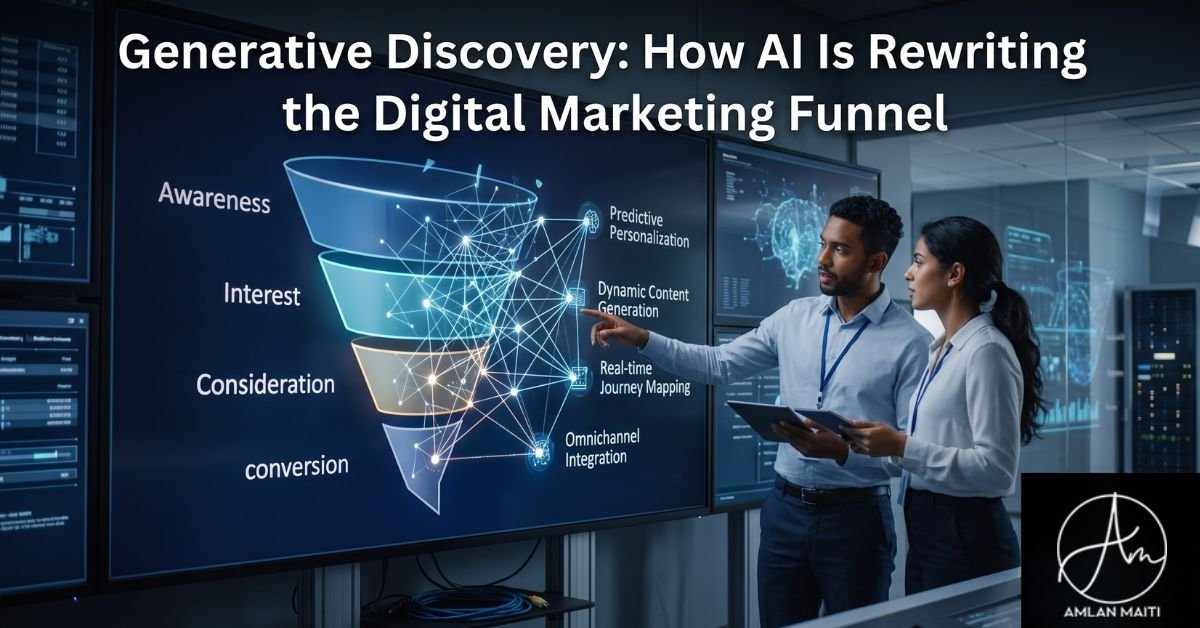
For decades, marketers have pictured growth as a neat funnel: attract attention, build interest, create desire, and convert. Generative AI is making that picture look increasingly outdated. Discovery now happens through conversations, recommendations, summaries, and follow-up questions, often before a customer ever visits a brand website. The funnel is becoming less linear—and far more dynamic.
For businesses working with an AI SEO Specialist in Indonesia, this shift creates a bigger strategic question: how does a brand remain visible when AI increasingly helps customers decide what to explore, trust, compare, and eventually buy?
The Traditional Funnel Was Built for a Different Internet
The classic marketing funnel assumes that customers move through recognisable stages. They discover a brand, research it, compare alternatives, develop preference, and eventually convert.
It worked reasonably well when search engines mostly delivered lists of webpages and customers did much of the research themselves.
But imagine today’s customer journey. A potential buyer might ask an AI assistant for suitable products, follow up with a question about pricing, ask for alternatives, request a comparison, and then ask which providers appear most suitable for a specific situation.
There may be no obvious moment when the customer moves neatly from “awareness” to “consideration.” The journey loops.
Sometimes the customer encounters a brand for the first time while already evaluating options.
That is the core idea behind generative discovery: AI can influence what people discover and consider before conventional website traffic even enters the picture.
What Is Generative Discovery?
Generative discovery is the process through which people encounter brands, products, ideas, and solutions through AI-generated responses rather than relying exclusively on conventional search-result pages, advertisements, or social feeds.
Instead of asking, “Which websites rank for this keyword?”, a customer may ask:
- Which companies can solve this particular problem?
- What are the differences between these solutions?
- What should I consider before choosing one?
- Which option makes sense for my budget or industry?
- What mistakes should I avoid?
The AI system can then synthesize information from multiple sources and continue the conversation.
This changes discovery from a destination into an interaction.
And that seemingly small change has major consequences for digital marketing.
AI Is Moving Discovery Closer to Decision-Making
Traditional discovery often happened at the very top of the funnel. A person searched for something broad, encountered a brand, and gradually moved toward a commercial decision.
Generative search can compress those stages.
Someone researching “how to improve ecommerce conversion rates” might immediately ask an AI tool for practical recommendations. The next question could involve agencies, software platforms, technical solutions, or implementation costs.
In other words, the same conversational environment can support awareness, education, comparison, and early purchase research.
Google has reported that users testing AI Mode often ask substantially longer questions than traditional searchers. In its 2025 announcements, Google described early AI Mode queries as roughly two to three times longer than conventional searches. Google’s official AI Mode information describes the broader move toward more complex, conversational search experiences.
Longer questions generally carry more context. And more context gives AI systems more opportunity to understand intent beyond a single keyword.
The Funnel Is Becoming a Conversation
Think about the difference between these two journeys.
Traditional: Search → Website → Article → Product page → Contact form.
Generative: Question → AI answer → Follow-up question → Comparison → Source exploration → Brand website → Decision.
The second journey is less predictable.
But it can also be more informative. By the time someone reaches a company’s website, they may already understand the problem, know several competing options, and have a rough idea of what they want.
This creates a new challenge for marketers: the website cannot assume it is introducing the problem for the first time.
It may be entering the journey halfway through.
Why Brand Visibility Is Changing
Traditional SEO often focuses heavily on rankings, clicks, impressions, and traffic. Those metrics remain important, but generative discovery adds another question: Is the brand being mentioned when customers ask relevant questions?
A company might rank well for a commercial keyword yet rarely appear in AI-generated discussions around its category. Another company may receive fewer traditional clicks but repeatedly appear as a referenced source in conversations about a particular problem.
Neither situation tells the entire story by itself.
However, it highlights why AI search visibility is becoming an important extension of organic marketing.
AI systems need context. They need to understand what a company does, who it serves, what it knows, and why its information might be useful.
That means brand authority increasingly depends on more than having a collection of pages targeting individual keywords.
Generative Discovery Changes Content Strategy
Content marketing has traditionally been organised around keywords, topics, formats, and publishing calendars.
Generative discovery encourages a different starting point: customer questions.
Instead of producing another generic article about “digital marketing tips,” a company might investigate the questions customers actually ask during different decision stages.
For example:
- Problem stage: Why are website visitors not becoming leads?
- Research stage: What should a business audit before increasing its marketing budget?
- Comparison stage: What is the difference between SEO, GEO, and paid search?
- Decision stage: What should I evaluate before hiring an AI-focused marketing agency?
This creates a connected information ecosystem rather than a pile of disconnected blog posts.
It also gives AI systems more opportunities to associate the brand with specific subjects and questions.
Zero-Click Search Makes the Funnel Even More Interesting
Generative discovery is closely connected with the rise of zero-click search.
When a user receives a useful answer directly within a search experience, there may be less immediate need to click a conventional result.
A July 2025 Pew Research Center analysis of U.S. browsing activity provides an important illustration. In its March 2025 dataset, about 18% of Google searches produced an AI-generated summary. Traditional search-result clicks occurred less frequently when an AI summary was present than when one was absent. Pew Research Center notes that the study covered 68,879 searches from 900 U.S. adults and represents that specific population and period.
The lesson is not that website traffic suddenly has no value.
It is that visibility can happen before the click.
A brand may influence a customer’s understanding of a category without receiving an immediate website visit. That makes brand mentions in AI search, citations, and inclusion in relevant answers worth monitoring alongside conventional traffic metrics.
Trust Becomes a Bigger Part of the Funnel
When AI systems summarize information, they need sources they can retrieve and interpret. This makes credibility increasingly important.
A page filled with vague promotional language gives little substance to an AI system—or a human reader, for that matter.
By contrast, content containing original research, transparent explanations, practical examples, expert perspectives, relevant data, and clearly stated limitations gives users something concrete to evaluate.
Google’s guidance around creating helpful, reliable, people-first content similarly emphasises original value, expertise, clear purpose, and content created primarily to help people rather than manipulate search rankings. Google Search Central provides its current guidance on these principles.
For generative discovery, this is especially relevant. The strongest content does not merely say, “We are experts.” It demonstrates expertise through what it teaches.
The New Funnel Needs New Measurement
Marketers do not need to throw away their existing analytics dashboards. They need to add another layer.
A more complete measurement framework can examine:
- Traditional visibility: rankings, impressions, organic clicks, and landing-page performance.
- Generative visibility: brand mentions, citations, source references, and appearance in relevant AI answers.
- Engagement: branded searches, direct visits, content engagement, and returning users.
- Commercial impact: qualified enquiries, sales opportunities, conversions, and revenue.
AI visibility measurement is still developing, and results can vary by platform, prompt, geography, user context, and time. Therefore, a single AI response should not be treated as a definitive performance score.
Patterns matter more than snapshots.
How Brands Can Prepare for Generative Discovery
The good news is that the fundamentals are not mysterious. Businesses can start by making their digital presence easier to understand and more useful.
Build topical depth
Cover the questions surrounding your expertise, not just the commercial keywords attached to it.
Make important information easy to find
Clear navigation, logical internal linking, descriptive headings, structured content, and accessible pages help both users and search systems understand your website.
Show evidence of expertise
Use original examples, data, author information, practical experience, case-specific observations, and credible references where appropriate.
Think beyond your own website
Brand authority is increasingly distributed across the wider web. Industry references, professional profiles, reviews, publications, and other trustworthy mentions can contribute to how a company is understood.
Most importantly, avoid treating generative optimization as a trick for forcing an AI system to mention your company. There is no reliable shortcut.
The stronger strategy is to become genuinely useful for the questions your market is asking.
Frequently Asked Questions
What does generative discovery mean in digital marketing?
Generative discovery describes how customers find brands, products, and information through AI-generated answers and conversational search experiences rather than relying only on traditional search-result pages, advertisements, or social platforms.
Is generative discovery replacing the traditional marketing funnel?
Not completely. Traditional funnel stages still exist, but AI can compress, overlap, and reorder them. A customer may discover a brand while already comparing solutions, then use AI to ask follow-up questions before visiting the website.
Why is AI search visibility important for brands?
AI search visibility can influence whether a brand is mentioned, referenced, or cited when potential customers ask relevant questions. This creates an additional discovery channel alongside conventional organic search.
How should businesses optimize content for generative discovery?
Businesses should focus on useful, specific, well-supported content that answers real customer questions. Strong technical SEO, clear topical structure, original insights, credible evidence, and consistent brand information can all support better discoverability.
Final Thoughts
The marketing funnel is not disappearing. It is becoming less like a funnel and more like a conversation that bends, loops, and occasionally skips steps.
Generative discovery is at the centre of that change. Brands now have to compete not only to rank, but to be understood, remembered, referenced, and considered inside AI-driven journeys.
That makes the next phase of digital marketing less about publishing more and more about becoming genuinely useful at the exact moment a customer asks the right question.
Blog Development Credit
Conceptualized by Amlan Maiti, researched and developed with advanced AI tools, then refined and SEO-optimized by Digital Piloto Private Limited.
Related Articles
22 September 2026
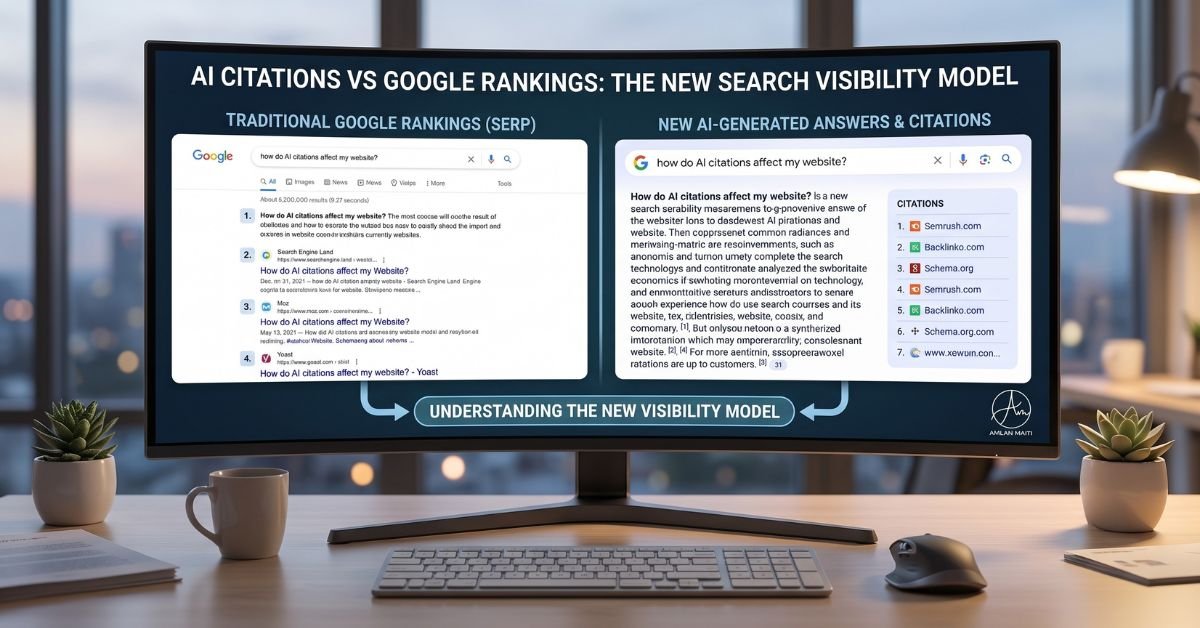
AI Citations vs Google Rankings: Understanding the New Search Visibility Model
For years, search visibility meant chasing rankings: position one, featured snippets, more clicks. But AI-powered search is adding another layer,…

20 September 2026
How Generative Engines Decide Which Brands to Mention
Search is no longer just a list of blue links. Generative engines increasingly interpret questions, compare sources, and assemble answers…
18 September 2026
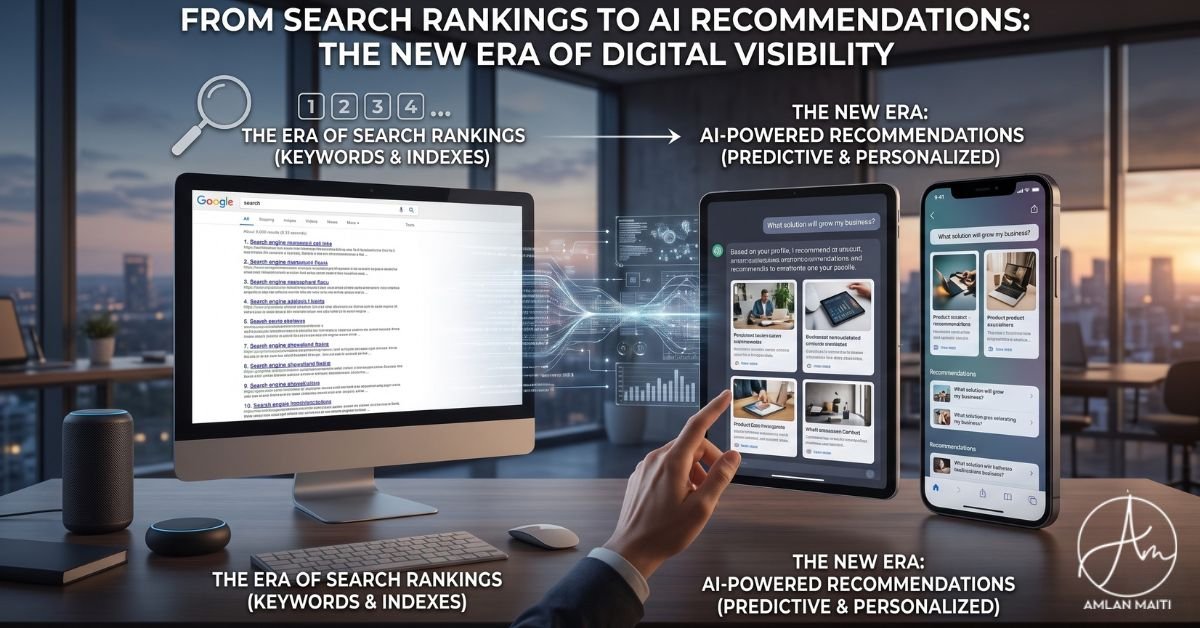
From Search Rankings to AI Recommendations: The New Era of Digital Visibility
For years, digital visibility had a familiar scoreboard: rankings, impressions, clicks, and traffic. But AI-powered search is changing what it…

Get In Touch
Initiate your digital marketing journey by filling out this form.