




Recent Post
- How Multi-Agent AI Systems Could Reshape Performance Marketing
- Knowledge Graph SEO: Why Entities Matter in the Age of AI Search
- AI Discovery Index: A New Way to Think About Brand Visibility
- How to Optimize Content for AI Answers Without Losing Human Engagement
- The Future of SEO: From Keywords and Rankings to Entities and AI Retrieval
- How to Measure GEO Performance When AI Answers Keep Changing
Imagine a marketing team that does not simply wait for instructions but notices a campaign slipping, investigates why, adjusts the next action and reports back. That is the promise of agentic AI. For businesses, it signals a shift from using AI as a content assistant to using autonomous systems that can coordinate real marketing work.
For example, an AI SEO Expert in Oman can use agentic workflows to monitor search behaviour, identify content opportunities and support optimisation decisions. The bigger idea, though, extends far beyond SEO: AI agents are beginning to influence the entire customer journey.
What Makes Agentic AI Different?
Traditional automation follows instructions. Generative AI creates content when prompted. Agentic AI sits somewhere further along that spectrum: it can interpret a goal, break it into tasks, use connected tools, evaluate results and take another action with limited human intervention.
IBM describes AI agents as systems capable of reasoning and acting toward complex goals rather than simply responding to individual prompts. Its research also notes that agents are being explored across customer engagement, campaign management, content and performance analysis.
Where Autonomous AI Agents Are Changing Marketing
1. Campaign Management Becomes Continuous
A conventional campaign might be planned, launched and reviewed weekly. An agentic workflow can continuously watch performance and flag—or, where authorised, make—adjustments.
- Monitor campaign performance and audience behaviour.
- Identify underperforming audiences or creative variations.
- Recommend budget, targeting or messaging changes.
- Trigger follow-up actions based on predefined business rules.
This does not mean handing the advertising account completely to a machine. Smart businesses will define boundaries: what an agent can change independently, what requires approval and what should always reach a human.
2. Personalisation Moves Beyond First Names
Personalisation has often meant inserting a customer’s name into an email. Agentic AI can make the process considerably more contextual. An agent can potentially combine behavioural signals, purchase history, previous interactions and current intent to determine which message or next step makes sense.
For a B2B company, that might mean recognising that a prospect repeatedly reads implementation content and suggesting a technical case study. For an ecommerce brand, it could mean identifying a returning shopper’s changing interests and adapting recommendations accordingly.
3. Customer Journeys Become More Responsive
Perhaps the most interesting change is that marketing and customer service begin to overlap. Instead of treating the journey as a fixed funnel, AI agents can respond to what the customer is actually doing.
Salesforce reported that the number of agents created and deployed by participating first-mover organisations increased 119% during the first half of 2025. Its data also showed sales and customer service among the leading areas for agent adoption.
Agentic AI and SEO: A New Operating Model
SEO is another area where agents could change the rhythm of work. Instead of waiting for a monthly report, an AI system can continuously monitor technical signals, search trends, competitors and content gaps.
A useful agentic SEO workflow might:
- Detect changes in rankings, crawling or search demand.
- Connect those changes with relevant pages and topics.
- Prioritise opportunities according to business value.
- Draft recommendations or content briefs for human review.
- Measure the outcome and feed the learning into the next cycle.
This is where AI-powered digital marketing becomes more interesting. The goal is not simply producing more content. It is creating a system that learns which actions are worth taking.
What Business Owners Should Not Automate Blindly
Autonomy sounds exciting until an agent makes the wrong decision at scale. A poorly governed system could overspend an advertising budget, publish inaccurate claims, mishandle customer information or create messaging that damages a brand.
That is why responsible agentic marketing needs guardrails around:
- Brand voice: Humans should define what the brand can and cannot say.
- Data access: Agents should only access information necessary for their assigned tasks.
- Financial actions: Significant budget changes should require appropriate approval.
- Escalation: Sensitive customer or reputational issues should move to a human.
IBM likewise highlights governance, monitoring, security and human oversight as important considerations because autonomous systems can introduce risks involving bias, privacy and cybersecurity.
How Businesses Can Start Small
There is no need to build a futuristic marketing department overnight. Start with one repetitive, measurable problem. Salesforce recommends identifying specific bottlenecks, performance gaps and areas where greater speed or personalisation could create value before deploying agentic workflows.
Good starting points include lead qualification, reporting, content opportunity discovery, customer follow-ups and campaign monitoring. Once an agent proves reliable, its responsibilities can gradually expand.
FAQs
What is agentic AI marketing?
Agentic AI marketing uses autonomous or semi-autonomous AI agents to analyse information, make decisions and execute connected marketing tasks toward defined business goals.
Is agentic AI the same as marketing automation?
No. Traditional automation generally follows predefined rules. Agentic AI can interpret context, select actions and adapt its next step based on outcomes, although the exact level of autonomy depends on the system.
Can small businesses use AI agents?
Yes. Small businesses can begin with focused workflows such as lead qualification, customer responses, reporting or campaign monitoring instead of attempting complete marketing autonomy.
Will AI agents replace marketing teams?
They are more likely to change how marketing teams work. Agents can handle repetitive analysis and execution, while humans remain important for strategy, creativity, judgment, relationships and accountability.
Final Thoughts
Agentic AI is not simply another faster content-generation tool. Its real significance is operational: marketing can become a continuous system that observes, decides, acts and learns. Businesses that combine that autonomy with clear objectives, quality data and human oversight will be better positioned to turn AI from an interesting experiment into a practical growth engine.
Blog Development Credit
This article was conceptualized by Amlan Maiti, researched and developed with advanced AI tools, then refined for search performance by Digital Piloto Private Limited.
Related Articles
02 October 2026
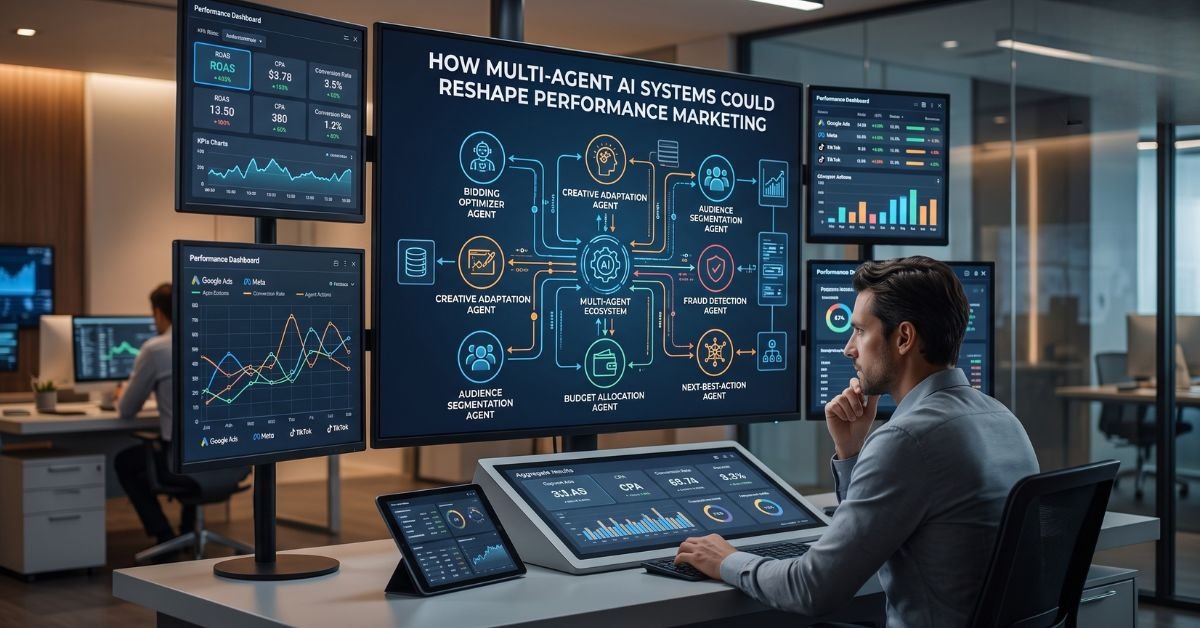
How Multi-Agent AI Systems Could Reshape Performance Marketing
Performance marketing has always been about coordination: media buyers, analysts, creative teams and marketers watching the same funnel from different…
30 September 2026
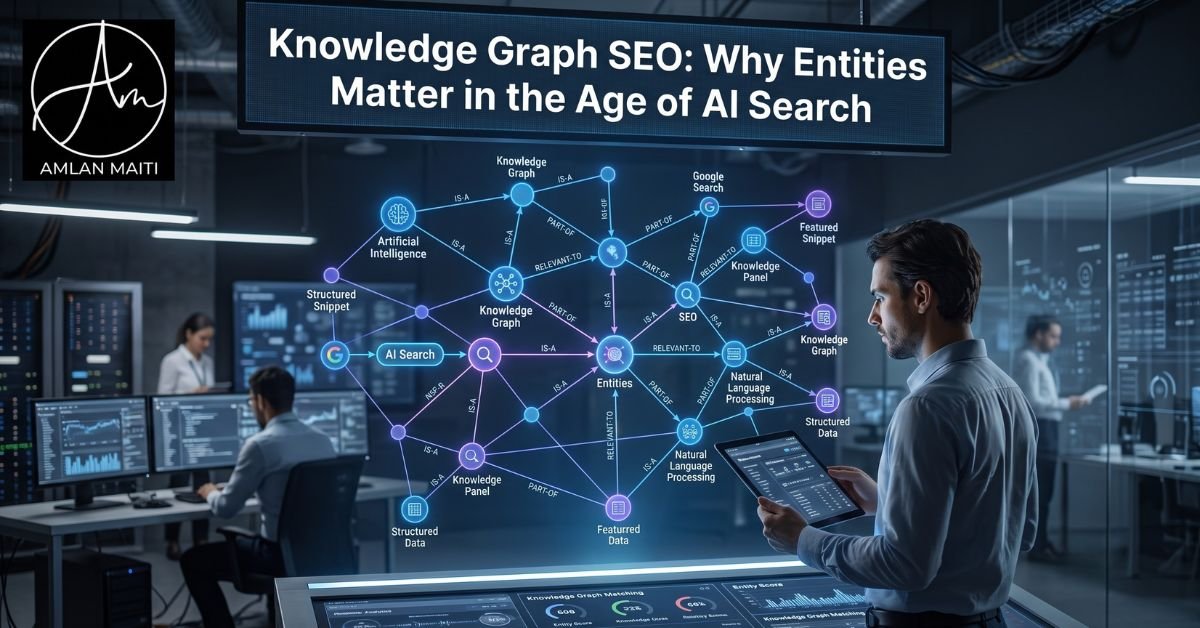
Knowledge Graph SEO: Why Entities Matter in the Age of AI Search
Search engines are no longer simply matching words on pages. They are trying to understand people, businesses, products, places, and…
28 September 2026
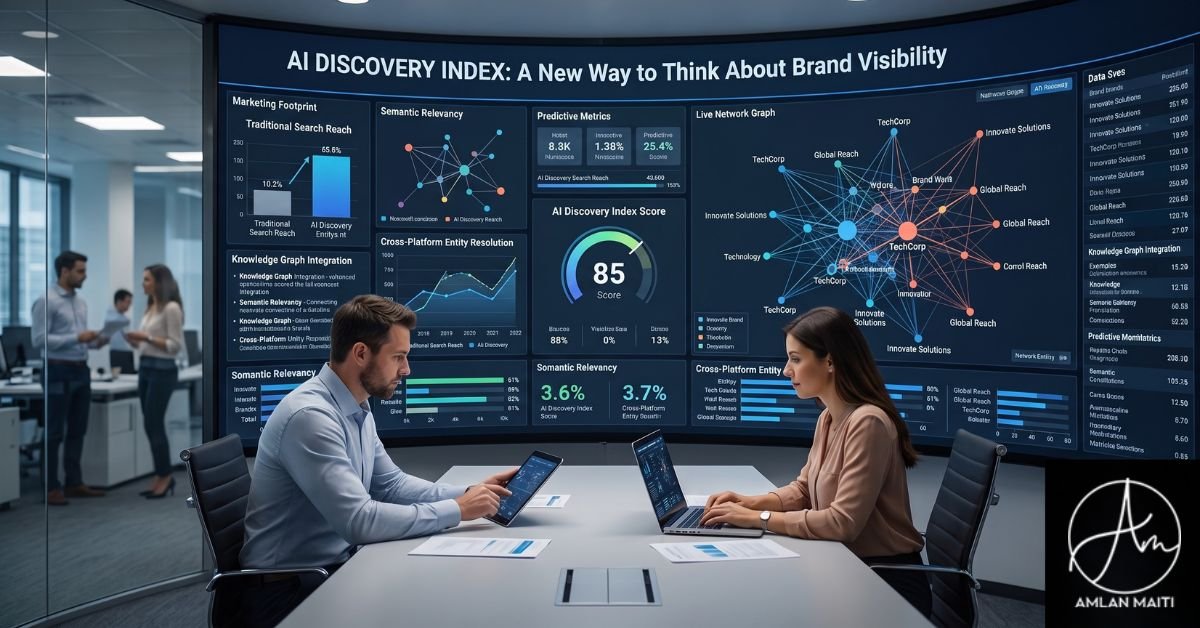
AI Discovery Index: A New Way to Think About Brand Visibility
For years, brand visibility had a familiar scoreboard: rankings, impressions, clicks, and traffic. AI search is quietly changing that game.…

Get In Touch
Initiate your digital marketing journey by filling out this form.