




Recent Post
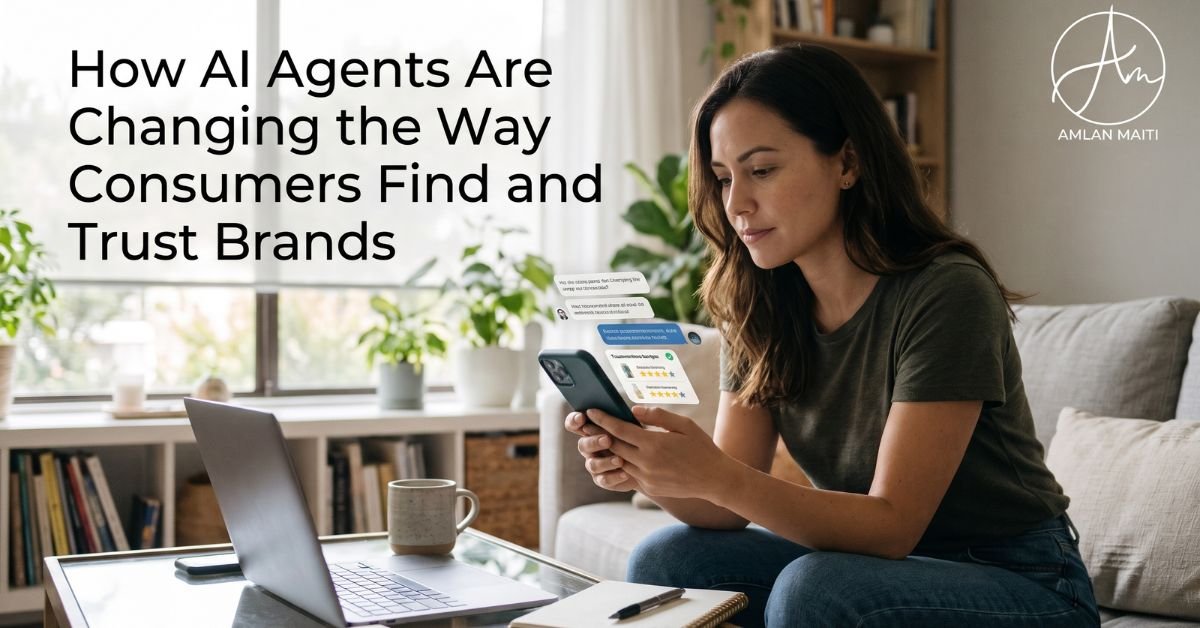
- How AI Agents Are Changing the Way Consumers Find and Trust Brands
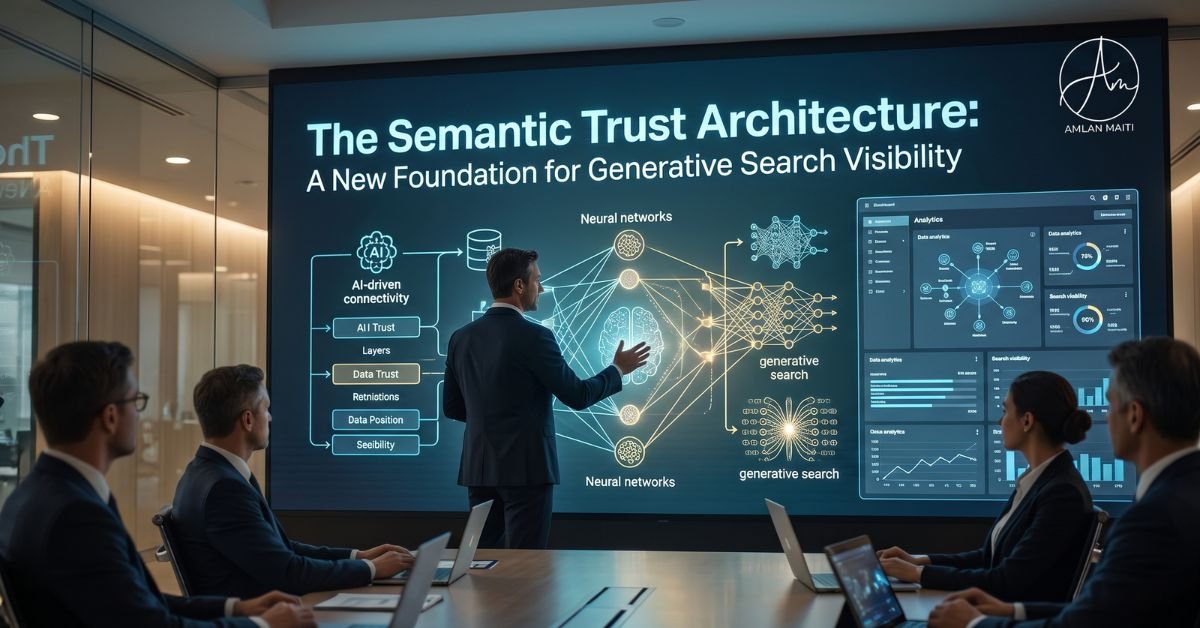
- The Semantic Trust Architecture: A New Foundation for Generative Search Visibility
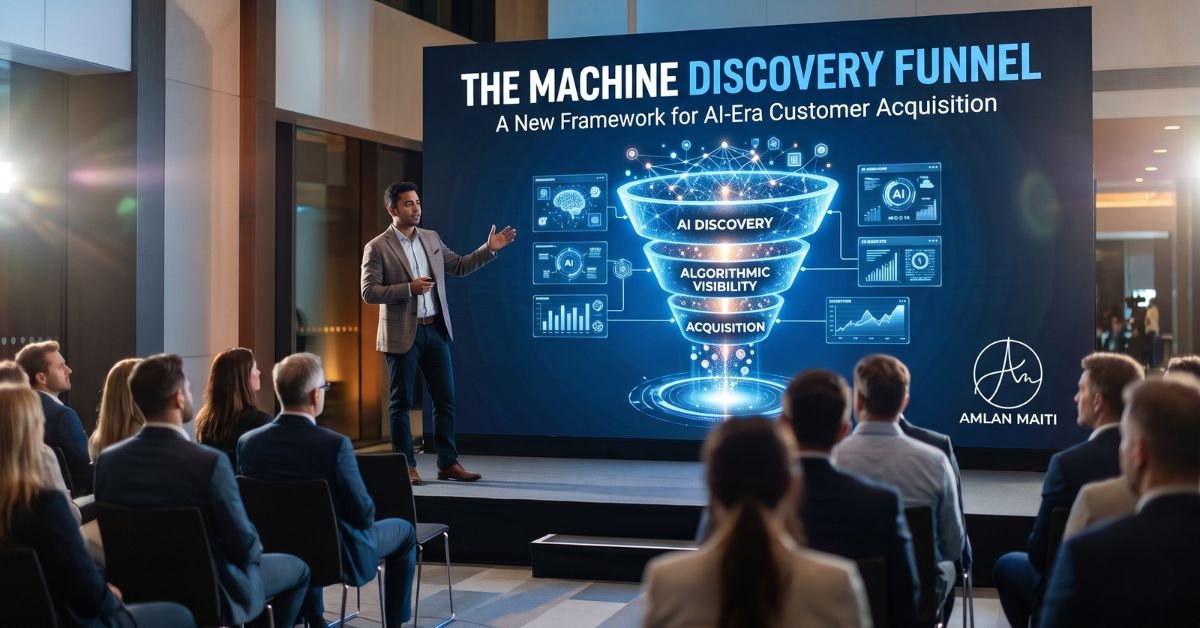
- The Machine Discovery Funnel: A New Framework for AI-Era Customer Acquisition
- Beyond Local Rankings: Becoming the Preferred Business in AI Recommendations
- AI-Powered Review Intelligence: Understanding Customer Sentiment at Scale
- How AI Agents Will Change the Way Customers Discover and Choose Brands
Imagine a sales team that never misses a promising enquiry, understands what a prospect needs before the first conversation, and follows up at the right moment without drowning in repetitive work. That is the promise of AI-powered agents. Used thoughtfully, they could change customer acquisition from a series of manual tasks into a more responsive, connected growth process.
An AI SEO expert understands that customer acquisition is not simply about generating more leads. It is about finding the right people, understanding their intent, building trust, and helping them move towards a decision. AI agents may make this process more intelligent—but the real revolution depends on how businesses use them.
What Makes an AI Agent Different?
Many businesses already use AI to write emails, summarise reports, or generate advertising ideas. AI-powered agents take the concept a step further. They can be designed to pursue a defined goal, use connected tools, evaluate information, and complete a sequence of tasks with varying levels of independence.
Think of a traditional automation workflow as a train following fixed tracks. If the expected event happens, the next step runs. An AI agent is closer to a capable assistant who can review the situation, choose from approved actions, and adjust its approach when new information appears.
For customer acquisition, that could mean researching a potential account, identifying relevant business needs, preparing a personalised first message, updating a CRM record, and recommending a suitable follow-up. The agent does not necessarily perform every action alone; it may request approval before contacting a prospect or changing important records.
The distinction matters because customer acquisition is rarely a perfectly predictable process. Prospects have different questions, budgets, timelines, and decision-making styles. An agent can help teams respond to that variety more efficiently.
Why Businesses Are Exploring Agentic AI
Customer acquisition has become a demanding mix of research, advertising, content, qualification, follow-up, and relationship building. Sales teams may spend valuable hours searching for account information or updating records instead of speaking with potential customers.
Research suggests that businesses are actively exploring the technology, although many are still learning how to scale it. McKinsey’s 2025 global AI survey found that 23% of respondents said their organisations were scaling AI agent systems somewhere in the business, while another 39% were experimenting with them. The figures reflect adoption across business functions, not customer acquisition alone.
For sales teams in India, the interest is also visible. Salesforce reported in March 2026 that 91% of surveyed Indian sales professionals considered AI agents mission-critical to business success. The India sample included 250 sales professionals within a broader international survey of 4,050 respondents conducted in August and September 2025. These are survey findings, not a guarantee that every company will see similar results.
The direction is clear enough: businesses want to increase their capacity without simply adding more manual work.
Where AI Agents Can Improve Customer Acquisition
1. Finding better-fit prospects
Lead generation often begins with broad lists. An agent can help enrich those lists using permitted business information, compare prospects against an ideal customer profile, and identify signals that suggest a potential fit.
For example, a B2B software company may target businesses expanding their sales teams. An agent could review approved company data, identify relevant organisations, and prepare a concise account brief for a salesperson. The human team can then focus on the most promising opportunities rather than researching every company from scratch.
2. Understanding customer intent
Not every visitor is ready to buy. Someone reading a beginner’s guide may be exploring a problem, while someone comparing pricing and implementation options may be closer to a decision.
AI agents can help interpret permitted engagement signals and organise prospects by likely needs or stage. They might recommend educational content for an early-stage visitor or suggest a consultation for someone requesting detailed service information.
These predictions should be treated as useful signals, not certain knowledge. A visitor’s behaviour can be incomplete or misleading, and businesses should avoid making sensitive assumptions about individuals.
3. Personalising outreach without losing relevance
Personalisation is often reduced to inserting a prospect’s name into an email. Genuine relevance requires more than that. An agent can help connect a message to a prospect’s role, industry, publicly stated business priorities, or a specific problem the company’s service addresses.
The goal should be a message that feels informed, not intrusive. A short, useful note explaining why a solution may be relevant is generally more valuable than a long email pretending to know everything about the recipient.
4. Improving lead response and follow-up
When enquiries arrive outside business hours, an agent can acknowledge the request, answer approved basic questions, collect necessary details, and route the lead to the appropriate team. It may also remind sales representatives when a promised follow-up is due.
This can reduce the chance of a qualified enquiry being forgotten. Still, complex questions, pricing exceptions, complaints, and high-value opportunities should have a clear path to a human representative.
How an Agent-Based Acquisition Workflow Could Work
Picture a company offering website development and digital marketing services. A potential customer visits its website, reads a service page, and submits an enquiry about improving lead generation.
A connected agent workflow might look like this:
- Capture: The enquiry enters the CRM with its source, requested service, and consent details.
- Understand: The agent summarises the prospect’s stated goal and identifies missing information.
- Qualify: It compares the enquiry with the company’s approved qualification criteria without inventing facts.
- Assist: It prepares a relevant response, recommends a useful resource, or suggests a meeting.
- Route: The lead is assigned to the appropriate salesperson or team based on established rules.
- Learn: The business reviews outcomes to improve its qualification criteria and follow-up process.
This is where the technology becomes more than a chatbot. The agent supports a connected sequence of activities, while the business defines its objectives, boundaries, and escalation rules.
AI Agents Can Support SEO and Digital Marketing
Customer acquisition often begins long before a prospect speaks to sales. Search visibility, useful content, paid campaigns, and website experience all influence whether a potential customer discovers and trusts a business.
AI agents can assist with analysing search queries, grouping content opportunities, monitoring campaign patterns, identifying landing-page issues, and preparing performance summaries. They may also help connect marketing insights with sales feedback.
For example, if sales teams repeatedly hear that prospects are confused about implementation costs, an agent could flag the pattern and suggest reviewing the relevant service page or creating a clearer pricing guide. The marketing team still decides what to publish, but it receives a more timely signal from customer conversations.
Agents may also help businesses maintain a more consistent follow-up experience across channels. However, they should not automatically publish large volumes of content or launch campaigns without quality checks. More activity is not necessarily better acquisition.
What Businesses Must Get Right Before Deploying Agents
AI agents can create new problems when the underlying business process is weak. If customer records are outdated, qualification rules are vague, or the service offering is poorly defined, an agent may simply perform the wrong task faster.
Before deployment, businesses should pay attention to three foundations:
- Reliable data: Keep CRM records accurate, remove duplicates, and define which data sources an agent may use.
- Clear operating rules: Specify the agent’s goal, permitted actions, approval requirements, and situations that require human intervention.
- Customer trust: Be transparent where appropriate, respect consent and privacy requirements, and avoid misleading or excessively automated outreach.
Security deserves particular attention. Agents connected to email, CRM systems, advertising accounts, or customer databases may have access to sensitive information. Permissions should follow the principle of least privilege: give an agent only the access it needs to perform its assigned task.
Measure Results Beyond the Number of Leads
It is easy to celebrate an agent that generates hundreds of prospects or sends thousands of messages. But customer acquisition is about business outcomes, not activity alone.
Businesses should evaluate whether the system improves qualified lead volume, response time, conversion rate, customer acquisition cost, sales-cycle duration, and revenue contribution. They should also monitor negative signals such as complaints, unsubscribes, inaccurate messages, and poor-fit leads.
A useful comparison is to measure the same workflow before and after introducing the agent. If the agent reduces research time but does not improve lead quality or sales productivity, the business may need to rethink its process rather than simply expand deployment.
Will AI Agents Replace Human Sales and Marketing Teams?
Probably not in the way some headlines suggest. Agents are well suited to research, coordination, repetitive communication, and structured decisions. Human professionals remain essential for understanding nuanced needs, building relationships, negotiating, resolving uncertainty, and taking responsibility for important commitments.
In many cases, the strongest model will be a partnership. The agent prepares the context, handles routine work, and keeps the process moving. The human salesperson brings judgment, empathy, and the ability to understand what a customer has not explicitly said.
Businesses should also recognise that not every customer wants an automated interaction. Some prefer a quick self-service answer; others want to speak with a real person immediately. A good acquisition system makes both paths available.
FAQs
1. What are AI-powered agents in customer acquisition?
AI-powered agents are systems designed to pursue defined goals by analysing information, using connected tools, and completing multiple steps. In customer acquisition, they can support prospect research, lead qualification, outreach preparation, and follow-up.
2. Can AI agents generate qualified leads automatically?
They can assist with identifying and qualifying potential leads based on approved criteria and available data. However, lead quality depends on accurate information, suitable targeting, and human review where needed.
3. Are AI agents suitable for small businesses?
Yes, when the use case is focused and the workflow is manageable. A small business might begin with enquiry routing, CRM updates, or basic lead research rather than deploying a complex autonomous sales system.
4. How should businesses measure AI agent performance?
Measure qualified leads, conversion rates, response time, acquisition cost, sales-cycle length, and revenue contribution. Also monitor errors, customer complaints, and whether the agent improves the experience for prospects.
Final Thoughts
AI-powered agents could revolutionise customer acquisition—not by removing the human side of selling, but by making it easier to focus on the moments that matter. When businesses combine reliable data, thoughtful automation, clear safeguards, and human judgment, agents can help turn scattered marketing and sales activities into a more responsive growth engine.
Blog Development Credits
Created with direction from Amlan Maiti, this article draws on research and AI-assisted drafting with ChatGPT, Gemini, and Copilot, followed by SEO refinement from Digital Piloto Private Limited.
Related Articles
24 November 2026
How AI Agents Are Changing the Way Consumers Find and Trust Brands
Consumers once discovered brands by walking through stores, scrolling search results, or asking friends for recommendations. Now, they can ask…
22 November 2026
The Semantic Trust Architecture: A New Foundation for Generative Search Visibility
Generative search is changing how people discover and evaluate businesses. Instead of simply scanning a page of links, users increasingly…
21 November 2026
The Machine Discovery Funnel: A New Framework for AI-Era Customer Acquisition
Customer acquisition used to follow a fairly familiar path: someone sees an advertisement, visits a website, compares options, and eventually…

Get In Touch
Initiate your digital marketing journey by filling out this form.