



Recent Post
- Unlocking Growth: AI SEO Consulting Case Studies and Insights
- Navigating the Future of AI Marketing Strategy
- Unlocking the AI SEO Expert Mindset: Strategies for Success
- Unlocking Success with an AI SEO Agency Blueprint
- Navigating the Future: AI SEO Leadership Strategies for Success
- Unlocking Success with the AI SEO Consulting Playbook
In the rapidly evolving landscape of digital marketing, the debate between AI SEO and traditional content SEO has gained significant traction. Businesses are increasingly exploring how Retrieval-Augmented Generation (RAG) can enhance their content strategies, offering a dynamic alternative to conventional methods. This article delves into the differences between RAG and traditional SEO, examining their effectiveness, benefits, and the future of content optimization.
Understanding Traditional Content SEO
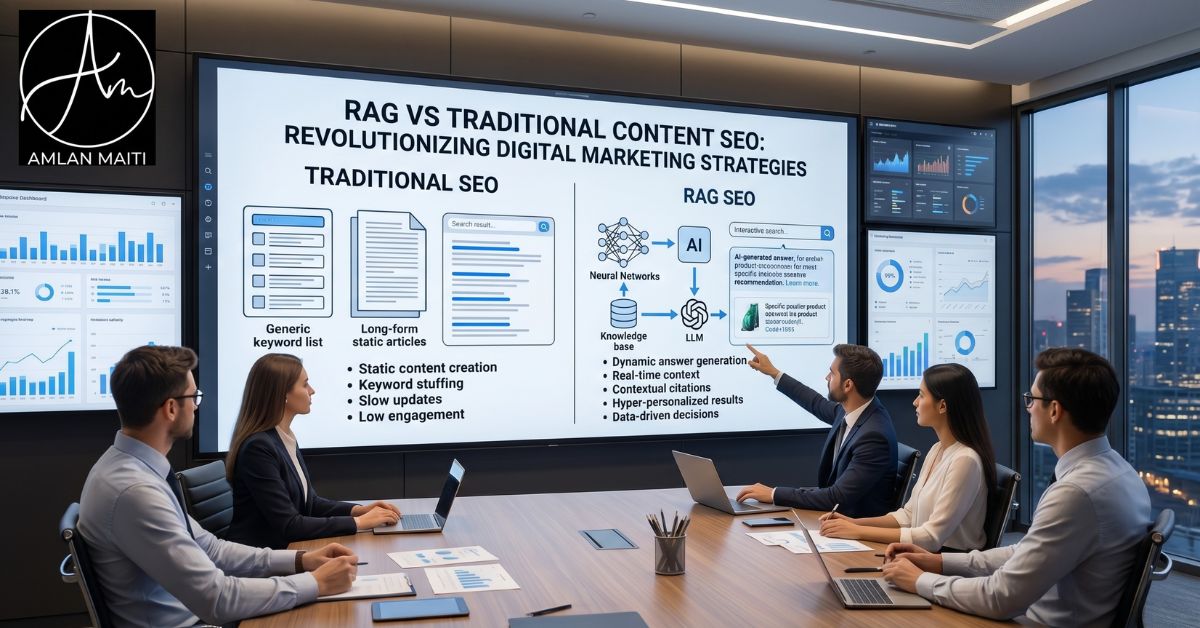
Traditional content SEO primarily focuses on optimizing web pages for specific keywords to improve search engine rankings. This approach relies heavily on keyword density, backlinks, and meta tags. While effective in its time, traditional SEO often falls short in addressing user intent and delivering personalized content experiences.
Limitations of Traditional SEO
- Static Content: Traditional SEO strategies often produce static content that may not engage users effectively.
- Keyword Dependency: Over-reliance on keywords can lead to content that feels forced or unnatural.
- Slow Adaptation: Traditional methods may struggle to keep pace with changing user preferences and search algorithms.
Introducing RAG: A Game Changer in Content Strategy
Retrieval-Augmented Generation (RAG) leverages AI to create content that is not only relevant but also personalized to the user’s needs. By combining retrieval mechanisms with generative models, RAG can produce high-quality content that resonates with audiences in real-time.
Benefits of RAG in Content SEO
- Enhanced Personalization: RAG models analyze user behavior and preferences, allowing for tailored content delivery.
- Dynamic Content Creation: Unlike traditional methods, RAG can generate content that adapts to current trends and user queries.
- Improved Engagement: Businesses utilizing RAG have reported a significant increase in user engagement, with some noting up to a 30% rise in interaction rates.
RAG vs Traditional SEO: A Comparative Analysis
When comparing RAG to traditional SEO, several key differences emerge:
- User Intent Focus: RAG prioritizes understanding user intent, while traditional SEO often fixates on keyword rankings.
- Content Interactivity: RAG enables the creation of interactive and engaging content, contrasting with the static nature of traditional SEO.
- Real-Time Adaptation: RAG can quickly adjust to changes in user behavior and market trends, making it more agile than traditional methods.
Real-World Example:
A leading e-commerce platform recently integrated RAG into their content strategy. By analyzing customer interactions and preferences, they generated personalized product recommendations. The result? A remarkable 20% increase in conversion rates, showcasing the effectiveness of RAG in delivering relevant content.
Tool Spotlight: Enhancing SEO with AI
Utilizing AI tools like ChatGPT and Google Gemini can significantly enhance your content strategy. ChatGPT helps in generating engaging copy and answering user queries effectively, while Google Gemini offers insights into user behavior, allowing for better-targeted content creation. Together, these tools can streamline your SEO efforts and improve overall performance.
Frequently Asked Questions
What is RAG content SEO?
RAG content SEO refers to the use of Retrieval-Augmented Generation models in creating personalized and relevant content. It enhances user engagement and improves search relevance by analyzing real-time data.
How does RAG differ from traditional SEO?
RAG focuses on user intent and dynamic content generation, while traditional SEO relies on static keyword optimization. This makes RAG more adaptable to changing user preferences and search algorithms.
Can RAG improve conversion rates?
Yes, businesses that implement RAG models often see higher conversion rates due to the personalized nature of the content, which resonates better with users and meets their specific needs.
What are the challenges of using RAG?
One major challenge is data privacy. As RAG relies on user data for content personalization, businesses must ensure compliance with regulations like GDPR to avoid potential legal issues.
Is RAG suitable for all industries?
While RAG can benefit various industries, its effectiveness may vary based on the target audience and the nature of the content. Industries that thrive on personalization, such as e-commerce and healthcare, may see the most significant advantages.
Conclusion
As digital marketing continues to evolve, the integration of AI-driven strategies like RAG presents a compelling alternative to traditional content SEO. By focusing on user intent and delivering personalized experiences, businesses can enhance engagement and drive measurable growth. The future of SEO lies in adapting to these innovative approaches, ensuring that brands remain relevant in a competitive landscape.
Blog Development Credits
This blog was developed with insights from Amlan Maiti, an AI-powered digital marketing expert, and optimized by Digital Piloto. Together, they provide cutting-edge solutions for businesses looking to thrive in the digital age.
Related Articles

05 September 2026
Unlocking Growth: AI SEO Consulting Case Studies and Insights
In the fast-evolving landscape of digital marketing, AI SEO consulting has emerged as a game-changer for businesses looking to enhance…

04 September 2026
Navigating the Future of AI Marketing Strategy
The future of AI marketing strategy is rapidly evolving, driven by advancements in technology and changing consumer behaviors. As businesses…

03 September 2026
Unlocking the AI SEO Expert Mindset: Strategies for Success
Understanding the AI SEO Expert Mindset In today’s digital landscape, the AI SEO expert mindset is pivotal for marketers aiming…

Get In Touch
Initiate your digital marketing journey by filling out this form.