




Recent Post
- LLM SEO vs Traditional SEO: Navigating the Future of Search Optimization
- How LLMs Interpret Your Content
- Mastering LLM Content Optimization: A Comprehensive Guide
- Unlocking the Future: Understanding LLM SEO Ranking Signals
- Understanding LLM SEO: The Future of Search Engine Optimization
- Mastering GEO Strategy for Consultants: Trends, Tools, and Tactics
In the rapidly evolving landscape of digital marketing, the integration of Artificial Intelligence (AI) has become a game-changer. However, with the advent of stringent data regulations such as the General Data Protection Regulation (GDPR) and India-specific data protection laws, businesses face new challenges in leveraging AI for marketing. This blog explores how these regulations impact AI-driven marketing strategies and the steps businesses can take to comply while maintaining effectiveness.
Understanding GDPR and India-Specific Data Regulations
GDPR, implemented in 2018, is a comprehensive data protection law in the European Union that sets guidelines for the collection and processing of personal information. Similarly, India is on the brink of enforcing its Personal Data Protection Bill, which aims to regulate data handling practices. These regulations emphasize data privacy and consumer consent, compelling businesses to rethink their data strategies.
The Role of AI in Modern Marketing
AI-driven marketing utilizes algorithms to analyze consumer data, predict behaviors, and deliver personalized experiences. However, the reliance on vast amounts of data makes it susceptible to regulatory scrutiny. Businesses must adapt their AI strategies to comply with data protection laws while still achieving marketing goals.
Key Impacts of Data Regulations on AI Marketing
1. Data Minimization and Its Importance
Data minimization is a critical aspect of compliance, requiring businesses to collect only the necessary data for their marketing activities. This approach reduces the risk of data breaches and ensures adherence to regulations. For instance, companies are now focusing on collecting anonymized data to maintain consumer privacy.
2. Enhanced Consumer Consent Mechanisms
Under GDPR and similar laws, obtaining explicit consumer consent is paramount. Businesses are implementing robust consent management systems to ensure transparency in data collection processes. This not only builds trust with consumers but also aligns with regulatory requirements.
3. Privacy-Enhancing Technologies (PETs)
Organizations are investing in Privacy-Enhancing Technologies (PETs) like differential privacy and federated learning. These technologies allow data processing in a way that enhances privacy while still enabling effective AI-driven marketing. PETs are becoming essential tools for businesses aiming to balance personalization with privacy.
Tool Spotlight: Implementing PETs
Tools like Google’s TensorFlow Privacy and IBM’s AI Privacy Toolkit are leading the charge in PETs. TensorFlow Privacy helps integrate differential privacy into AI models, ensuring data anonymity. IBM’s toolkit offers a suite of tools for privacy-preserving AI, aiding businesses in compliance and innovation.
4. Balancing Personalization and Privacy
One of the major challenges is delivering personalized experiences while adhering to data protection laws. Businesses must innovate in data handling practices to maintain personalization without compromising privacy. This often requires significant changes in AI algorithms and data processing methods.
Real-World Example: A Healthcare Company’s Compliance Journey
A leading healthcare company in Europe revamped its AI marketing strategy to comply with GDPR. By adopting data minimization and enhancing consumer consent mechanisms, they maintained compliance while improving customer trust. This strategic shift resulted in a 20% increase in customer engagement, demonstrating the effectiveness of compliant AI-driven marketing.
FAQs
1. What is data minimization, and why is it important?
Data minimization involves collecting only the data necessary for specific purposes. It’s important because it reduces compliance risks, protects consumer privacy, and aligns with regulations like GDPR.
2. How do Privacy-Enhancing Technologies (PETs) benefit AI marketing?
PETs enhance privacy by allowing data processing without compromising personal information. They enable businesses to comply with regulations while still leveraging AI for effective marketing.
3. What are the challenges of balancing personalization and privacy?
Balancing personalization and privacy involves delivering tailored experiences without violating data protection laws. This requires innovative data handling practices and changes in AI algorithms.
4. How can businesses enhance consumer consent mechanisms?
Businesses can enhance consumer consent by implementing transparent data collection processes and robust consent management systems. This builds trust and ensures compliance with regulations.
5. What role does AI play in modern marketing?
AI plays a crucial role in analyzing consumer data, predicting behaviors, and delivering personalized experiences. However, its reliance on data makes it subject to regulatory scrutiny.
Conclusion
As data regulations like GDPR and India-specific laws become more stringent, businesses must adapt their AI-driven marketing strategies to ensure compliance. By focusing on data minimization, enhancing consumer consent, and leveraging Privacy-Enhancing Technologies, companies can navigate these challenges effectively. Embracing these changes not only ensures compliance but also builds consumer trust and drives marketing success.
Blog Development Credits
This blog post was developed by Amlan Maiti, an AI-Powered Digital Marketing & SEO Consultant, with research assistance from AI tools like ChatGPT and Google Gemini. Optimization was provided by Digital Piloto.
Related Articles

31 March 2026
Mastering GEO Content Architecture: A Comprehensive Guide
In the evolving landscape of digital marketing, GEO content architecture has emerged as a pivotal strategy for businesses aiming to…

11 March 2026
Unlocking the Future: Intro to LLM SEO for Modern Marketers
In the rapidly evolving world of digital marketing, staying ahead of the curve is essential. One of the most transformative…
10 March 2026
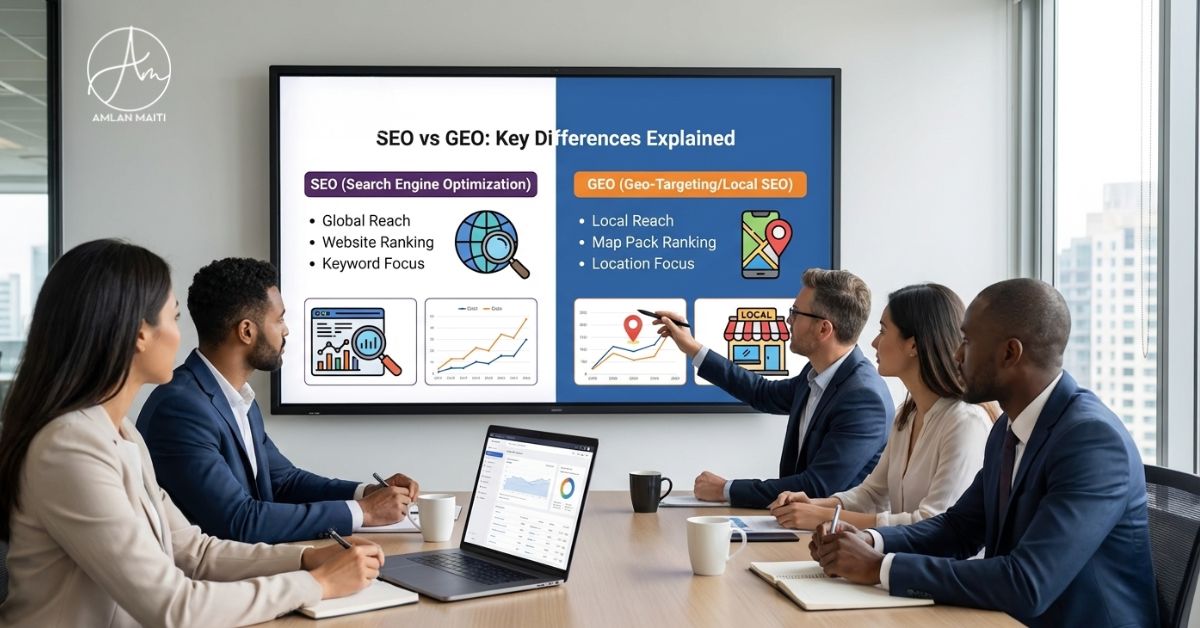
SEO vs GEO: Key Differences Explained
In the evolving landscape of digital marketing, understanding the nuances between AI SEO and GEO strategies is crucial for businesses…

Get In Touch
Initiate your digital marketing journey by filling out this form.